Category Archives: Diet, Habits, & Other Behaviors

Exercise, Reducing Your Likelihood of Cancer, and Life After Treatment

Farmin Shahabuddin, MPH, Cancer Prevention and Treatment Fund


Most people know that exercise is good for your heart and overall health. What many people do not know is that exercise may also reduce the likelihood of developing cancer and help cancer survivors live longer after treatment ends. Whether you have never had cancer or finished treatment and want to lower your chances of it coming back, physical activity is one of the most important things you can do.

Can Exercise Reduce Your Likelihood of Getting Cancer?

Research shows that people who are physically active are less likely to develop many types of cancer. A study of 1.4 million people found that those who exercised regularly were less likely to develop 13 types of cancer, including breast, colon, liver, kidney, stomach, and bladder cancer.1

A 2025 study tracked activity of more than 85,000 adults using wearable devices. The most active people were about 26% less likely to develop cancer than the least active.2 Even light activities such as errands and household chores made a difference. Taking more steps each day also helped. For example, people who took 9,000 steps a day were about 16% less likely to develop cancer than those who took 5,000.

Cancer usually is growing before it is diagnosed, and being active in the year before a diagnosis is also beneficial according to a 2025 study of more than 28,000 people with stage 1 cancers who had activity records for the year before their diagnosis.3 Those who exercised as little as 60 minutes per week were 27% less likely to have their cancer progress to a more advanced stage  and were 47% less likely to die, compared to those who were not active.3 Five years after diagnosis, about 91% of the most active people were still alive, compared to about 84% of those who had not been active.3

Why Does Exercise Lower the Likelihood of Cancer?

Exercise may lower the likelihood of cancer in several ways. It lowers hormones such as estrogen and insulin that can encourage cancer cells to grow.4,5,6 It helps the immune system spot and destroy abnormal cells.6 It also helps people maintain a healthy weight, which matters because being overweight contributes to an estimated 14% to 20% of cancer deaths in the U.S.6 Exercise also helps move food through the digestive system faster, which reduces the time that the lining of the intestines is exposed to potentially harmful substances.

Scientists are still learning more about why exercise can prevent cancer. A 2026 lab study found that even 10 minutes of exercise changed the blood in ways that helped colon cancer cells repair damaged DNA.7 While more research is needed, this adds to the evidence that exercise sends signals throughout the body that may help fight cancer.

How Much Exercise Do You Need?

The U.S Department of Health and Human Services physical activity guidelines recommend that all adults get 150 to 300 minutes per week of moderate activity such as brisk walking, or 75 to 150 minutes of vigorous activity such as running. Adults should also do muscle strengthening exercises at least 2 days per week.6 These guidelines are not specific to cancer prevention. Of course, any amount of physical activity is better than none. The key is to start where you are and gradually build up.

Exercise for Cancer Survivors After Treatment

Exercise does not just matter before a cancer diagnosis. It can also be helpful during cancer treatment (see this link for our article on that). Regular exercise after you have finished cancer treatment, can also help you live longer and feel better, with fewer side effects from treatment, including less fatigue.8,9 Survivors who exercise regularly are less likely to die from cancer and are more likely to live longer than those who do not exercise.[10-14] It does not matter if you were fit before you got diagnosed. What matters is that you start exercising now.

Since exercise improves the immune system, cancer survivors who exercise regularly lower their chances of the cancer returning. A large 2026 study followed more than 17,000 cancer survivors for an average of about 11 years. 15 The survivors had bladder, endometrial, lung, oral cavity, ovarian, or rectal cancer. The activities studied included brisk walking, cycling, and swimming.      The study compared survivors at different activity levels to those who did no physical activity at all. It found that even small amounts of exercise that were considerably less than the recommended physical activity guidelines, were linked to longer survival. Bladder cancer survivors who did relatively low levels of exercise were 33% less likely to die from their cancer, endometrial cancer survivors were 38% less likely, and lung cancer survivors were 44% less likely, compared to those who did no physical activity.

Survivors who met or exceeded the recommended guidelines saw even greater benefits. Endometrial cancer survivors who met the guidelines were 60% less likely to die from their cancer, and lung cancer survivors were 62% less likely, compared to those who did no exercise. Oral and rectal cancer survivors who doubled the recommended amount of activity were 61% less likely to die of oral cancer and 43% less likely to die of rectal cancer.

Sitting Less Matters Too

Along with exercising more, sitting less can also make a difference. A 2022 study followed over 1,500 cancer survivors ages 40 and over for an average of 4.5 years. Survivors who exercised at least 150 minutes per week were less likely to die than those who did not exercise. 16  Survivors who sat for more than 8 hours a day were also more likely to die than those who sat less than 4 hours per day. Those who both did not exercise and sat more than 8 hours per day had the worst outcomes of all.”

A 2020 study followed 8,000 adults aged 45 and older for about 5 years. People who sat the most were more likely to die from cancer than those who sat the least.17 Replacing just 30 minutes of sitting per day with moderate to vigorous activity was linked to a 31% lower chance of dying from cancer. Even replacing that sitting time with light activity like standing or gentle walking was linked to an 8% lower chance of dying.

What Kind of Exercise Should I Do?

Aerobic activity of light to moderate intensity was the most common type of exercise studied in cancer patients. Combining aerobic exercise with walking and resistance training, such as lifting weights or resistance bands, led to greater health benefits than aerobic activity alone.11,13 Lifting weights refers to any weights, even just a few pounds. Do not assume you need barbells and large muscles.

Walking is the easiest way to start. The greatest benefit comes from walking at an average speed, about a 20-minute mile, for 3 to 5 hours per week.8 Even walking just 1 hour per week showed improvements over no physical activity at all.

The most important thing is to make it a habit. Start small by taking the stairs instead of the elevator or walking after dinner each evening. It is better to start small and keep it up than to try to do too much and give up. Do not miss the chance to get at least some benefit from this easy, free way to fight cancer.

The Bottom Line

Exercise is a powerful, free tool. For people who have never had cancer, regular physical activity is linked to a lower likelihood of developing many types of cancer. For survivors who have finished treatment, exercise lowers the chances of cancer coming back and helps people live longer. Being active before a diagnosis also improves outcomes if cancer does occur. Even if you were not active before, starting to exercise afterward still helps. Try to walk 3 to 5 hours a week at an average pace, about 1 mile per 20 minutes. Try to sit less and move more throughout the day. Even a little exercise is better than none. It is never too late to begin.

To read about the benefits of exercise during cancer treatment, click here: https://stopcancerfund.org/pz-diet-habits-behaviors/exercise-cancer-treatment-benefits/

References

  1. Moore, S. C., Lee, I. M., Weiderpass, E., Campbell, P. T., Sampson, J. N., Kitahara, C. M., Keadle, S. K., Arem, H., Berrington de Gonzalez, A., Hartge, P., Adami, H. O., Blair, C. K., Borch, K. B., Boyd, E., Check, D. P., Fournier, A., Freedman, N. D., Gunter, M., Johansson, M., & Patel, A. V. (2016). Association of leisure-time physical activity with risk of 26 types of cancer in 1.44 million adults. JAMA Internal Medicine, 176(6), 816–825. https://doi.org/10.1001/jamainternmed.2016.1548
  2. National Cancer Institute. (2025, March 26). Cancer risk decreases with more physical activity [Press release]. https://www.cancer.gov/news-events/press-releases/2025/light-intensity-physical-activity-cancer-risk
  3. Patricios, J., Constantinou, D., Goff, P., Kolbe-Alexander, T., Capostagno, B., Gossage, S., & van Rensburg, D. C. J. (2025). Regular physical activity before cancer diagnosis may lower progression and death risks. British Journal of Sports Medicine. https://doi.org/10.1136/bjsports-2024-108699
  4. Key, T., Appleby, P., Barnes, I., & Reeves, G. (2002). Endogenous sex hormones and breast cancer in postmenopausal women: Reanalysis of nine prospective studies. Journal of the National Cancer Institute, 94(8), 606–616. https://doi.org/10.1093/jnci/94.8.606
  5. McTiernan, A., Tworoger, S. S., Ulrich, C. M., Yasui, Y., Irwin, M. L., Rajan, K. B., Sorensen, B., Rudolph, R. E., Bowen, D., Stanczyk, F. Z., Potter, J. D., & Schwartz, R. S. (2004). Effect of exercise on serum estrogens in postmenopausal women: A 12-month randomized clinical trial. Cancer Research, 64(8), 2923–2928. https://doi.org/10.1158/0008-5472.CAN-03-3393
  6. National Cancer Institute. (n.d.). Physical activity and cancer fact sheet. U.S. Department of Health and Human Services. https://www.cancer.gov/about-cancer/causes-prevention/risk/obesity/physical-activity-fact-sheet
  7. Orange, S. T., Dodd, E., Nath, S., Bowden, H., Jordan, A. R., Tweddle, H., Hedley, A., Chukwuma, I., Hickson, I., & Sharma Saha, S. (2025). Exercise serum promotes DNA damage repair and remodels gene expression in colon cancer cells. International Journal of Cancer. https://doi.org/10.1002/ijc.70271
  8. Holmes, M. D., Chen, W. Y., Feskanich, D., Kroenke, C. H., & Colditz, G. A. (2005). Physical activity and survival after breast cancer diagnosis. JAMA, 293(20), 2479–2486. https://doi.org/10.1001/jama.293.20.2479
  9. McNeely, M. L., Campbell, K. L., Rowe, B. H., Klassen, T. P., Mackey, J. R., & Courneya, K. S. (2006). Effects of exercise on breast cancer patients and survivors: A systematic review and meta-analysis. Canadian Medical Association Journal, 175(1), 34–41. https://doi.org/10.1503/cmaj.051073
  10. Meyerhardt, J. A., Heseltine, D., Niedzwiecki, D., Hollis, D., Saltz, L. B., Mayer, R. J., Thomas, J., Nelson, H., Whittom, R., Hantel, A., Schilsky, R. L., & Fuchs, C. S. (2006). Impact of physical activity on cancer recurrence and survival in patients with stage III colon cancer: Findings from CALGB 89803. Journal of Clinical Oncology, 24(22), 3535–3541. https://doi.org/10.1200/JCO.2006.06.0863
  11. Fong, D. Y. T., Ho, J. W. C., Hui, B. P. H., Lee, A. M., Macfarlane, D. J., Leung, S. S. K., Cerin, E., Chan, W. Y. Y., Leung, I. P. F., Lam, S. H. S., Taylor, A. J., & Cheng, K. K. (2012). Physical activity for cancer survivors: Meta-analysis of randomized controlled trials. BMJ, 344, e70. https://doi.org/10.1136/bmj.e70
  12. Meyerhardt, J. A., Giovannucci, E. L., Holmes, M. D., Chan, A. T., Chan, J. A., Colditz, G. A., & Fuchs, C. S. (2006). Physical activity and survival after colorectal cancer diagnosis. Journal of Clinical Oncology, 24(22), 3527–3534. https://doi.org/10.1200/JCO.2006.06.0855
  13. Spence, R. R., Heesch, K. C., & Brown, W. J. (2010). Exercise and cancer rehabilitation: A systematic review. Cancer Treatment Reviews, 36(2), 185–194. https://doi.org/10.1016/j.ctrv.2009.11.003
  14. Sternfeld, B., Weltzien, E., Quesenberry, C. P., Jr., Castillo, A. L., Kwan, M., Slattery, M. L., & Caan, B. J. (2009). Physical activity and risk of recurrence and mortality in breast cancer survivors: Findings from the LACE study. Cancer Epidemiology, Biomarkers & Prevention, 18(1), 87–95. https://doi.org/10.1158/1055-9965.EPI-08-0595
  15. Rees-Punia, E., Teras, L. R., Newton, C. C., Gapstur, S. M., Patel, A. V., Gaudet, M. M., Islami, F., Campbell, P. T., & McCullough, M. L. (2026). Leisure-time physical activity and cancer mortality among cancer survivors. JAMA Network Open, 9(2), e2556971. https://doi.org/10.1001/jamanetworkopen.2025.56971
  16. Cao, C., Friedenreich, C. M., & Yang, L. (2022). Association of daily sitting time and leisure-time physical activity with survival among US cancer survivors. JAMA Oncology, 8(3), 395–403. https://doi.org/10.1001/jamaoncol.2021.6590
  17. Gilchrist, S. C., Howard, V. J., Akinyemiju, T., Judd, S. E., Cushman, M., Hooker, S. P., & Diaz, K. M. (2020). Association of sedentary behavior with cancer mortality in middle-aged and older US adults. JAMA Oncology, 6(8), 1210–1217. https://doi.org/10.1001/jamaoncol.2020.2045

The Benefits of Exercise During Cancer Treatment

Farmin Shahabuddin, MPH, Cancer Prevention and Treatment Fund


You may have heard that regular exercise can reduce your likelihood of developing cancer, but did you know it is also good for cancer patients who are going through treatment?

Is Exercise Good for Everyone with Cancer?

If you or someone you love is going through cancer treatment, you may wonder whether exercise is safe or even possible. The answer, according to a growing body of research, is yes. In 2022, the American Society of Clinical Oncology (ASCO) formally recommended that cancer doctors encourage their patients to do regular physical activity during treatment.1

Until recently, most of the research on exercise and cancer focused on patients with breast or colon cancer. However, newer studies have shown that exercise benefits people with many different types of cancer.2,3 A large 2025 review combined data from 151 studies involving nearly 1.5 million cancer patients with breast, prostate, lung, colorectal, and skin cancers. Across all these cancer types, patients who were physically active were less likely to die from their cancer than those who were not active.4

Of course, exercising during treatment can feel difficult. Cancer and its treatments can cause fatigue, pain, and other symptoms that make physical activity challenging. But exercise does not have to be intense to be helpful. Even gentle stretching, short walks, or light movement throughout the day can make a difference. A 2022 review of 15 clinical trials found that even patients with advanced cancers who participated in exercise programs at a low level of effort saw improvements in fatigue, independence, quality of life, and sleep.5

How Does Exercise Help Cancer Patients?

You may be wondering why exercise helps during cancer treatment. Researchers have found that it works in several ways. Exercise lowers levels of certain hormones, such as estrogen, that can fuel the growth of some cancers, and it reduces inflammation throughout the body, which is believed to play a role in how cancer develops and spreads.⁶ A 2026 clinical trial also found that patients who followed a simple home-based walking and resistance band program had a healthier immune response during chemotherapy, which may explain why they experienced fewer side effects like mental fatigue and difficulty thinking.⁷

Physical Benefits of Exercise During Treatment

The ASCO review found that exercise during cancer treatment led to improvements in heart and lung fitness, muscle strength, and energy levels.1 Other studies have found that cancer patients who exercise during treatment have lower body fat, lower blood pressure, and stronger bones, which means fewer fractures.8,9 Patients who exercised also reported less nausea and better sleep.8 The most commonly reported improvement was reduced fatigue, which is one of the most challenging side effects of cancer treatment.8,9

Beyond helping reduce side effects, exercise may also help cancer patients live longer. A 2025 review that followed nearly 1.5 million cancer patients for 6 months to several years after their diagnosis found that those who were physically active were less likely to die from their cancer than those who were not active. The benefit was seen across several types of cancer. Breast cancer patients who exercised were 31% less likely to die from their cancer, followed by colorectal cancer patients at 29%, prostate cancer patients at 27%, and lung cancer patients at 24%, compared to patients with those cancers who did not exercise.

Mental and Emotional Benefits

Cancer patients who exercised during treatment also reported improved mental and emotional well-being.2 They frequently reported a higher quality of life, less anxiety, and felt more motivated.8 Cancer patients over the age of 80 who exercised regularly during their weeks or months of treatment reported fewer memory problems.10 A review of studies that was published in 2025 noted that exercise during treatment can help improve emotional health, reduce symptoms of depression, and support overall psychological well-being across many cancer types.6

Exercise May Help Relieve “Chemo Brain”

“Chemo brain” (also known as chemo fog) is a common side effect of chemotherapy that affects many cancer patients receiving chemotherapy. Common symptoms include having trouble learning new tasks, remembering names, paying attention, and concentrating. Chemo brain can be upsetting and make everyday life much harder.

Fortunately, research suggests that exercise can help. A 2021 study found that patients who averaged  2.5 to 5 hours of moderate exercise (like brisk walking) per week or 1.5 to 2.5 hours of vigorous exercise (such as running) per week before, during, and after chemotherapy for breast cancer were less likely to report chemo brain symptoms than patients who did not exercise.11

A 2026 clinical trial tested a home-based exercise program in 687 cancer patients at 20 cancer centers across the United States.7 All patients were about to start chemotherapy. They were randomly assigned to either follow the exercise program or receive their usual care. The exercise program included daily walking and resistance band exercises at a light to moderate level of effort for 6 weeks. Before starting chemotherapy, patients in both groups were walking about 4,000 to 5,000 steps a day from their normal daily activities. After 6 weeks, patients who did not follow the exercise program were walking about half as many steps, while patients on the exercise program kept up their usual amount of walking.

Among patients receiving chemotherapy in 2-week cycles, those on the exercise program reported less overall cognitive impairment and less mental fatigue compared to those who did not exercise.7 In the exercise group, 92% of patients said they had a more positive view of exercise after the study, and 97% said they would recommend the program to other patients receiving chemotherapy.⁷

What Kind of Exercise Should I Do?

Light to moderate physical activity was the most common type of exercise studied in cancer patients.1,2 Combining activities that get your heart rate up, like walking or swimming, with activities that build muscle strength, like using light weights or resistance bands, led to greater health benefits than either type alone.2,9 The 2026 clinical trial described above found that a simple program of daily walking plus resistance band exercises, done at home without a gym or special equipment, was enough to make a meaningful difference during chemotherapy.7 Walking is the easiest way to start. Studies show that walking 3 to 5 hours per week provides the greatest benefit, but even 1 hour of walking per week showed improvements over no activity at all.3

The most important thing is to make exercise a habit. Start small by taking the stairs instead of the elevator or taking a walk during the day if you can. It is better to start small and keep it up than to try to do too much and give up. Do not miss the chance to get at least some benefit from this easy, free way to fight cancer.

The Bottom Line

Cancer patients who engage in even light or moderate physical activity regularly during treatment can expect fewer side effects, including less fatigue, fewer problems with concentration and memory, and better overall fitness and health. A home-based program of walking and resistance band exercises has been shown to reduce chemo brain and mental fatigue during chemotherapy. Exercise benefits people with all types of cancer, including those with advanced disease. Even a little exercise is better than none, and it is never too late to begin.

References

  1. Ligibel, J. A., Bohlke, K., May, A. M., Clinton, S. K., Demark-Wahnefried, W., Gilchrist, S. C., Irwin, M. L., Late, M., Mansfield, S., Marshall, T. F., Meyerhardt, J. A., Thomson, C. A., Wood, W. A., & Alfano, C. M. (2022). Exercise, diet, and weight management during cancer treatment: ASCO guideline. Journal of Clinical Oncology, 40(22), 2491–2507. https://doi.org/10.1200/JCO.22.00687
  2. Fong, D. Y. T., Ho, J. W. C., Hui, B. P. H., Lee, A. M., Macfarlane, D. J., Leung, S. S. K., Cerin, E., Chan, W. Y. Y., Leung, I. P. F., Lam, S. H. S., Taylor, A. J., & Cheng, K.-K. (2012). Physical activity for cancer survivors: Meta-analysis of randomised controlled trials. BMJ, 344, e70. https://doi.org/10.1136/bmj.e70
  3. Holmes, M. D., Chen, W. Y., Feskanich, D., Kroenke, C. H., & Colditz, G. A. (2005). Physical activity and survival after breast cancer diagnosis. JAMA, 293(20), 2479–2486. https://doi.org/10.1001/jama.293.20.2479
  4. Ungvari, Z., Fekete, M., Varga, P., Munkácsy, G., Fekete, J. T., Lehoczki, A., Buda, A., Kiss, C., Ungvari, A., & Győrffy, B. (2025). Exercise and survival benefit in cancer patients: Evidence from a comprehensive meta-analysis. GeroScience, 47(3), 5235–5255. https://doi.org/10.1007/s11357-025-01647-0
  5. Rodríguez-Cañamero, S., Cobo-Cuenca, A. I., Carmona-Torres, J. M., Pozuelo-Carrascosa, D. P., Santacruz-Salas, E., Rabanales-Sotos, J. A., Cuesta-Mateos, T., & Laredo-Aguilera, J. A. (2022). Impact of physical exercise in advanced-stage cancer patients: Systematic review and meta-analysis. Cancer Medicine, 11(19), 3714–3727. https://doi.org/10.1002/cam4.4746
  6. Albini, A., La Vecchia, C., Magnoni, F., Garrone, O., Morelli, D., Janssens, J. Ph., Maskens, A., Rennert, G., Galimberti, V., & Corso, G. (2025). Physical activity and exercise health benefits: Cancer prevention, interception, and survival. European Journal of Cancer Prevention, 34(1), 24–39. https://doi.org/10.1097/CEJ.0000000000000898
  7. Mustian, K. M., Lin, P.-J., Chakrabarti, A., Mattick, L. J., Samuel, S., Gada, U., Altman, B. J., Vertino, P. M., Kleckner, A. S., Kleckner, I. R., Guido, J. J., Li, C.-S., Peppone, L. J., Kamen, C. S., Loh, K. P., Rousey, S. R., Onitilo, A. A., Melnik, M., Mohile, S. G., & Janelsins, M. C. (2026). Effects of exercise on cognitive impairment in patients receiving chemotherapy: A multicenter phase III randomized controlled trial. Journal of the National Comprehensive Cancer Network, 24(3), 91–99. https://doi.org/10.6004/jnccn.2025.7118
  8. Knols, R., Aaronson, N. K., Uebelhart, D., Fransen, J., & Aufdemkampe, G. (2005). Physical exercise in cancer patients during and after medical treatment: A systematic review of randomized and controlled clinical trials. Journal of Clinical Oncology, 23(16), 3830–3842. https://doi.org/10.1200/JCO.2005.02.148
  9. Spence, R. R., Heesch, K. C., & Brown, W. J. (2010). Exercise and cancer rehabilitation: A systematic review. Cancer Treatment Reviews, 36(2), 185–194. https://doi.org/10.1016/j.ctrv.2009.11.003
  10. Sprod, L. K., Mohile, S. G., Demark-Wahnefried, W., Janelsins, M. C., Peppone, L. J., Morrow, G. R., Lord, R., Gross, H., & Mustian, K. M. (2012). Exercise and cancer treatment symptoms in 408 newly diagnosed older cancer patients. Journal of Geriatric Oncology, 3(2), 90–97. https://doi.org/10.1016/j.jgo.2012.01.002
  11. Salerno, E. A., Culakova, E., Kleckner, A. S., Heckler, C. E., Lin, P.-J., Matthews, C. E., Conlin, A., Weiselberg, L., Mitchell, J., Mustian, K. M., & Janelsins, M. C. (2021). Physical activity patterns and relationships with cognitive function in patients with breast cancer before, during, and after chemotherapy in a prospective, nationwide study. Journal of Clinical Oncology, 39(29), 3283–3292. https://doi.org/10.1200/JCO.20.03514

Sleep Better Tonight: A Guide for Cancer Patients and Survivors

Farmin Shahabuddin, MPH, National Center for Health Research


Many cancer patients (and their loved ones) experience insomnia, which is defined as having trouble falling and/or staying asleep.1 If this is a problem for you, you are not alone. Lack of sleep can make us tired, make it difficult to concentrate, and make it difficult to deal with any issues that arise, and can increase our chances of developing other health problems.2 Most cancer patients with insomnia are prescribed sleep-aid medications, which can have unpleasant side effects, such as memory problems and other health risks.1 Before reaching for the medicine cabinet, there are natural strategies that can help you get the rest you need. This guide combines the latest research and expert recommendations to help cancer patients and survivors sleep without the need for pills.

Your Plate Is Your Sleep Aid: How Diet Affects Rest

One of the simplest and most overlooked ways to improve sleep is already in your kitchen. Research shows that foods and dietary patterns that improve sleep tend to be lower in sugar and saturated fat and higher in fiber.3

The Sleep-Friendly Menu

A Mediterranean-style diet, which is rich in fruits and vegetables, lean meat, olive oil, vegetable fats, and whole grains, has shown promising results for sleep. A 2020 study followed more than 400 women based on a sleep questionnaire that measured overall sleep quality and found that those who followed this eating pattern most closely had 30% fewer sleep problems as measured by a sleep questionnaire than those who did not.3

Foods that promote better sleep:3,4

  • Fruits and vegetables (promote relaxation)
  • Beans and lentils (the more servings, the better the sleep quality)
  • Whole grains
  • Nuts, seeds, and leafy greens
  • Lean meat, olive oil, and vegetable fats

Your gut and your brain work as a team. When you eat more fruits, vegetables, nuts, and other plant-based foods that are high in fiber, the good bacteria in your gut stay balanced and healthy. This helps your body relax and know when it is time to sleep, which may help you sleep better.3

Sleep Disruptors: What to Skip

Research found that eating more sugar, refined carbs, and saturated fat made people take longer to fall asleep and spend less time in deep, restorative sleep.4

Foods and drinks that disrupt sleep:3,4

  • Sugary snacks and drinks
  • Highly processed packaged foods
  • Chocolate (contains caffeine)
  • Alcohol (it makes you drowsy initially but disrupts sleep later)
  • Acidic foods like citrus, which can cause heartburn
  • Spicy foods

A study of almost 500 women found that those who took more than an hour to fall asleep consumed over 400 calories more per day and consumed more sugar, more saturated fat, and less fiber compared to those who fell asleep within 15 minutes.3

Creating the Perfect Sleep Environment

Cool, Dark, and Quiet

Your bedroom directly affects your sleep quality. Ideally, you want a quiet, dark, cool environment, all of which help you fall asleep more quickly.4 Temperatures between 65-70 are usually ideal, but keep in mind that biological differences mean that men tend to like cooler temperatures than women.

Wear Socks To Bed?

This may seem like a strange idea, but it works. As our body makes more melatonin near the end of the day to prepare us for sleep, our body temperature starts to drop. Wearing socks can help a natural process that increases the flow of blood to your hands and feet, warming them. The nonprofit Sleep Foundation points out that socks can help you fall asleep more quickly and even help you stay asleep.5 Of course, your socks should not be tight (you don’t want to cut off circulation!), and to prevent sweating feet, we recommend sleeping in cotton socks (100% cotton if possible) that are relatively lightweight.

The Light Fight: Winning the Battle Against Blue Glow

Melatonin is a hormone that is naturally released in the brain a few hours before we feel a sense of sleepiness. Light from phones, laptops, and TVs prevents melatonin from being released, making it hard to fall asleep.4 If you use your computer, smartphone, or tablet before bedtime, the blue and green light from these devices can neutralize melatonin’s effects. If you watch television, be sure you are at least six feet away from the screen.6 Even going to the bathroom in the middle of the night can make it harder to go back to sleep, so try using a flashlight to reduce the impact of the light. Unfortunately, if you wake up for a bathroom break, it is completely normal to take up to 30 minutes to drift back to sleep.6

Clock Work: Timing Your Way to Better Sleep

Harness the Power of Daylight

You can help program your body to produce melatonin for sleep at the right time of day by getting exposure to daylight during the morning and afternoon. Take a walk outside or sit beside a sunny window.4 Morning activity that exposes you to bright daylight will help your natural circadian rhythm.6

The Goldilocks Rule for Eating

Going to sleep hungry can keep you awake, but so can eating before bedtime. Avoid eating a big meal within two to three hours of bedtime. If you are hungry right before bed, eat a small, healthy snack (such as an apple with a slice of cheese or a few whole-wheat crackers) to satisfy you until breakfast.4

Rituals That Rock You to Sleep

When you were a child, and your mother read you a story and tucked you into bed every night, this comforting ritual helped lull you to sleep. Even in adulthood, a set of bedtime rituals can have a similar effect. Rituals help signal to the body and mind that it is time for sleep. Drink a glass of warm milk. Take a bath. Or listen to calming music to unwind before bed.4

Move It to Snooze It: Exercise and Sleep

Physical activity, even gentle movement like a short walk, can help you sleep better at night. Exercise boosts the effect of natural sleep hormones such as melatonin.4 However, timing matters: aerobic exercise releases endorphins, which are chemicals that keep people awake. If you are having trouble sleeping, try to avoid vigorous activity within two hours of bedtime.6 Of course, check with your doctor about what level of physical activity is right for you during treatment or recovery.

Breaking the Sleep Anxiety Cycle

One of the most effective ways to overcome sleep problems is cognitive behavioral therapy for insomnia. This type of therapy helps people understand how their thoughts, habits, and routines affect their sleep.7 It focuses on changing behaviors that interfere with sleep, such as spending too much time in bed awake with unhelpful thoughts, whether worrying about your health or the health of a loved one, or even worrying that not getting enough sleep will make you feel worse the next day.

A review of studies found that cognitive behavior therapy is effective for reducing insomnia in cancer survivors.8 In addition, a 2019 study from Memorial Sloan Kettering Cancer Center found that the therapy helped reduce insomnia in cancer survivors, and also helped patients reduce their use of sleep aids even 20 weeks after finishing treatment. About 25% of patients were using at least one prescription sleep aid at the beginning of the study, but only 17% used the medication 20 weeks after treatment.9 Twenty weeks after completing the therapy, participants fell asleep an average of 24 minutes faster. That may not seem like much, but it is comparable to the small benefit of sleeping pills.9

The study also evaluated acupuncture for insomnia and found it to be less effective than cognitive therapy at falling asleep but more effective at staying asleep. almost as effective as cognitive behavioral therapy. Acupuncture is a traditional Chinese treatment where a trained acupuncturist places special needles into the skin at specific points on the body, which are associated with different aspects of health, such as pain or insomnia. Those who received acupuncture fell asleep an average of 11 minutes faster than before treatment. Right after completing treatment, participants who had acupuncture slept for an average of 62 more minutes a night, which was 27 more minutes than those treated with cognitive behavioral therapy. That is much more additional sleep than is typical of sleeping pills.9

Most cognitive behavioral therapy programs for insomnia last about six to eight weeks. If it is difficult to find a trained CBT-I therapist where you live, online therapy options are becoming more available. Acupuncture is a good alternative, especially for those who also experience pain, since acupuncture can also provide short-term pain relief.9,10

For more information about cognitive behavioral therapy or acupuncture for cancer patients with insomnia, see link.

Quiet the Mind: Tackling Stress Before Bed

When you are dealing with cancer, it is natural for worries to bubble to the surface at night, concerns about your health, upcoming appointments, treatment side effects, costs, or what the future holds. Stress activates the fight-or-flight hormones that make it hard to sleep.4

Give yourself time to wind down before bed. To relax, try deep breathing exercises: The simple one is to inhale slowly and deeply, and then exhale. Or try the 4-7-8 breathing exercise, which, in addition to a breathing technique, helps you concentrate on something other than whatever is worrying you.11

In addition to relaxation techniques, small changes to your sleep environment can also help. A sleep mask can block out light from streetlights, electronics, or early morning sun, helping your body stay in sleep mode. White noise, such as a fan, sound machine, or app, creates a steady background sound that covers up sudden noises that can disrupt your sleep. This can help your brain relax and make it less likely that you will wake up during the night.

If you are curious about which sleep masks, white noise machines, and other sleep products work best, Consumer Reports has tested and reviewed many of them. You can check out their recommendations.12 In addition, there are free cell phone apps that provide a choice of soothing repetitive sounds, such as waves, babbling streams, and rain, such as the Soothing Sleep Sounds for iPhones.

The Melatonin Question: What You Need to Know

If you try melatonin supplements, experts recommend buying the same brand consistently since supplements are not tested by any unbiased government agencies, and dosages vary between manufacturers. For most people, it is safe to take melatonin nightly for one to two months. After that, you should stop and see how your sleep is.6

Important caution: Talk to your oncologist or health care provider before taking melatonin or any supplement, as it may interact with your cancer treatment. Do not use melatonin if you are pregnant or breastfeeding or have an autoimmune disorder, a seizure disorder, or depression. Also, talk to your provider if you have diabetes or high blood pressure.6

Red Flags: When to Talk to Your Doctor

Pain or discomfort, an urge to move your legs, snoring, and a burning pain in your stomach, chest, or throat are symptoms of common sleep disrupters, including restless legs syndrome, sleep apnea, and gastroesophageal reflux disease (GERD). If these symptoms are keeping you up at night or making you sleepy during the day, talk to your doctor.4 Many cancer patients experience sleep problems related to their treatment or medications, so do not hesitate to bring up sleep concerns with your care team.

The “Magic Food” Myth

You may have heard that specific foods like tart cherries or kiwifruit can ease you into slumber. While some small studies suggest benefits, there is no single “miracle” food that works for everyone.3

The Bottom Line

Better sleep does not come from any single trick; it comes from building healthy habits throughout your day. Start with one or two changes that feel manageable. Eat more fruits and vegetables, get some gentle movement when you can, dim the lights in the evening, find ways to quiet your mind through breathing exercises or therapy, and permit yourself to rest.

If sleep problems persist, talk to your care team about cognitive behavioral therapy or acupuncture; both have been shown to help cancer survivors sleep better without the side effects of sleeping pills. Small improvements add up over time, and better sleep can help you feel better each day.

References

  1. Savard, J., Ivers, H., Villa, J., Caplette-Gingras, A., & Morin, C. M. (2011). Natural course of insomnia comorbid with cancer: An 18-month longitudinal study. Journal of Clinical Oncology, 29(26), 3580–3586.
  2. Harvard Health Publishing. (2023, November 20). 8 secrets to a good night’s sleep. Harvard Health. https://www.health.harvard.edu/newsletter_article/8-secrets-to-a-good-nights-sleep
  3. Wadyka, S. (2025, January 10). Foods to eat for better sleep. Consumer Reports. https://www.consumerreports.org/health/nutrition-healthy-eating/foods-to-eat-for-better-sleep-a7781483547/
  4. Johns Hopkins Medicine. (n.d.). Natural sleep aids: Home remedies to help you sleep. Johns Hopkins Medicine. https://www.hopkinsmedicine.org/health/wellness-and-prevention/natural-sleep-aids-home-remedies-to-help-you-sleep
  5. Sleep Foundation. (n.d.). Sleeping with socks on. Sleep Foundation. https://www.sleepfoundation.org/sleep-hygiene/sleeping-with-socks-on
  6. Harvard Health Publishing. (2023, November 20). 8 secrets to a good night’s sleep. Harvard Health. https://www.health.harvard.edu/newsletter_article/8-secrets-to-a-good-nights-sleep
  7. Tagle, A. (2026, January 15). 4 ways to beat the anxiety of insomnia—and get back to sleep. NPR Life Kit. https://www.npr.org/2026/01/15/nx-s1-5611117/beat-anxiety-insomnia-get-back-to-sleep
  8. Johnson, J. A., Rash, J. A., Campbell, T. S., Savard, J., Gehrman, P. R., Perlis, M., Carlson, L. E., & Garland, S. N. (2016). A systematic review and meta-analysis of randomized controlled trials of cognitive behavior therapy for insomnia (CBT-I) in cancer survivors. Sleep Medicine Reviews, 27, 20–28.
  9. Garland, S. N., Xie, S. X., DuHamel, K., Bao, T., Li, Q., Barg, F. K., Song, S., Kantoff, P., Gehrman, P., & Mao, J. J. (2019). Acupuncture versus cognitive behavioral therapy for insomnia in cancer survivors: A randomized clinical trial. Journal of the National Cancer Institute, 111(12), 1323–1331.
  10. Yin, X., Gou, M., Xu, J., Dong, B., Yin, P., Masquelin, F., Wu, J., Lao, L., & Xu, S. (2017). Efficacy and safety of acupuncture treatment on primary insomnia: A randomized controlled trial. Sleep Medicine, 37, 193–200.
  11. Young, M. (2022, September 6). How to do the 4-7-8 breathing exercise. Cleveland Clinic. https://health.clevelandclinic.org/4-7-8-breathing
  12. Consumer Reports. (2026, January 9). 12 products that help us get a good night’s sleep. Consumer Reports. https://www.consumerreports.org/health/sleeping/products-that-help-us-get-a-good-nights-sleep-a8894453489/

Can Belly Fat Cause Cancer and Other Serious Diseases?

Farmin Shahabuddin, MPH, Ammu Dinesh, and Claire Viscione, National Center for Health Research


Belly fat is common among men and women. However, when a person’s body shape looks more like an apple than a pear, that could increase their likelihood of developing cancer or other serious diseases. 

More than two-thirds of adult Americans are overweight or obese.1 Most people know that obesity increases the risk of diabetes, heart disease, and high blood pressure. But did you know that being overweight also increases your chances of developing cancer, and that having an “apple” body shape due to belly fat can increase your chances of developing cancer and dying from several serious diseases, even if you are not overweight?

Why is belly fat dangerous?

Whether your body fat is located at your waist (giving you an apple shape) or hips (giving you a pear shape) makes a difference to your health. Women tend to gain more belly fat as they get older. Regardless of their weight, white, black, and Latina women with a waistline measurement of 35 inches or more have higher health risks. This is also true for Asian women with a waistline of 31 inches or more. Although it is important to get rid of excess fat in general, belly fat is the most threatening to your health.

Unlike the fat that sits just beneath the skin, the fat that sits around internal organs is called visceral fat.2

This fat is the most dangerous, and it is typically what shows up as belly fat. Measuring your waistline is important since you can get a good idea of whether you have a dangerous amount of belly fat. 

You can check your waist circumference at home with a simple tape measure. Wrap the tape around your bare waist, above your hipbones, after gently exhaling. As you can see from the table below, a waist size of 40 inches or more for men and 35 inches or more for women is considered high risk.

Table 1. What does your waistline measurement mean? 2

Additionally, the waist-to-hip ratio is also another important indicator to determine whether you are at risk for abdominal obesity. The waist-to-hip ratio can be measured by dividing your waist measurement (in inches/cm) by your hip measurement (in inches/cm). The World Health Organization (WHO) states that abdominal obesity is defined as a waist-hip ratio above 0.90 for males and above 0.85 for females. 3 Use this calculator to measure your ratio. Even if you are not overweight or obese, having a lot of belly fat can more likely lead to developing cancer and other chronic health conditions.

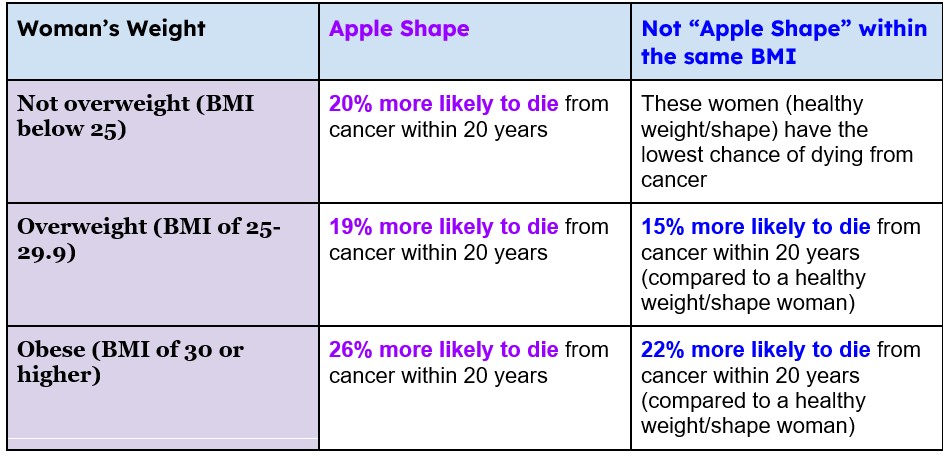
Physicians often use the body mass index (BMI) to estimate whether an individual is overweight or obese. To figure out your BMI, use the chart below, and enter your height and weight into this calculator. The chart shows how being overweight or having an apple shape increases your chances of dying from cancer compared to women who are not overweight and do not have an apple shape.

Table 2. Likelihood of death due to cancer in women based on BMI. 3

You can see that women who were not overweight or obese but had extra belly fat were almost exactly as likely to die from cancer as overweight women with extra belly fat (20% compared to 19%). 

As experts have increasingly criticized reliance on BMI as the way to define overweight and obesity, they worked together to develop a new definition that includes belly fat and related proportional measurements, either in addition to a traditional BMI obesity measure or independent of the BMI obesity measure. In 2025, this definition has already been endorsed by at least 76 professional organizations. 4 It classifies a person as obese if any of the following criteria are met:

  1. A BMI greater than 40 and at least one elevated proportional measure of waist circumference, waist-to-hip ratio, and/or waist-to-height ratio.
  2. At least two high proportional body measurements, regardless of BMI – for example, a person with both a large waist and a high waist-to-hip ratio could meet the definition.
  3. Excess body fat is assessed by dual-energy x-ray or similar technology to measure fat mass.

Using this updated definition, researchers found that approximately 69-75% would be classified as obese, compared with 43% under the traditional BMI definition. 4,5  This large difference was due to the addition of adults who had excess belly fat but a normal BMI. For example, one study found that 39% of adults with a normal BMI and 80% of adults who were overweight had obesity based on excess belly fat or unhealthy body proportions, showing that BMI alone often overlooks people with unhealthy belly fat.5

Furthermore, people newly identified as obese under the updated definition had higher rates of serious health problems. For example, 12% had diabetes compared with about 2% of adults who had a normal BMI and a healthy waistline. Likewise, about 10% had a heart attack or stroke, compared with about 2% in the healthier-fat-distribution group. In terms of mortality, about 8% died during the study period, compared with about 3% of adults with a normal BMI and normal fat distribution. 4 These findings show that the new definition does not simply change how obesity is counted—it does a better job of identifying adults with excess belly fat who are more likely to develop serious medical problems.

Researchers emphasized that future research and medical care should consider BMI and measures of body fat distribution to more accurately identify patients who would benefit from treatment to prevent weight-related diseases. Since that new definition has not yet been used in most studies, this article focuses on studies evaluating the health impact of body fat with or without a high BMI.

Research on Belly Fat and Cancer

Several studies have looked at the relationship between belly fat and cancer and other serious diseases. One study in 2013 followed more than 3,000 men and women for 7 years. They used CT scans and physical exams to look at the fat throughout the body. Over the course of the study, the men and women developed 141 cases of cancer, 90 heart-related incidents, and 71 deaths from various causes. The study found that people with more belly fat, specifically visceral fat, were about 44% more likely to develop cancer and heart disease, even when adjusting for waist circumference. 6

Another study in 2019 followed over 150,000 post-menopausal women ages 50-79 for about 20 years.7 This study found that women who have extra belly fat are at a higher risk of death regardless of their weight. Causes of death in the study included cardiovascular disease and cancer. The women of normal weight who had extra belly fat tended to be older, nonwhite, and with less education and income. They were also less likely to use menopausal hormones and to exercise.

Recent studies provide more detailed evidence about how belly fat raises cancer risk and affects cancer after diagnosis. A 2022 study that followed 94,000 adults for more than ten years found that people were about 30% more likely to develop colorectal cancer. The researchers found that belly fat increases inflammation and makes it harder for cells to use insulin properly, which are the two changes that make it easier for cancer to grow. 8

A 2021 study looked at people who were already being treated for stage III colorectal cancer. Those with higher amounts of belly fat had lower survival rates – about 79% were still alive three years after treatment, compared with 88% of people with less belly fat. People who had more belly fat were also three times as likely to have their cancer spread inside the abdomen. 9 This shows that belly fat can affect not just who gets cancer but how well patients respond to treatment and recover.

Colorectal cancer may not be the only type of cancer affected. New evidence suggests that fat may contribute to the growth of various types of cancer cells. A 2022 scientific review found that cancers can use fatty acids as a source of energy, so that excess fat in the body may act as “fuel” for tumor growth. 10 Other studies show that obesity can disrupt the body’s gut microbiome, changing the balance of healthy and harmful bacteria. A 2023 review concluded that these changes in bacteria can increase toxins, inflammation, and immune dysfunction, all of which can promote gastrointestinal cancers. 11

Belly fat also increases the chances of prostate cancer. Researchers report that men with more belly fat are more likely to develop prostate cancer, and that is true even for men with a normal BMI. 12 A 2018 scientific review of the association between abdominal obesity and prostate cancer reports that larger waist size and central fat are associated with higher prostate cancer risk, particularly for more aggressive and advanced stages of cancer. 13

Belly Fat and Heart Disease and Related Health Problems

For both men and women, extra belly fat raises the chances of heart disease, stroke, high blood pressure, and type 2 diabetes – the leading causes of death in the United States. 14 Visceral fat releases substances that trigger chronic inflammation and damage blood-vessel walls, making arteries stiffer and more likely to clog. Over time, this increases the risk of heart attack, stroke, and metabolic disease, even in people whose BMI is normal.

A major international study published in JAMA Network Open in 2025 found that many people who appear to have a healthy weight still have unhealthy amounts of belly fat. 15 Researchers analyzed data from more than 470,000 adults in 91 countries and discovered that about one in five adults worldwide (21.7%) had a normal BMI but excess belly fat, also called abdominal obesity. People with a normal BMI and excess belly fat had higher levels of all four major cardiometabolic risk factors measured in the study. It may seem surprising that 30% had high blood pressure, 17% had diabetes, 28% had high cholesterol, and 23% had high triglycerides. These conditions are among the leading causes of heart disease and stroke.

In fact, adults with abdominal obesity had 30% with high blood pressure, compared with about 20% of adults with both a normal BMI and a healthy waistline. About 17% had diabetes, compared with about 9% in the healthy-waistline group. About 28% had high cholesterol, compared with about 19% in the healthier-fat-distribution group. About 23% had high triglycerides, compared with about 13% of adults with a normal BMI and a healthy waistline. The study also found that people who had belly fat were less likely to be physically active and ate fewer fruits and vegetables. The researchers concluded that waist size should be treated as an important health indicator because it identifies people who may seem healthy by BMI standards but are more likely to develop serious health problems such as heart disease, stroke, and diabetes.

A recent imaging study in 2025 from Germany examined how belly fat affects the heart in 2173 adults ages 45 to 74. 16 The researchers used detailed MRI scans to compare heart structure in people with obesity based on waist-to-hip ratio (WHR) and those with obesity based on BMI. They found that about 80 out of 100 adults had obesity according to WHR, while about 20 out of 100 had obesity based on BMI alone. Adults with more belly fat had larger, thicker heart muscle and smaller heart chambers, which means the heart pumps less blood with each beat.

Even a small increase in WHR was linked to noticeable changes in heart structure, including a heavier left ventricle and smaller chamber sizes on both the left and right sides of the heart. These changes, known as cardiac remodeling, may be early signs of strain on the heart. The heart changes were greater in men than in women. In men, belly fat was more closely linked to the shrinking of the heart’s right ventricle, which pumps blood to the lungs. Women showed the same pattern but to a lesser degree. The researchers concluded that belly fat may be more important than BMI for identifying adults who are already developing harmful changes in heart structure, and that clinicians should pay closer attention to the waist-to-hip ratio when evaluating heart health.

What can you do?

As you can see, belly fat can be very dangerous, especially for women, even if they are not overweight. Losing weight or preventing weight gain can lower health risks. By exercising regularly, you can get rid of unhealthy belly fat. It is also important to change your diet to eat foods that are high in nutrients and essential vitamins. You can do this by eating more fresh vegetables, nuts, and whole-grain breads instead of processed meat, red meat, candy, pasta, and white bread. These few changes can help you lose belly fat and improve the quality and length of your life.

Local bans on unhealthy food and drinks may also be effective in reducing belly fat. A 2019 study shows that a ban on the sale of sugar-sweetened beverages at a large college campus substantially decreased consumption and led to significantly less belly fat.17 Students who stopped drinking the beverages had improved insulin resistance and lower cholesterol. The combination of the ban and a brief motivational talk was even more effective than the ban by itself.

Latest Evidence on What Works and What Doesn’t

The public often sees ads promising to “melt belly fat fast”. Recent studies show which methods help reduce belly fat and which do not.

What Works

  • Regular Exercise: Aerobic activity, such as brisk walking, swimming, or cycling, is one of the most effective ways to reduce visceral fat. A 2023 study found a clear “dose-response” effect: more aerobic exercise produced greater belly-fat reduction.18
  • Strength Training: Adding resistance exercise two or more times per week helps preserve lean muscle while reducing overall body fat. 19
  • Healthy, Sustainable Eating: Johns Hopkins Medicine recommends limiting refined carbohydrates and added sugars, while emphasizing vegetables, whole grains, and lean proteins. In other words, a Mediterranean-style diet rich in fruits, vegetables, nuts, and olive oil helped people lose visceral fat while maintaining muscle mass. 20
  • High-Intensity Workouts: In younger adults with overweight or obesity, high-intensity interval training (HIIT) and aerobic exercise both significantly reduced visceral fat. 21
  • Healthy Habits Beyond Exercise: Harvard experts note that enough sleep, avoiding smoking, and managing stress all help prevent fat from collecting around the waist. 22

What Doesn’t Work

  • Spot-Reduction Exercises: Doing only sit-ups or crunches won’t specifically burn belly fat. 23
  • Alternate-Day Fasting Alone: A 2021 study found that belly fat was resistant to every-other-day fasting if it is not combined with other lifestyle changes. 23
  • Fat Burning” Pills, Creams, or Belts – None of these products has been proven to reduce visceral fat safely or effectively. 24

What This Means for You:

  • Cancer risk: Belly fat increases the chances of developing colorectal, breast, and other cancers – even in people who are not overweight.
  • Cancer outcomes: People with more visceral fat may not live as long as others after a cancer diagnosis. Additionally, people with more visceral fat often have lower survival rates after cancer treatment.
  • Heart Disease and Related Serious Illness: Extra belly fat raises inflammation and insulin resistance, which can lead to heart disease, stroke, and type 2 diabetes for both men and women.
  • Prevention works: The most effective ways to reduce belly fat are regular aerobic and strength exercise, a healthy diet, and consistent lifestyle habits.
  • Don’t be fooled: Restrictive fasting, supplements, and “spot reduction” exercises do not work.

The Bottom Line

Belly fat is more than a cosmetic concern — it is a health risk. Reducing belly fat through regular physical activity, healthy eating, and other health habits reduces your chances of developing cancer or other serious diseases. No shortcut, pill, or single exercise will work.

Learn more about how extra body fat can increase your risk for developing cancer, and how you can make a commitment to your health and reduce risky belly fat:

All articles on our website have been approved by Dr. Diana Zuckerman and other senior staff.

References:

  1. Center for Disease Control and Prevention. FastStats- Overweight Prevalence. CDC.gov. https://www.cdc.gov/nchs/fastats/obesity-overweight.htm. Updated June 13, 2016.
  2. Ma, W. Y., Yang, C. Y., Shih, S. R., Hsieh, H. J., Hung, C. S., Chiu, F. C., Lin, M. S., Liu, P. H., Hua, C. H., Hsein, Y. C., Chuang, L. M., Lin, J. W., Wei, J. N., & Li, H. Y. (2013). Measurement of Waist Circumference: midabdominal or iliac crest?. Diabetes care, 36(6), 1660–1666. https://doi.org/10.2337/dc12-145
  3. Ashwell, M., & Gibson, S. (2016). Waist-to-height ratio as an indicator of ‘early health risk’: Simpler and more predictive than using a ‘matrix’ based on BMI and waist circumference. BMJ Open, 6(3), e010159. https://doi.org/10.1136/bmjopen-2015-010159
  4. Fourman LT, Awwad A, Gutiérrez-Sacristán A, et al. Implications of a New Obesity Definition Among the All of Us Cohort. JAMA Netw Open. 2025;8(10):e2537619. doi:10.1001/jamanetworkopen.2025.37619
  5. Al-Roub NM, Malik D, Essa M, et al. Body Mass Index and Anthropometric Criteria to Assess Obesity. JAMA Network Open. 2025;8(12):e2549124. doi:10.1001/jamanetworkopen.2025.49124
  6. Britton KA, Massaro JM, Murabito JM, Kreger BE, Hoffmann U, Fox CS. Body Fat Distribution, Incident Cardiovascular Disease, Cancer, and All-Cause Mortality. Journal of the American College of Cardiology. 2013; 62(10): 921-925. http://www.onlinejacc.org/content/62/10/921.
  7. Sun Y, Liu B, Snetselaar LG, Wallace RB, Caan BJ, Rohan TE, et al. Association of Normal-Weight Central Obesity With All-Cause and Cause-Specific Mortality Among Postmenopausal Women. JAMA Network Open. 2019;2(7):e197337. https://www.ncbi.nlm.nih.gov/pubmed/31339542.
  8. Li W et al. Frontiers in Endocrinology. 2022. Abdominal Obesity, Inflammation, and Colorectal Cancer Risk. https://www.frontiersin.org/journals/endocrinology/articles/10.3389/fendo.2022.983160/full
  9. Park JW et al. Frontiers in Oncology. 2021. Visceral Fat and Colorectal Cancer Outcomes.  https://pmc.ncbi.nlm.nih.gov/articles/PMC8761926/
  10. Lengyel E et al. Steroids. 2022. Cancer’s Fuel from Fat: Fatty-Acid Oxidation in Tumor Growth. https://www.sciencedirect.com/science/article/pii/S1044579X22001766
  11. Chen J et al. Int J Oncol. 2023. Obesity, Gut Microbiome, and Gastrointestinal Cancers.
     https://www.spandidos-publications.com/ijo/64/1/4#
  12. Harvard Health Publishing. Body fat may predict aggressive prostate cancer.
     https://www.health.harvard.edu/mens-health/body-fat-may-predict-aggressive-prostate-cancer
  13. Lavalette C, et al. Abdominal obesity and prostate cancer risk. PubMed Central (review).
     https://pmc.ncbi.nlm.nih.gov/articles/PMC6195387/
  14. SolutionHealth. 6 hidden dangers of belly fat in men (heart disease, stroke, diabetes explained).
     https://www.solutionhealth.org/2024/07/25/6-hidden-dangers-of-belly-fat-in-men/
  15. Ahmed KY, Aychiluhm SB, Thapa S, et al. Cardiometabolic Outcomes Among Adults With Abdominal Obesity and Normal Body Mass Index. JAMA Netw Open. 2025;8(10):e2537942. doi:10.1001/jamanetworkopen.2025.37942
  16. Henderson, J. (2025, December 3). Belly Fat May Be Stronger Predictor of Heart Damage Than BMI. Medpagetoday.com; MedpageToday. https://www.medpagetoday.com/meetingcoverage/rsna/118818
  17. Epel ES, Hartman A, Jacobs LM, Leung C, Cohn MA, Jensen L, et al. Association of a Workplace Sales Ban on Sugar-Sweetened Beverages With Employee Consumption of Sugar-Sweetened Beverages and Health. JAMA Network Open. 2019. doi:https://doi.org/10.1001/jamainternmed.2019.4434
  18. JAMA Network Open. 2023. Dose–Response of Aerobic Exercise and Visceral Fat.
     https://jamanetwork.com/journals/jamanetworkopen/fullarticle/2828487
  19. Harvard Health Publishing. Taking Aim at Belly Fat. Exercise and Lifestyle Guidance.
     https://www.health.harvard.edu/newsletter_article/taking-aim-at-belly-fat
  20. Martínez-González MA et al. Nutrition & Metabolism. 2023. Mediterranean Diet and Visceral Fat Loss.
     https://nutritionandmetabolism.biomedcentral.com/articles/10.1186/s12986-023-00706-4
  21. Sun Y et al. Frontiers in Physiology. 2022. Effects of Different Exercise Types on Visceral Fat in Young Adults. https://pmc.ncbi.nlm.nih.gov/articles/PMC10456392/
  22. Harvard Health Publishing. Taking Aim at Belly Fat. 2024. https://www.health.harvard.edu/newsletter_article/taking-aim-at-belly-fat
  23. University of Sydney. 2021. Belly Fat Resistant to Every-Other-Day Fasting Study. https://www.sydney.edu.au/news-opinion/news/2021/03/03/belly-fat-resistant-to-every-other-day-fasting-study.html
  24. Sato Y et al. Frontiers in Physiology. 2021. Possible Mechanisms to Explain Abdominal Fat Loss Effect of Exercise Training.https://www.frontiersin.org/journals/physiology/articles/10.3389/fphys.2021.789463/full

Eating Habits That Improve Health and Reduce Cancer Risks While Helping with Weight Loss

The latest research shows that measuring your waistline and keeping your BMI (body mass index) at a reasonable number will help keep you alive and healthy, while reducing your chances of developing cancer or cancer returning after treatment.[1] Research also shows that certain foods improve your health even if they don’t help you lose weight. This article will focus on eating habits that help you lose weight, but will also include information about the kinds of foods that are good for your health even if they don’t affect your weight.

Let’s start with the obvious: Sticking to a healthy diet in order to lose weight is hard for almost everyone. Keeping track of calories and fat can be confusing, and the nutrition labels on the foods we buy aren’t always that helpful. How are consumers supposed to figure out which diet advice is just hype – that ultimately doesn’t contribute to better health – and which advice offers good, medically sound information?

Here are some basic guidelines to keep in mind:

  • Calories matter
  • Serving size matters
  • Fats and cholesterol matter
  • Fruits, vegetables and whole grains matter
  • Exercise matters
  • Sticking to it matters

The Key to Losing Weight is to Eat Fewer Calories than You Burn in a Day- But There is More to it than That

Simply increasing your activity level might be enough if you only need to lose a few pounds to get your BMI into a healthy range. Most of the time, however, eating fewer calories is also going to be needed. Scientists have found that, in order to lose weight, a person must burn more calories than they consume.[2] Unfortunately, calories add up quickly!  For example, have you eaten at a fast food chain recently?  To work off the calories from a double cheeseburger, extra large fries and a 24 ounce soft drink – about 1500 calories – you would have to run for two and half hours at a ten minute mile pace! (For more information, see Fast Food Facts: Calories and Fats).  And some chain restaurants offer meals that have much more calories for lunch or dinner than an average person should eat in an entire day!

What happens if you exercise without lowering the calories you’re eating? A 2009 study found mixed results: some lost a significant amount of weight while others gained weight.[3] Although some weight loss strategies are effective for some people but not others, eating fewer calories and increasing exercise is most likely to help most people shed pounds.

Eating Fewer Calories Doesn’t Necessarily Mean Eating Less

The trick to dieting without being hungry is to choose foods that contain fewer calories and also fill you up. An example would be having a piece of fruit instead of fries with lunch.  It helps to remember that not all foods are created equal!  Some foods, such as nuts, are high in nutrients and essential vitamins, while others lack nutritional substance, such as products containing added sugars. “Nutrient-dense food” provides substantial amounts of vitamins and minerals and relatively few calories, but leaves you feeling fuller while also supplying valuable fuel for your body.  A person is more likely to stick to a diet if calories are nutrition-dense and offer variety.[4]

Empty calories from foods with processed and refined sugars, such as candy, pasta and bread made from white flour, and many energy drinks and soft drinks, leave you hungry again soon after, craving more food.  In contrast, the “complex carbohydrates” in vegetables, whole-grain breads and cereals, and low-fat yogurt and milk, provide long-lasting nutrients, improve digestion, help stabilize blood sugar, and keep your energy at an even level.  Although fruits are also considered simple carbohydrates, they contain vitamins and nutrients that occur naturally, unlike those found in processed and refined foods.

A 2011 study in the respected New England Journal of Medicine found that certain foods were linked to weight change more than others.[5] After following participants for an average of 17 years, researchers found that gaining weight was most strongly linked to foods such as potato chips, sugar-sweetened beverages, and red meat.  People who ate more vegetables, whole grains, nuts, fruits, and yogurts were less likely to gain weight over the years, even though some of those foods are quite high in calories.

What about low-carb diets versus low-fat diets? A 2014 study compared the effects of both diets on body weight and cardiovascular health. They found that the low-carb diet was much more effective than the low-fat diet for losing weight and reducing cardiovascular risks.[6] So hold back on the white bread, but don’t feel bad about eating some olive oil.  But if you want to maintain that weight loss, remember that variety in your diet as well as exercise are also important.

Don’t Assume that Foods Marketed as “Healthy” Really Are or Will Help You Lose Weight

Don’t fall for the “health halo” effect: assuming that all foods at restaurants marketed as “healthy” or all foods of a category labeled “healthy” (e.g., salads) are actually better for you.  Research shows that customers at fast food restaurants underestimate the calories in their meals [7] and most consumers underestimate the calorie content of foods that are labeled “low-fat.”[8] For example, if you look at a bag of potato chips, you will probably see that the “low fat” ones almost have the same number of calories as the regular chips made by the same company.

The choices that will keep your calories down are not always obvious.  For example, a 2013 study found that adolescents ordered about the same number of calories at Subway as they did at McDonald’s.[9] Try to check the nutritional contents of your meal options and make an informed decision. If nutritional information is not posted in the restaurant, it is probably available on the restaurant’s website.

Eating 5 Small Meals Is Not Better than Eating 3 Larger Ones

For several years, some experts have claimed that eating 5 or 6 times a day can be a better way to lose weight than eating only 3 times a day.  However, the latest research indicates that is not true.[10]

Studies have found that eating off of smaller plates or bowls helps people eat less, because most of us tend to fill our plate and then finish what is on it.[11],[12] Unfortunately, portion sizes for restaurant meals, baked goods, other prepared foods, and even homemade meals – everything from breakfast muffins to a plate of spaghetti – have grown to very unhealthy proportions in the last few decades. This is contributing to the obesity epidemic.

In addition to adjusting your portion size, limiting the hours when you eat can also help you maintain a healthy weight. In a study published in British Journal of Nutrition in 2013, researchers followed a group of healthy men for four weeks. They ate their normal diets during all four weeks, but for 2 of those weeks, they fasted for 11 hours at night (from 7 pm to 6 am). The study found that under the time-restricted conditions, the men consumed approximately 200 fewer calories per day and lost weight during the two weeks of nightly fasting compared to the two weeks when they did not fast at night. The researchers believe that it was the combination of few calories and night-time fasting that resulted in the weight loss.[13]

What About Fats?

Recent research has shown that eating foods high in cholesterol don’t necessarily contribute to a person’s cholesterol levels.  The past focus on fats is also being questioned, especially in light of an investigation indicating that the original reports that blamed fats were written by researchers paid by the sugar industry.[14]

Fats are high in calories, but some fats are more dangerous for you than others.  The least healthy ones include saturated fats and of trans fats. These tend to be the kinds of fat that are solid at room temperature – like the fat in meat products, butter, margarine, shortening and lard – and the fats that come from baked goods and fried foods.  The fats that are good (in moderation) are “unsaturated” or “polyunsaturated” fats. These tend to be liquid at room temperature, like canola oil, olive oil and some of the other vegetable oils. There are exceptions, however, such as coconut oil, which is high in saturated fats. Diets such as the Mediterranean diet, which includes more unsaturated fats and plant-based foods, can lower the chances of cardiovascular diseases. So, for people who find it difficult to stick with a low-fat diet, such as a vegan or vegetarian diet, there are other healthy alternatives.[15Check the nutrition label before you buy, to be sure that you’re choosing the product with the lowest possible saturated fat content.

Eat More Fruits, Vegetables, Whole Grains, and Low- or No-Fat Dairy Products Every Day

There are many good resources to help you learn about healthy eating, such as the US Department of Agriculture website at My Plate. Nutritionists at the Harvard School of Public Health have similar (but not identical) healthy food guidelines. What these diets have in common includes recommendations to:

  • Aim for at least five servings of fruits and vegetables a day. Usually, the more colorful the fruit or vegetable, the more nutritious. For example, dark green spinach has more nutrients than light green iceberg lettuce. In 2023, an analysis of studies of 2372 adults with mean ages 20 to 67 reported that a vegan or vegetarian diet can help people reduce their risk of developing cardiovascular diseases.[15However, research has also shown that any diet that replaces at least some fats, carbohydrates, and foods high in added sugar with fresh fruits and vegetables is likely to improve your health.[16]
  • Try and choose whole grain cereal, pasta, rice, and bread. Many foods that claim “whole wheat” or “whole grain” on the front of the package actually contain very little, but breads that are truly high in whole grains now give the exact amount in a very obvious place on the label.  Be sure to see if the amount listed is for one slice or two – in many cases, a “portion” is listed as 2 slices for the amount of grains but only one slice when listing calories per portion!  And don’t be fooled by bread color: dark brown breads are often colored with coffee or other dyes, not whole grains.
  • Avoid food that is high in sugar, such as pastries, sweetened cereal, and soda or fruit-flavored drinks.
  • Reduced-fat or no-fat (skim) milk, reduced-fat cheese, and low-fat or no-fat yogurt are good sources of the protein and calcium we need. Try to eat 2-4 servings of low-fat or no-fat dairy products each day.
  • Fruits and vegetables often cost less than unhealthy foods.[17],[18] By buying healthy food options, you’re doing both your body and your wallet a favor!

Exercise Does Burn More than Calories

Increasing the amount of exercise you do each day means you burn more calories to help you lose weight.  And it doesn’t take much; just 30 minutes of moderately strenuous daily exercise helps prevent heart disease, which is the #1 killer of women and men in the U.S..[17] The exercise you choose doesn’t need to be elaborate either, or even take place in a gym.  Walking, biking, swimming, or gardening can do the trick, and getting a friend or family member to exercise with you can turn this into a valued part of your daily routine.  Learn more about the health benefits of physical activity and how to get started from the CDC.

Staying Healthy is a Life-Long Proposition

Don’t think about dieting as a short-term weight loss goal.  Instead, ask yourself the question: How long do I want to live and how sick do I want to be?  Scientists have found that one of the keys to success is to think about these goals every day.[18] For example, people who get on a scale and check their weight daily are more successful at keeping their weight under control than people who don’t.[18]

Don’t Waste Your Time and Energy and Money on “Quick Fix” Solutions

For some people, there may be faster ways to lose weight than following the diet suggestions listed here.  But those quick solutions tend to be temporary; even bariatric surgeries don’t necessarily provide long-term solutions.  Learning to eat in a healthier way allows you to sometimes indulge in foods that aren’t so healthy, while still being healthier than you ever were before, and living longer.

All articles are reviewed and approved by Dr. Diana Zuckerman and other senior staff.

  1. For more information about BMI and how it is calculated, see Obesity in America: Are You Part of the Problem?
  2. Thomas, D.M., Bouchard, C., Church, T. et al. Why do individuals not lose more weight from an exercise intervention at a defined dose? An energy balance analysis. Obes Rev. 2012; 13: 835–847
  3. Church, TS, Martin, CK, Thompson, AM et al. Changes in weight, waist circumference and compensatory responses with different doses of exercise among sedentary, overweight postmenopausal women. PLoS ONE. 2009; 4
  4. Vadiveloo M, Sacks, FM, Champagne, CM, et al. Greater Healthful Dietary Variety Is Associated with Greater 2-Year Changes in Weight and Adiposity in the Preventing Overweight Using Novel Dietary Strategies (POUNDS Lost) Trial. J Nutri. 2016, doi: 10.3945/jn.115.224683
  5. Mozaffarian D, Hao T, Rimm, EB, et al. Changes in Diet and Lifestyle and Long-Term Weight Gain in Women and Men. The New England Journal of Medicine. 2011;364:2392-404.
  6. Bazzano LA, Hu, T, Reynolds, K et al. Effects of Low-Carbohydrate and Low-Fat Diets: A Randomized Trial. Annals of Internal Medicine. 2014;161(5):309-310
  7. Block, JP, Condon, SK, Kleinman, K, et al. Consumers’ estimation of calorie content at fast food restaurants: cross sectional observational study. BMJ 2013; 346
  8. Ebneter, DS, Latner, JD, Nigg, CR. Is less always more? The effects of low-fat labeling and caloric information on food intake, calorie estimates, taste preference, and health attributions. Appetite 2013. 68(1): 92-97)
  9. Lesser LI, Kayekjian K, Velasquez P, et al. Adolescent purchasing behavior at McDonald’s and Subway. J Adolesc Health. 2013 Oct; 53(4):441-5.
  10. Varady KA. Meal frequency and timing: impact on metabolic disease risk. Curr Opin Endocrinol Obes. 2016 Jul 21.
  11. Hanks, A, Kaipainen, K, Wansink, B. The Syracuse Plate: Reducing BMI by Introducing Smaller Plates in Households. J of Nutrition Education and Behavior. 2013, 45 (4), Supplement, S41
  12. Wansink, B, Painter, JE, North, J. Bottomless Bowls: Why Visual Cues of Portion Size May Influence Intake. Obesity Research. 2005,13 (1)
  13. LeCheminant, JD, Christenson, E, Bailey, BW, Tucker, LA. Restricting night-time eating reduces daily energy intake in healthy young men: a short-term cross-over study. British Journal of Nutrition. 2013, 110 (11)
  14. Connor, Anahad. How the Sugar Industry Shifted Blame to Fat. The New York Times. 2016. http://www.nytimes.com/2016/09/13/well/eat/how-the-sugar-industry-shifted-blame-to-fat.html?_r=0
  15. Koch, C., Kjeldsen, E., Friikkle-Schmidt, R. Vegetarian or Vegan Diets and Blood Lipids: a Meta-Analysis of Randomized Trials. European Heart Journal. 2023, ehad211. https://doi.org/10.1093/eurheartj/ehad211
  16. National Institute of Diabetes and Digestive and Kidney Diseases. Take Charge of Your Health: A Guide for Teenagers. U.S. Department of Health and Human Services. Available https://www.niddk.nih.gov/health-information/weight-management/take-charge-health-guide-teenagers
  17. Bishop, K., Wootan, MG. Healthy bargains: Fruits and vegetables are nutritious and economical. A Center for Science in the Public Interest study. Available https://cspinet.org/healthybargains.pdf.
  18. Carlson A, Frazao E. Are Healthy Foods Really More Expensive? It Depends on How You Measure the Price. Washington, D.C.: United States Department of Agriculture. May, 2012. Report No. EIB-96.
  19. Pandey, A, Garg, S, Khunger, M, et al. Dose Response Relationship Between Physical Activity and Risk of Heart Failure: A Meta-Analysis. Circulation. 2015; http://dx.doi.org/10.1161/CIRCULATIONAHA.115.015853
  20. Bertz, F, Pacanowski, CR, Levitsky, DA. Frequent Self-Weighing with Electronic Graphic Feedback to Prevent Age-Related Weight Gain in Young Adults. Obesity. 2015; 23(10): 2009-2014

Everything You Need To Know About The New Weight Loss Drugs

Jenny Niwa


You have probably heard about several very popular new weight loss drugs, such as Wegovy, Ozempic, Mounjaro, and Zepbound.  Although Ozempic and Mounjaro are specifically approved by FDA for treating diabetes and not for weight loss, all four are being used by people who want to lose weight. Before you decide whether to take these drugs, here are some things you should know.

What are these drugs and how do they work?

The FDA approved Ozempic in 2017 for the treatment of type 2 diabetes and Wegovy in 2021 for weight loss for adults with obesity or who are overweight and have at least one weight-related health condition.  Although these drugs have been on the market for several years, their popularity really exploded in 2023. Mounjaro was approved in the spring of 2022 for Type 2 diabetes and Zepbound was approved in late 2023 for those with obesity or who are overweight with an additional chronic condition such as hypertension. While Ozempic and Mounjaro are not approved specifically for weight loss, doctors may prescribe them anyway – that’s called prescribing it off-label. All four curb hunger and reduce the intake of food. The medications are currently administered by injection once a week, but they may soon be available in pill form.

Both Wegovy and Ozempic  are made of semaglutide. Mounjaro and Zepbound are made of tirzepatide.  Both mimic the GLP-1 hormone, which is made naturally by the body. GLP-1  does 2 things: 1) It One is to slow the passage of food through the stomach, which helps people feel fuller longer; and 2) it promotes insulin release and helping reduce blood sugar.

What do research studies say? 

In August 2023, Wegovy’s maker, Novo Nordisk, claimed in a press release that the drug reduced the risk of serious heart problems. The company described a randomized trial of 17,500 patients with obesity and heart disease, although patients with diabetes were excluded.[2] Half of the participants received regular injections of Wegovy and the other half received a placebo. Rather than publish the results in a peer-reviewed journal, Novo Nordisk publicized their research in a press release that claimed that Wegovy reduced heart attacks, strokes, and deaths by 20% compared to placebo, and this was widely reported in the media. However, this statistic is misleading because it is a relative risk. When the study was finally published in the New England Journal of Medicine on November 11, 2023, the results did not sound as impressive:  8% of the people in the placebo group had had a nonfatal stroke or heart attack or died due to cardiovascular causes, compared to 6.5 percent in the Wegovy group[3] That decrease from 8% to 6.5% is a 20% decrease, but the difference is only 1.5% for patients considering whether it is a meaningful difference for them.

In August 2023, a study published in the New England Journal of Medicine found that the medication reduced the risk of heart problems for diabetes patients who were at high risk for cardiovascular complications. [4] This study included more than 3,000 patients with type 2 diabetes, who were randomly assigned to receive once-weekly Ozempic or a placebo for 2 years. Results showed that 108 of 1648 patients (6.6%) taking Ozempic either died, had a nonfatal heart attack, or nonfatal stroke, compared to 146 of 1649 patients (8.9%) who took the placebo.  This was statistically significant (which means it did not occur by chance), but is a difference of only 2.3%.

Mounjaro has been found to reduce blood pressure, which could improve health, but no published studies have provided evidence that it reduces heart disease.

What are the side effects?

The most common side effects of these GLP-1 medications include stomach issues such as nausea and diarrhea. Some patients experienced persistent vomiting or cyclic vomiting syndrome and severe gastroparesis. Gastroparesis is stomach paralysis and occurs when there is a delay or stopping in food movement from the stomach to the small intestine.

Warnings about other possible serious side effects that are listed on the companies’ websites include inflammation of the pancreas, gallbladder problems, increased risk of low blood sugar, kidney problems, serious allergic reactions, change in vision for people with type 2 diabetes, increased heart rate, and depression and thoughts of suicide.[5]

In January 2024, a new FDA report listed potential links between the medications and extensive hair loss (called alopecia), a swallowing problem that can occur during surgery called aspiration, and thoughts of suicide.[14]  A few days later, the FDA announced that their preliminary review did not support an increase in thoughts of suicides among patients taking these drugs, but the FDA also said they had drawn no conclusions based on their preliminary findings and would continue to review new data.

An even more serious side effect is the risk of thyroid cancer. According to a study conducted by the European Medicines Agency (EMA, which is the European version of the FDA), researchers found that using GLP-1 medications for 1-3 years may increase the risk for all types of thyroid cancers.[6]

Concerns about aspiration and suicidal thoughts are not new. For example, in 2023 there were media reports about potential complications from anesthesia for people taking these drugs. The American Society of Anesthesiologists advises that people taking these drugs should make sure to stop taking the medication a week before surgery. People who know they are going to have surgery are advised not to eat for 24 hours before surgery, but since these drugs affect how long food stays in the stomach, a 24-hour fast is not enough to prevent regurgitating food during the operation. This is dangerous because vomiting under anesthesia can cause pneumonia and other fatal problems due to the food and stomach acid getting into the lungs.[7]  This risk may be impossible to prevent if someone taking the drug requires emergency surgery.

What Happens if You Lose Weight and Want to Stop Taking the Drug?

Most weight loss strategies work for a limited time; when people stop dieting or exercising, they gain the weight back. Is the same true for the new weight loss drugs such as semaglutide and tirzepatide? Unfortunately, most patients take these drugs for less than 3 months and the number still taking the drug after 1 year is even lower. A study of more than 1,900 patients by researchers at the Cleveland Clinic found that patients’ use of semaglutide and several other weight loss medications dropped from 44% at 3 months to 33% at 6 months and just 19% at 12 months.[8]  Regardless of whether they stopped taking the drugs due to side effects, cost, or other reasons, the long-term benefits of these drugs are limited because when they stop taking the drugs, their stomach no longer feels full. A study conducted with almost 2,000 adults without diabetes found that one year after no longer taking Wegovy, participants regained two-thirds of their prior weight loss.[9]  

There is still much that is unknown about these drugs. It is unclear how these drugs affect patients after years of use, whether the drugs are effective at maintaining a certain weight after long-term use, and whether most patients will benefit from taking the drugs for a limited period of time or if they need to stay on for the rest of their lives. Current literature suggests that such medications may need to be taken life-long to experience long-term benefits and prevent any negative consequences that come from discontinuing use. [8]

Other Questions to Consider

In 2022, Novo Nordisk spent a total of $11 million to promote their Ozempic and other weight-loss drugs, including $9 million on meals and $2 million on travel for thousands of doctors to promote their weight-loss drugs.[10] That included more than 457,000 meals; nearly 12,000 prescribers had food paid for by the company more than a dozen times in that one year. Buying meals for doctors is not illegal, but this extreme level of “generosity” raises concerns. If these drugs are so effective, why did the company think it necessary to provide all these free meals?  And since the drugs became much more popular after the company spent all that money providing free meals to doctors, do you wonder if doctors are prescribing these drugs because they have they been unduly influenced to prescribe them?

Is taking these weight loss drugs right for you?

Ozempic is FDA approved for patients with type 2 diabetes and is not approved for weight loss. Due to the risk of thyroid cancer, if you or any family member has ever had a type of thyroid cancer, taking any of these 4 drugs may be dangerous. Similarly, if you have sensitivity to gastrointestinal problems, these drugs may not be right for you.

In January 2024, Eli Lilly, the maker of Mounjaro and Zepbound, warned against their use for cosmetic reasons. The company reminded physicians and patients that GLP-1 drugs are meant for serious diseases (obesity or Type 2 diabetes) and not for cosmetic weight loss. [15]

Another thing to consider is the cost, which is much higher in the U.S. compared to other countries.[11] If insurance does not cover the cost, one monthly dose of Ozempic costs about $900, and the cost for Wegovy is about $1,350 per month.[12],[13] The cost of Mounjaro is similar to Ozempic and Zepbound costs somewhat less than Wegovy. Since they are relatively new, there are no generic versions. You may be able to lower the costs of these drugs through savings programs or through coverage on your health insurance plan. Many private insurance providers cover these drugs to treat Type 2 diabetes. When used for weight-loss purposes, it is much less likely to be covered. Medicare does not cover these drugs, although patients, doctors, and Congress are pressuring Medicare to do so.

The media attention to these 4 drugs makes it seem that they are the only FDA-approved weight loss drugs. They are not. However, all weight loss drugs have unpleasant and potentially serious side effects, and these 4 seem to be more effective.

If you are eligible and interested in taking these drugs, you should first and foremost make sure to talk to your physician and discuss what to expect, the possible side effects, and your medical history. If you are not eligible for these drugs or are not interested in using them, there are other methods available that can help you lose weight and improve your health if you stick with them. These include exercising daily or regularly, developing healthier eating habits, and knowing when to eat.


[1] Hoffman, S. (2023) The Differences between Saxenda and Wegovy. Very Well Health. https://www.verywellhealth.com/the-differences-between-saxenda-and-wegovy-7564310

[2] Chen, E., and Joseph, A. (2023). Novo’s obesity drug Wegovy lowers cardiovascular risk by 20%, landmark trial finds. STAT+. https://www.statnews.com/2023/08/08/novo-nordisk-wegovy-cardiovascular-risk/

[3] Lincoff, A. M., Brown-Frandsen, K., Colhoun, H. M., Deanfield, J., Emerson, S. S., Esbjerg, S., Hardt-Lindberg, S., Hovingh, G. K., Kahn, S. E., Kushner, R. F., Lingvay, I., Oral, T. K., Michelsen, M. M., Plutzky, J., Tornøe, C. W., & Ryan, D. H. (2023). Semaglutide and Cardiovascular Outcomes in Obesity without Diabetes. New England Journal of Medicine. https://doi.org/10.1056/NEJMoa2307563

[4] Marso, S., Bain, S., Consoli, A., & Eliaschewitz, F. (2016). Semaglutide and Cardiovascular Outcomes in Patients with Type 2 Diabetes. The New England Journal of Medicine. https://www.nejm.org/doi/full/10.1056/nejmoa1607141

[5] Novo Nordisk. (n.d.). Tips for managing common side effects. https://www.wegovy.com/dashboard/my-library/week-02-tips-for-managing-common-side-effects.html#:~:text=thoughts%20of%20suicide.-,The%20most%20common%20side%20effects%20of%20Wegovy%C2%AE%20may%20include,runny%20nose%20or%20sore%20throat.

[6] Bezin, J., Gouverneur, A., Penichon, M., Mathieu, C., Garrel, R., Hillaire-Buys, D., Pariente, A., & Faillie, J.L. (2022). GLP-1 Receptor Agonists and the Risk of Thyroid Cancer. Diabetes Care. https://diabetesjournals.org/care/article-abstract/46/2/384/147888/GLP-1-Receptor-Agonists-and-the-Risk-of-Thyroid?redirectedFrom=fulltext

[7] Goodman, B. (2023). They took blockbuster drugs for weight loss and diabetes. Now their stomachs are paralyzed. CNN. https://www.cnn.com/2023/07/25/health/weight-loss-diabetes-drugs-gastroparesis/index.html

[8] Most Stop Taking Weight Loss Drugs Within 1 Year. (n.d.). Medscape. Retrieved December 12, 2023, from https://www.medscape.com/viewarticle/most-stop-taking-weight-loss-drugs-within-1-year-2023a1000uiq

[9] Wilding, J. P., Batterham, R. L., Davies, M., Van Gaal, L. F., Kandler, K., Konakli, K., Lingvay, I., McGowan, B. M., Oral, T. K., Rosenstock, J., Wadden, T. A., Wharton, S., Yokote, K., &  Kushner, R. F. (2022). Weight regain and cardiometabolic effects after withdrawal of semaglutide: The STEP 1 trial extension. Diabetes, Obesity and Metabolism, 24(8), 1553–1564. https://doi.org/10.1111/dom.14725

[10] Florko, N. (2023). Novo Nordisk bought prescribers over 450,000 meals and snacks to promote drugs like Ozempic. STAT+. https://www.statnews.com/2023/07/05/ozempic-rybelsus-novo-nordisk-meals-for-doctors/#:~:text=Novo%20Nordisk%20bought%20prescribers%20over,to%20promote%20drugs%20like%20Ozempic&text=WASHINGTON%20%E2%80%93%20Novo%20Nordisk%20spent,weight%20loss%2Dinducing%20diabetes%20drugs

[11] Amin, K., Telesford. I., Singh, R., & Cox, C. (2023). How do prices of drugs for weight loss in the US compare to peer nations’ prices? Health System Tracker. https://www.healthsystemtracker.org/brief/prices-of-drugs-for-weight-loss-in-the-us-and-peer-nations/?utm_campaign=morning_rounds&utm_medium=email&_hsmi=270760455&_hsenc=p2ANqtz-_P2SZN9DLjS_l7fSn8hrgS8xRf4YvJIonV0X-iRtKF3FtcWbgsMJd-K6tDV2u12XNFMEesDCulwlbdwkw74D1S-2WqXQ&utm_content=270760453&utm_source=hs_email#List%20prices%20of%20drugs%20used%20for%20weight%20loss%20in%20the%20U.S.%20and%20peer%20nations

[12] Wilson, A. (2023). How much does Ozempic cost without insurance?. RO. https://ro.co/weight-loss/ozempic-cost-without-insurance/

[13] Wilson, A. (2023). How much does Wegovy cost? RO. https://ro.co/weight-loss/wegovy-cost/

[14]  FDA Looking Into New Risks With Popular Weight-Loss Drugs. (n.d.). Retrieved January 9, 2024, from https://www.usnews.com/news/health-news/articles/2024-01-04/fda-looking-into-new-risks-with-popular-weight-loss-drugs

[15]  Open Letter Regarding the Use of Mounjaro® (tirzepatide) and ZepboundTM (tirzepatide) | Eli Lilly and Company. (n.d.). Retrieved January 12, 2024, from https://investor.lilly.com/news-releases/news-release-details/open-letter-regarding-use-mounjaror-tirzepatide-and-zepboundtm

Artificial Sweeteners: Do They Help You Lose Weight or Gain it? Are they Safe?

Danielle Pavliv, Laura Gottschalk, PhD, and Amanda Chu


When people want to treat themselves to something sweet without having to treat themselves to a larger pants size too, they often reach for low-calorie, artificial sweeteners. But do artificial sweeteners actually help you lose weight? The answer is not necessarily. As for their safety, the answer becomes more complex.

What are Artificial Sweeteners?

The most popular types of sugar substitutes in the US and many other countries are artificial sweeteners. Artificial sweeteners are typically made in a laboratory and don’t contain calories or supply your body with energy, vitamins, or anything else nutritious. These sweeteners are many times sweeter than sugar, so less is needed to reach the same level of sweetness as something containing sugar. Sweeteners can be used in the home for baking and cooking, and they can also be found in soft drinks, candy, and canned foods that are not necessarily sweet. These artificial sweeteners are considered to be “ultra-processed” and in addition to being used as sweeteners in foods that are marketed as “low-sugar” or “sugar-free” are also used to mask the taste of preservatives or other ingredients in foods that are not sweet.[10]

There are six types of artificial sweeteners currently approved by the FDA.

TTwo “natural” sugar substitutes have also been approved by the FDA. Brand names such as Truvia, PureVia, Enliten (Steviol glycosides), Nectresse, Monk Fruit in the Raw, PureLo (monk fruit extract) are all made from plants. But before being sold in the store, they must first be highly processed in a laboratory. So don’t be fooled into thinking that the word “natural” means that it comes straight from nature to your table.

Do Artificial Sweeteners Help You Lose Weight?

It makes sense that eating and drinking fewer calories by switching to sugar substitutes should lead to weight loss. However, there are several studies that found that people who drink diet drinks weigh more than those who don’t.[1] However, that does not mean that the sugar substitutes cause weight gain, since people who are overweight may choose diet drinks in an effort to lose weight.

Researchers are questioning whether these products may actually make it more difficult to lose weight, perhaps because sweet drinks and foods make people crave more sweets.  For example, research published in 2021 found that drinking beverages sweetened with the artificial sweetener sucralose, led women and people with obesity to eat larger amounts of food at their next meal.[11] That would definitely stand in the way of people trying to lose weight.

The best way to study if artificial sweeteners help people lose weight is known as a randomized controlled trial. People in the trial would be randomly put into groups—one group uses artificial sweeteners while the other group uses sugar. Then, the two groups can be compared to see if using artificial sweeteners had a different impact than sugar. However, randomized clinical trials would be very difficult to conduct on artificial sweeteners because they are in so many different types of food, not just diet drinks.

In 2023, the World Health Organization (WHO) scrutinized scientific reviews of the effect of artificial sweeteners on weight control and concluded that artificial sweeteners do not help people lose weight.[2]

Are Artificial Sweeteners Safe?

A 2020 study published in the journal Cell Metabolism by a group of Yale researchers found that the consumption of the common artificial sweetener sucralose (found in Splenda, Zerocal, Sukrana, SucraPlus) in combination with carbohydrates can turn a healthy person into one with high blood sugar.[3]

You may have heard claims that artificial sweeteners could change hormone levels [4], increase the risk of heart problems [5], and cause higher rates of type II diabetes.[6] An important 2022 French study of more than 100,000 adults followed for a median of 9 years found that consuming artificial sweeteners was associated with a very slight increased likelihood of experiencing newly diagnosed cardiovascular conditions such as heart attacks and stroke. The study identified three artificial sweeteners that seem to cause the greatest increases. People taking aspartame (NutraSweet, Equal) were more likely to have a stroke, while people taking acesulfame potassium (Sunnett, Sweet One) or sucralose (Splenda) were more likely to develop coronary artery disease.[7]

The reasons why artificial sweeteners might harm cardiovascular health are unclear. However, experts suggest that these sweeteners could increase inflammation, metabolic disruptions, and alterations in the gut microbiome and blood vessels. That may increase the chances of developing conditions such as type 2 diabetes, unhealthy cholesterol levels, and high blood pressure.

Artificial sweeteners also increase the chances of being depressed, according to a study published in 2023 on 31,712 women aged 40-62. After statistically controlling for other traits such as age, smoking, and BMI, women who consumed larger quantities of artificial sweeteners and artificially sweetened beverages were more likely to be depressed. While the reasons are not fully understood, the use of these artificial sweeteners can lead to changes in the brain that could contribute to the development of depression.[8]

For many years, there were concerns about whether artificial sweeteners cause cancer. A recent study by the WHO’s International Agency for Research on Cancer (IARC) has found a possible link between aspartame and liver cancer. While the risk of cancer from aspartame is considered low for most consumers, those who consume large quantities could be harmed. In addition, children may reach the daily recommended limit more easily due to their lower body weight. In fact, a 44-pound child would only need to drink approximately four cans of Diet Coke per day to exceed the maximum recommended limit. That is why it is so important to be very careful to consume as little aspartame as possible, especially for children, to reduce the chances of developing cancer.[9]

Should You Use Artificial Sweeteners?

Does the increased risks of obesity, diabetes, and heart disease from consuming large amounts of sugary drinks may outweigh the risks posed by artificial sweeteners?  That is still now clear, but based on the research so far, it makes sense to avoid the largest drink sizes, whether sugary or artificially sweetened. There is growing evidence that consuming even small amounts of artificially sweetened beverages may result in similar health risks to sugary drinks, and they apparently do not help with weight loss. Finding healthier alternatives, such as making your own coffee or tea, or flavoring water with slices of lemon, lime, watermelon, or apple, is a good strategy for your health. And, keep in mind that you should never consume more calories in other food because you “saved” some by drinking a non-caloric drink![7]

All NCHR articles are reviewed and approved by Dr. Diana Zuckerman and other senior staff. 

The National Center for Health Research is a nonprofit, nonpartisan research, education and advocacy organization that analyzes and explains the latest medical research and speaks out on policies and programs. We do not accept funding from pharmaceutical companies or medical device manufacturers. Find out how you can support us here.

References

  1. Anderson GH, Foreyt J. Sigman-Grant M, Allison DB, The use of low-calorie sweeteners by adults: impact on weight management. J Nutr. 2012 Jun;142(6):1163S-9S.
  2. The World Health Organization. WHO advises not to use non-sugar sweeteners for weight control in newly released guideline. May 2023. Retrieved from https://www.who.int/news/item/15-05-2023-who-advises-not-to-use-non-sugar-sweeteners-for-weight-control-in-newly-released-guideline
  3. Dalenberg JR, Patel BP, Denis R, Vinke PC, Luquet S, Small DM. Short-Term Consumption of Sucralose with, but Not without, Carbohydrate Impairs Neural and Metabolic Sensitivity to Sugar in Humans. Cell Metabolism. Clinical and Translational Report, Volume 31, Issue 3, P493-502E7. March 03, 2020. https://www.cell.com/cell-metabolism/fulltext/S1550-41312030057-7
  4. Brown RJ, Walter M, Rother KI. Effects of diet soda on gut hormones in youths with diabetes. Diabetes Care. 2012 Mat;35(5):959-64.
  5. Vyas A, Rubenstein L, Robinson J. et al. Diet drink consumption and the risk of cardiovascular events: a report from the Women’s Health Initiative. J Gen Intern Med. 2015 apr;30(4):462-8.
  6. Suez J, Korem T, Zeevi D, et al. Artificial sweeteners induce glucose intolerance by altering the gut microbiota. Nature. 2014 Oct 9;514(75210:181-6.
  7. Corliss, Julie. Sugar substitutes: New cardiovascular concerns? Harvard Medical School. January 1, 2023. https://www.health.harvard.edu/heart-health/sugar-substitutes-new-cardiovascular-concerns
  8. Florko, Nicholas. WHO says aspartame might cause cancer–but that most adult consumers don’t need to worry. STAT. July 13, 2023. https://www.statnews.com/2023/07/13/who-says-aspartame-might-cause-cancer-but-that-most-adult-consumers-dont-need-to-worry
  9. Florko, Nicholas. WHO says aspartame might cause cancer–but that most adult consumers don’t need to worry. STAT. July 13, 2023. https://www.statnews.com/2023/07/13/who-says-aspartame-might-cause-cancer-but-that-most-adult-consumers-dont-need-to-worry
  10. Look for these 9 red flags to identify food that is ultra-processed. (2024, January 2). Washington Post. https://www.washingtonpost.com/wellness/2024/01/02/ultra-processed-foods-identification/
  11. O’Connor, A., Steckelberg, A., & Reiley, L. (n.d.). How fake sugars sneak into foods and disrupt metabolic health. Washington Post. Retrieved January 11, 2024, from https://www.washingtonpost.com/wellness/interactive/2023/sugar-substitutes-health-effects/

Fast Food Calorie Count Cheat Sheet

Andrea Sun, Avery Nork, Jenny Niwa

Fast Food Facts (download pdf)

Let’s face it:  With so much to do, it’s hard to eat right. And even though you know that fast food tends to be more fattening and less healthy, fast food chains are convenient and avoiding them may not be the most realistic. However, obesity is linked to a wide range of health problems, including breast cancer, endometrial cancer, colon cancer, and liver cancer, and knowing your healthiest options can go a long way for your overall health.

There is good news. The FDA implemented the new menu labeling rule in 2018 after facing delays and challenges since it was finalized in December 2014.[1]

As a result, chain restaurants with 2 or more locations under the same name have to provide accurate information about calories and other nutritional information. Many changed their ingredients or made portions smaller to reduce calories. Customers can now consume fewer calories without dramatically changing their eating habits.[2] Consumers now are empowered to make more informed choices about their food and it is easier to choose healthier eating habits.

How Many Calories Should I be Consuming a Day?

The United States Department of Agriculture (USDA) has recommended dietary guidelines that include the number of calories you should consume a day, depending on your age, level of activity, and whether you are a man or woman.[3] The chart below will help you find out how many calories you should be getting.[3] If you regularly consume more than the recommended amount, you will probably gain weight.

Recommended Daily Calorie Intake by Gender and Age Based on Activity Level

Activity Level
Gender Age (years) Sedentary Moderately Active Active
Female Child


2-3


1,000


1,000-1,200


1,000-1,400


Male Child 2-3 1,000 1,000-1,400 1,000-1,400


Females 4-8

9-13

14-18

19-25

26-30

31-50

51+

1,200-1,400

1,400-1,600

1,800

2,000

1,800

1,800

1,600

1,400-1,600

1,600-2,000

2,000

2,200

2,000

2,000

1,800

1,400-1,800

1,800-2,200

2,400

2,400

2,400

2,200

2,200


Males 4-8

9-13

14-18

19-20

21-25

26-30

31-35

36-40

41-45

46-50

51-55

56-60


1,200-1,400

1,600-2,000

2,000-2,400

2,600

2,400

2,400

2,400

2,400

2,200

2,200

2,200

2,200


1,400-1,600

1,800-2,200

2,400-2,800

2,800

2,800

2,600

2,600

2,600

2,600

2,400

2,400

2,400


1,600-2,000

2,000-2,600

2,800-3,200

3,000

3,000

3,000

3,000

2,800

2,800

2,800

2,800

2,600


Source: HHS/USDA Dietary Guidelines for Americans, 2005 [3]

Sedentary means a lifestyle that includes only the light physical activity associated with typical day-to-day life. Moderately active means physical activity equal to walking about 1.5 to 3 miles per day at 3 to 4 miles per hour, in addition to the light physical activity typical of day-to-day life. Active means physical activity equal to walking more than 3 miles per day at 3 to 4 miles per hour, in addition to the light physical activity typical of day-to-day life. The calorie ranges are different for different age groups. For children and adolescents, more calories are needed at older ages. For adults, fewer calories are needed at older ages. [3] The National Center for Health Research wants to give you examples of menu choices offered by some of the most popular fast food chains. Take a look — you may be surprised!

Fast Foods by Category:

Pizza per slice: Calories
California Pizza Kitchen Original BBQ Chicken 190
Domino’s Medium Ultimate Deep Dish EXtravaganZZa Feast 350
Domino’s Medium Cheese 190
Domino’s Medium Cheese and Pepperoni 220
Papa John’s Medium Garden Fresh on Original Crust 200
Papa John’s Medium Spinach & Tomato Alfredo on Original Crust 200
Pizza Hut’s Medium Thin n’ Crispy, Pepperoni 200
Pizza Hut’s Medium Original Pan Meat Lover’s Pizza 310
Pizza Hut’s Medium Original Pan Hawaiin Chicken Pizza 240

Cheeseburges and Hamburgers Calories
Burger King Whopper (with cheese) 790
Five Guys (with cheese) 980
McDonald’s Quarter Pounder (with cheese) 520
Wendy’s ¼ Pound Single burger (with Cheese) 610
Hamburgers without cheese are ~100-150 calories less

Chicken: Calories
Burger King 8 Piece Chicken Nuggets 390
Burger King Original Chicken Sandwich 680
McDonalds McNuggets (10 piece) 410
McDonald’s McChicken 400
Wendy’s 10 Piece Chicken Nuggets 491
Wendy’s Spicy Chicken Sandwich 500
Popeyes Chicken Sandwich 700
Kentucky Fried Chicken Original Recipe Chicken Breast 390

French Fries: Calories
Burger King Medium Fries 387
Five Guys, Regular 953
McDonald’s Medium Fries 320
Wendy’s Medium Fries 427

Burritos: Calories
Baja Burrito with Chicken 988
Chipotle Chicken Burrito (with rice, black beans, pico, sour cream, and cheese) 1115
Taco Bell Beefy 5-layer Burrito 490
Taco Bell Grilled Cheese Burrito, Ground Beef 720

Sandwiches: Calories
Panera Smoky Buffalo Chicken Melt – Toasted Baguette 830
Panera Roasted Turkey & Avocado BLT (whole) 860
Quiznos Honey Mustard Chicken Sub, 8” 830
Quiznos Tuna Melt, 8” 660
Subway Turkey, 6 inch (no mayo no cheese) 280
Subway Sweet Onion Chicken Teriyaki, 6 inch (no mayo no cheese) 330

Salads (no dressing): Calories
McDonald’s Bacon Ranch Grilled Chicken Salad 440
Panera Greek Salad 400
Panera Strawberry and Poppyseed Chicken Salad 350
Quiznos Honey Mustard Chicken, Full 550
Subway Oven Roasted Chicken salad with MVP parmesan vinaigrette dressing 200
Wendy’s Apple Pecan Salad 450

Muffins: Calories Sugar
Au Bon Pain Cranberry Walnut 520 29 g
Dunkin Donuts Blueberry 460 44 g
Dunkin Donuts Honey Bran Raisin 440 39 g
Starbuck’s Blueberry 424 36 g
Starbuck’s Skinny Blueberry 264 29 g

Donuts: Calories Sugar
Dunkin Donuts Glazed Donut 260 12 g
Krispy Kreme Original Glazed Donut 190 10 g
Starbuck’s Old-fashioned Glazed Donut 480 30 g

Bagels: Calories
Dunkin Donuts Everything 350
Einstein’s Asiago Cheese Bagel 300
Einstein Everything 280
Starbuck’s Plain 280

Other Breakfast options: Calories
Burger King Sausage, Egg, and Cheese Biscuit 526
Dunkin Donuts Egg and Cheese Bagel 460
McDonald’s Sausage McMuffin with Egg 480
Taco Bell’s Breakfast Crunchwrap with Sausage 730
Starbuck’s Cheese Danish 290
Starbuck’s Banana Walnut & Pecan Loaf 410

Coffee: Calories Sugar
Dunkin Donuts Mocha Swirl Latte (10 oz) 220 32 g
Dunkin Donuts Coolatta with Skim Milk (16 oz) 140 29 g
Dunkin Donuts Latte (10oz) 120 9 g
Dunkin Donuts Coffee (14oz), (no milk or sugar) 10 0 g
Starbuck’s Caramel Frappuccino, Grande Nonfat with Whip 390 66 g
Starbuck’s Caffè Mocha, Grande Nonfat Milk, no Whip 250 34 g
Starbuck’s Caffè Latte, Grande 2% Milk 190 17 g
Starbuck’s Coffee Frappuccino Light 110 23 g
Starbuck’s Caramel Macchiato, Grande 250 33 g

Where to Find This Information?

Don’t fall for the “health halo” effect by assuming that all foods at restaurants marketed as “healthy” or salads and other foods you assume are healthy are actually better for you. Several fast food chains and restaurants have their nutrition information on their websites. If your favorite foods are not listed above, go to the chain’s website and look for the calorie information. You may be shocked…or pleasantly surprised! Remember: knowledge is power. Knowing how many calories are in your favorite snack or meal-on-the-go can help you watch your weight and stay healthy.

All articles are reviewed and approved by Dr. Diana Zuckerman and other senior staff.

References:

1. Federal Register. Food Labeling; Nutrition Labeling of Standard Menu Items in Restaurants and Similar Retail Food Establishments. National Archives. 2014. Access from https://www.federalregister.gov/documents/2014/12/01/2014-27833/food-labeling-nutrition-labeling-of-standard-menu-items-in-restaurants-and-similar-retail-food

2. Evich, Helena. Obama’s calorie rule kicks in thanks to Trump. Politico. 2018. Access from https://www.politico.com/story/2018/05/07/fdacalories-food-labels-obama-trump-517191

3. U.S. Department of Agriculture. Dietary Guidelines for Americans 2020-2025. Access from https://www.dietaryguidelines.gov/sites/default/files/2020-12/Dietary_Guidelines_for_Americans_2020-2025.pdf

Dietary Supplements Before and During Chemotherapy

Meg Seymour, PhD, National Center for Health Research


Many Americans, including those with cancer, take dietary supplements. People take supplements because they believe it will help them stay healthy and give them vitamins and minerals they may not get from their diet. Chemotherapy patients often take supplements because their nausea makes it difficult to eat, and they want to be sure to get enough nutrients. 

People think of dietary supplements as a no-risk insurance policy to improve nutrition, but a study published in 2020 shows that supplements can have risks if you are undergoing chemotherapy. More than 1,000 breast cancer patients were asked whether or not they took any supplements either before or during their chemotherapy.[1] The researchers then continued to evaluate any subsequent cancer or death for up to 15 years (almost all of the women were followed for at least 5 years).

  Results showed that patients who took vitamin B12 before and during their chemotherapy were more likely to die or have their cancer return. They were also more likely to die from any cause, not just from cancer. This increase in cancer recurrence or death was only for people who took the B12 supplements both before and during their chemotherapy. Patients who only took the B12 supplements before chemotherapy or only took supplements during chemotherapy were not more likely to have a recurrence of their cancer or die. Patients who took Iron supplements both before and during chemotherapy were also more likely to have their cancer return or to die of any cause. However, the same was also true for people who only took iron supplements during their chemotherapy.

The researchers also looked at antioxidant supplements, which include vitamins A, C, and E. They found that most patients did not take these supplements both before and during chemotherapy, but those who did were more likely to have cancer return after treatment. However, this finding was not “statistically significant,” which means that more research is needed to determine whether these worse outcomes occurred by chance.  In addition, the 44% of the patients in the study who were taking multivitamins did not have better or worse outcomes than people who were not taking them.

This is what scientists call an observational study rather than a clinical trial. In a clinical trial, some patients would be randomly assigned to take supplements and others would be assigned to take a placebo (with no active ingredients). In an observational study, people make their own decisions about what treatment (in this case supplements) to take. Those who chose to take supplements might have different health issues or health habits than those who did not. For example, it is possible that the people who were more likely to take supplements both before and during their chemotherapy were less healthy to begin with. For example, they could have been taking B12 or Iron supplements because they had anemia, and anemia may have increased the possibility of cancer recurrence or death. Also, because patients were asked whether or not they took supplements (instead of being given the supplements by researchers), it is impossible to know whether what patients said about supplements was completely accurate. For example, some patients could have said that they were regularly taking a supplement, but really they only took it occasionally.   

Dr. Christine Ambrosone, the lead researcher of the study, said in an interview that this is only one observational study, and doctors should not necessarily base their recommendations on this single study. Doctors need to consider the specific needs of each patient. For example, someone with anemia might need a dietary supplement, and the benefits of those supplements might outweigh the potential risks. 

If you are considering taking a dietary supplement, it is important to keep in mind that the Food and Drug Administration does not regulate dietary supplements for purity and quality. There is no guarantee that a supplement will work or even that it contains exactly what the bottle says it contains.[2] It is always important to talk with your doctor to help you decide if the benefits of any dietary supplement you are considering outweigh the potential risks. 


  1. Ambrosone, C. B., Zirpoli, G. R., Hutson, A. D., McCann, W. E., McCann, S. E., Barlow, W. E., … & Unger, J. M. (2019). Dietary Supplement Use During Chemotherapy and Survival Outcomes of Patients With Breast Cancer Enrolled in a Cooperative Group Clinical Trial (SWOG S0221). Journal of Clinical Oncology, JCO-19.
  2. Brooks, J, Mitchell, J., Nagelin-Anderson, E. , & Zuckerman, D. National Center for Health Research. How Safe are Natural Supplements? Center4research.org. http://www.center4research.org/examining-safety-natural-supplements/. 2019.

Do Vitamin D Supplements Prevent Cancer and Heart Disease? What the Research Says

Meg Seymour, PhD


Approximately 40% of Americans are low in vitamin D.[1] Low vitamin D has been linked to a number of health problems, including cancer, heart disease, and heart attack.[2, 3] 

Sunshine on your skin (without sunscreen) is a great way to get vitamin D (15 minutes between 10 a.m. and 3 p.m is key)[4], but many Americans don’t get that much sun, especially during colder months. Popular foods that provide vitamin D include fish and fortified milks or cereals.[5]  Scientists have studied whether taking vitamin D supplements could decrease the risk of developing health problems for people who do not get enough vitamin D from these natural sources. 

Do Vitamin D Supplements Help Prevent Cancer?

Researchers have conducted several long-term clinical trials to determine whether vitamin D supplements can decrease the risk of developing cancer. Randomized, controlled clinical trials are the “gold standard” of research. In these trials, some participants were assigned to take vitamin D supplements, and others were assigned to take a placebo (sugar pill). Then, the researchers measured whether or not the people given the supplements were less likely to develop cancer over time. 

A 2018 study found that vitamin D supplements did not prevent cancer. Researchers assigned 5,000 people, ages 50-84, to either take 100,000 IU of vitamin D or placebo once a month for 3 years. After 3 years, they found that monthly supplements of high doses of vitamin D did not decrease the percentage of people developing cancer.[6] An even larger study from 2019, of almost 26,000 patients over the age of 50, also found no benefit. The researchers assigned participants to take either 2000 IU of vitamin D or a placebo every day for over 5 years. People taking vitamin D every day were just as likely to develop cancer as the people taking the placebo.[7] 

A meta-analysis published in 2019 also looked at the impact of vitamin D supplements on cancer. A meta-analysis is a type of combination study that combines the results of many smaller studies. The study found that although vitamin D supplements did not prevent cancer, people who took daily vitamin D supplements were less likely to die from cancer.[8] The researchers suggested that even though vitamin D supplements do not prevent cancer, perhaps they affect the way that tumors grow. However, a bigger meta-analysis (combining more than 30 studies totaling 18,000 participants) found no difference in deaths from cancer for those who did or did not take the supplements.[9] The two meta-analyses had different methods and looked at different studies, so further research is needed in order to determine whether or not vitamin D supplements actually can prevent deaths from cancer. 

Most people taking vitamin D are taking it combined with calcium. For that reason, it is important to look at research that examines the effect of taking them both. A 2017 study looked at more than 2,300 women ages 55 and up. Half were assigned to take 2,000 IU of vitamin D and 1,500 mg of calcium per day, and the other half were assigned to take a placebo every day. The researchers followed them for 4 years and found no difference between the two groups in the chances of getting cancer.[10]

Why is it that people with low vitamin D are more likely to develop cancer, but vitamin D supplements do not prevent cancer? One possibility is that people low on vitamin D might be different from people with enough vitamin D in ways that are related to an increased risk of cancer. For example, people might be low in vitamin D because they do not go outside and exercise regularly, and people who exercise regularly are less likely to develop cancer [11]. Obese people are more likely to develop cancer, and obese people tend to have lower levels of vitamin D.[12]

Are Vitamin D Supplements Good for Your Heart?

People who do not have enough vitamin D are more likely to develop heart disease and have heart attacks.[13,14] Researchers have conducted clinical trials to find out if vitamin D supplements can help prevent heart disease. The same large study from 2019 that measured vitamin D supplements and cancer also looked at whether or not people taking the supplements had fewer heart attacks. The study found no benefit: there was no difference in the number of heart attacks between those taking vitamin D and those taking placebos.[7] 

Since people taking vitamin D supplements often take calcium supplements as well, researchers want to understand if taking both of these supplements affects heart health. The results of these studies are not consistent, with some showing an increase in strokes,[15] and others finding no impact on heart health.[13] More clinical trials on the combination of vitamin D and calcium are needed to draw any conclusions about whether these supplements are helpful or harmful to heart health. 

Vitamin D and COVID-19

Research has shown that Vitamin D supplements can help protect against acute respiratory infections like the flu[16]. That is why in 2020, research is underway to determine if vitamin D supplements can help protect against COVID-19. Thus far, the research has found that people low in vitamin D are more likely to have tested positive for the coronavirus than people who are not low in vitamin D.[17] This research is based on studies of people who tested positive at a time when testing in the U.S. was relatively rare and many of the people who were tested did so because they had respiratory symptoms such as coughs or flu-like symptoms. Since these were not clinical trials, it is not clear whether being low in vitamin D makes someone more susceptible to COVID-19 symptoms, or whether old age or other traits increases the chances of having low vitamin D levels and also increases the chances of developing COVID-19. Research is being conducted to determine if vitamin D can help prevent serious symptoms or help patients recover.

Potential Risks of Supplements 

Some older research found that taking a combination of vitamin D and calcium increased the risk of kidney stones.[18] However, more recent research has found that there is no increased risk of kidney stones in people taking the combination of vitamin D and calcium.[10] A large clinical study conducted in 2019 found that taking vitamin D supplements alone did not increase the chances of developing kidney stones, upset stomach, or hypercalcemia (too much calcium in the blood).[7] 

The Bottom Line

There is not enough evidence to conclude whether taking vitamin D prevents cancer or heart problems. The United States Preventive Services Task Force, a federally funded group that analyzes scientific research, has concluded that there is not enough evidence to say that the benefits of taking supplements, including vitamin D and calcium, to try to prevent heart disease and cancer outweigh the risks.[19]

If you are worried that you are not getting enough vitamin D, talk with your doctor about getting your vitamin D levels tested. If you choose to take a supplement, be sure to talk with your doctor about the amount of vitamin D you are taking. Unless you have a medical need and your doctor recommends it, it is not recommended to take more than 4,000 IU of vitamin D per day. It is better to try to get your vitamins from food or the sun.[20] The Food and Drug Administration requires that food packaging in the United States say what percentage of your daily vitamin D needs are included in a serving of packaged food. Read the labels on your food if you are concerned about getting enough vitamin D in your diet. For more information about vitamin D, what it does for the body, and getting vitamin D from food and the sun, click here. 

  1. Forrest, K. Y., & Stuhldreher, W. L. (2011). Prevalence and correlates of vitamin D deficiency in US adults. Nutrition Research, 31(1), 48-54.
  2. Hossain, S., Beydoun, M. A., Beydoun, H. A., Chen, X., Zonderman, A. B., & Wood, R. J. (2019). Vitamin D and breast cancer: A systematic review and meta-analysis of observational studies. Clinical Nutrition ESPEN, 30, 170-184.
  3. Garland, C. F., Garland, F. C., Gorham, E. D., Lipkin, M., Newmark, H., Mohr, S. B., & Holick, M. F. (2006). The role of vitamin D in cancer prevention. American Journal of Public Health, 96(2), 252-261. 
  4. U.S. News and World Report. How Much Time in the Sun Do You Need for Vitamin D? Health.usnews.com. Updated July 2018.  https://health.usnews.com/wellness/articles/2018-07-18/how-much-time-in-the-sun-do-you-need-for-vitamin-d
  5. Dietary Guidelines 2015-2020. Vitamin D: Food Sources Ranked by Amounts of Vitamin D and Energy per Standard Food Portions and per 100 Grams of Foods. Health.gov https://health.gov/our-work/food-nutrition/2015-2020-dietary-guidelines/guidelines/appendix-12/
  6. Scragg, R., Khaw, K. T., Toop, L., Sluyter, J., Lawes, C. M., Waayer, D., … & Camargo, C. A. (2018). Monthly high-dose vitamin D supplementation and cancer risk: a post hoc analysis of the vitamin D assessment randomized clinical trial. JAMA Oncology, 4(11), e182178-e182178.
  7. Manson, J. E., Cook, N. R., Lee, I. M., Christen, W., Bassuk, S. S., Mora, S., … & Friedenberg, G. (2019). Vitamin D supplements and prevention of cancer and cardiovascular disease. New England Journal of Medicine, 380(1), 33-44.
  8. Keum, N., Lee, D. H., Greenwood, D. C., Manson, J. E., & Giovannucci, E. (2019). Vitamin D supplementation and total cancer incidence and mortality: a meta-analysis of randomized controlled trials. Annals of Oncology, 30(5), 733-743.
  9. Goulão, B., Stewart, F., Ford, J. A., MacLennan, G., & Avenell, A. (2018). Cancer and vitamin D supplementation: a systematic review and meta-analysis. The American Journal of Clinical Nutrition, 107(4), 652-663.
  10. Lappe, J., Watson, P., Travers-Gustafson, D., Recker, R., Garland, C., Gorham, E., … & McDonnell, S. L. (2017). Effect of vitamin D and calcium supplementation on cancer incidence in older women: a randomized clinical trial. JAMA, 317(12), 1234-1243.
  11. Willer, A. (2005). Cancer risk reduction by physical exercise. World Review of Nutrition and Dietetics, 94(R), 176.
  12. Nair, R., & Maseeh, A. (2012). Vitamin D: The “sunshine” vitamin. Journal of Pharmacology & Pharmacotherapeutics, 3(2), 118.
  13. Chin, K., Appel, L. J., & Michos, E. D. (2017). Vitamin D, calcium, and cardiovascular disease: a “D” vantageous or “D” etrimental? An era of uncertainty. Current Atherosclerosis Reports, 19(1), 5.
  14. Vanga, S. R., Good, M., Howard, P. A., & Vacek, J. L. (2010). Role of vitamin D in cardiovascular health. The American Journal of Cardiology, 106(6), 798-805.
  15. Khan, S. U., Khan, M. U., Riaz, H., Valavoor, S., Zhao, D., Vaughan, L., … & Murad, M. H. (2019). Effects of nutritional supplements and dietary interventions on cardiovascular outcomes: an umbrella review and evidence map. Annals of Internal Medicine, 171(3), 190-198.
  16. Martineau AR, Jolliffe DA, Hooper RL, Greenberg L, Aloia JF, Bergman P, Dubnov-Raz G, Esposito S, Ganmaa D, Ginde AA, Goodall EC. Vitamin D supplementation to prevent acute respiratory tract infections: systematic review and meta-analysis of individual participant data. BMJ. 2017; 356.
  17. The Scientist. Trials Seek to Answer if Vitamin D Could Help in COVID-19. https://www.the-scientist.com/news-opinion/trials-seek-to-answer-if-vitamin-d-could-help-in-covid-19-67817. August 2020. 
  18. Jackson, R. D., LaCroix, A. Z., Gass, M., Wallace, R. B., Robbins, J., Lewis, C. E., … & Bonds, D. E. (2006). Calcium plus vitamin D supplementation and the risk of fractures. New England Journal of Medicine, 354(7), 669-683.
  19. Moyer, V. A. (2014). Vitamin, mineral, and multivitamin supplements for the primary prevention of cardiovascular disease and cancer: US Preventive Services Task Force recommendation statement. Annals of Internal Medicine, 160(8), 558-564.
  20. Harvard Health Publishing. Harvard Medical School. Taking too much vitamin D can cloud its benefits and create health risks. health.harvard.edu. https://www.health.harvard.edu/staying-healthy/taking-too-much-vitamin-d-can-cloud-its-benefits-and-create-health-risks. Published November 2017. Updated December 2019.