Category Archives: In the News

Why Are So Many American Women Having Mastectomies?

Diana Zuckerman, PhD, and Megan Polanin, PhD, National Center for Health Research, Our Bodies Ourselves: June 15, 2017

When Angelina Jolie publicly announced her double mastectomy four years ago, she was praised for possibly saving many women’s lives. But we know more today than we did then and experts now agree that too many women are undergoing unnecessary mastectomies – even some women with the “breast cancer genes.”  You’ll be surprised by what we’ve learned.

A 2007 review of 10 studies found that the risk of getting breast cancer for an average woman with BRCA1 is 57%. The risk is 49% for a woman with BRCA2. Although frightening, this is far from the inevitable breast cancer diagnosis that many women expect. And, keep in mind that the lifetime risk of breast cancer is very different from the risk of getting breast cancer in the next 10 years or even 20 years. According to experts, a 40-year-old woman with the BRCA1 gene has a 14% chance of getting breast cancer before she turns 50. We’re willing to bet that is a much lower risk than most women assume. With regular screening and all the progress in breast cancer treatments, the survival rate from breast cancer is higher than ever. Many breast cancer patients live long and healthy lives.

Most women are diagnosed with breast cancer at early stages, making it safe to undergo a lumpectomy (which removes just the cancer) rather than a mastectomy (which removes the entire breast). Yet American women are undergoing mastectomies at a higher rate than women in other countries, including prophylactic mastectomies. Breast cancer experts believe that many women undergoing mastectomies do not need them and are getting them out of fear, not because of the actual risks.

For many years, experts have known that women who undergo mastectomies for the non-invasive condition called ductal carcinoma in situ (DCIS) or for early-stage breast cancer do not live longer than women undergoing lumpectomies. However, the latest research goes a step further:  A 2016 study of more than 37,000 women with early-stage breast cancer found that the women undergoing lumpectomies were more likely to be alive 10 years later than women with the same diagnosis who underwent a single or bilateral (double) mastectomy. They were also less likely to have died of breast cancer. In 2016, Harvard cancer surgeon Dr. Mehra Golshan reported that of almost half a million women with breast cancer in one breast, those undergoing double mastectomies did not live longer than women undergoing a mastectomy in only one breast. These are just the latest studies – for more information about the years of consistent evidence that less radical surgery is better, see this article.

And yet, an increasing number of U.S. women with early-stage breast cancer are choosing to have both their breasts removed “just to be safe.” A 2015 study conducted by researchers at Vanderbilt University reported that, for women diagnosed with early-stage breast cancer in one breast, the rates of double mastectomy increased from 2% to 11% from 1998 to 2011. Researchers found that decisions to have a double mastectomy increased more for two groups of women: 1) Women with ductal carcinoma in situ (DCIS) where there are abnormal cells inside a milk duct in the breast that won’t spread and aren’t dangerous unless breast cancer develops later; and 2) Women with cancer only in one breast that has not spread to the lymph nodes. This year, researchers from Emory University reported that the percentage of women over 45 getting double mastectomies for early-stage breast cancer in one breast increased from 4% to 10% in less than a decade. For women ages 20-44, the percentage tripled from 11% to 33%. To some extent, geography was destiny: in five Midwestern states (Nebraska, Missouri, Colorado, Iowa, and South Dakota), 42% of the women who got surgery had a double mastectomy.

The bottom line is that women with DCIS or early-stage breast cancer have more effective and less radical treatment options than mastectomy. Even women with BRCA1 or BRCA2 may never develop breast cancer, and if they do, they may not need a mastectomy. We need to stop thinking of mastectomy as the “brave” choice and understand that the risks and benefits of mastectomy are different for every woman with cancer or the risk of cancer. In breast cancer, any reasonable treatment choice is the brave choice.

So, the good news for women newly diagnosed with cancer is that mastectomies are not the best choice for most women if they want to live longer. Women should be aware of treatment choices for breast cancer and encouraged to make decisions based on their own unique situations. For each woman, it is important to weigh her own risk of cancer — in the next few years, and not just over her lifetime – and the risks of various treatments. Each woman should make the decision that is best for her, based on information, not on fear.

See the original blog post here

Misplaced Trust: Why FDA Approval Doesn’t Guarantee Drug Safety

Michelle Llamas, Drugwatch: May 8, 2017

When 37-year-old Timothy “Woody” Witczak’s doctor gave him a few Zoloft (sertraline) samples to help him sleep in 2003, neither he nor his wife, Kim, was alarmed

“Woody and I never once questioned the drug. Why would we? Zoloft is FDA-approved, given to him by his doctor, and advertised and sold as safe and effective,” Kim told Drugwatch […]

Five weeks later, Woody — a happily married, energetic, compassionate and cheerful man with a successful career — was dead. He had hung himself in the garage […]

The family discovered Zoloft, an FDA-approved antidepressant, led to Woody’s tragic death.

Unfortunately, what Woody’s family didn’t know is the FDA’s approval process may favor drug companies over consumers — and FDA-approval does not guarantee safety. In fact, Big Pharma actually pays for the majority of drug safety reviews, provides the FDA with safety data for the review and has the option to have drugs approved faster with fewer clinical trials […]

“FDA approval is based on evidence — provided by the company that makes the medical product — that the benefits of the product outweigh the risks for most patients for a specific use. It doesn’t necessarily mean the product is safe.” – DIANA ZUCKERMAN, PRESIDENT, NATIONAL CENTER FOR HEALTH RESEARCH

Each year, more than 2 million Americans suffer serious adverse reactions from FDA-approved drugs like Zoloft. Each year, severe side effects kill roughly 1 in 20 people who experience them

Each year, severe side effects kill roughly 1 in 20 people who experience them.

While taxpayers still provide about one third of the FDA’s funding, the agency receives the majority of its drug-review funding from Big Pharma — the very industry it should be regulating. It’s a little-known fact to most Americans, and it raises red flags for a number of consumer groups.

“Taxpayers are also paying for agency [funding], but we’re not treated as the customers — the companies are,” Zuckerman said.

Under the Prescription Drug Use Fee Act (PDUFA) of 1992, drug companies pay user fees to get drugs approved. Initially, Congress passed PDUFA to provide a budget to hire more medical scientists and researchers to deal with the drug application load.

Witczak stresses education. She says consumers should challenge their physicians and find out all they can about a drug. The FDA also needs more authority to compel recalls and police drug and device companies.

“It was too late for our family,” she said. “But if just one family is informed, then Woody’s life and death made a difference.”

Read the original article here


Amy Reed, MD, Morcellator Opponent, Dies of Uterine Cancer

Robert Lowes, Medscape: May 25, 2017

Amy Reed, MD, PhD, an anesthesiologist whose laparoscopic hysterectomy in October 2013 called into question the safety of power morcellation, died Wednesday, May 24, at 44 years of age from uterine cancer.

Dr Reed, a mother of six, underwent the hysterectomy at Brigham and Women’s Hospital in Boston, Massachusetts, to remove fibroid tumors. Power morcellation, intended to shred uterine tissue for removal through a laparoscopic incision, dispersed and upstaged an undiagnosed uterine leiomyosarcoma inside her abdomen.

While she battled through a series of surgeries and procedures, Dr Reed joined her husband, Hooman Noorchashm, MD, PhD, in a high-profile campaign to ban the use of the devices during gynecologic procedures and bolster oversight of all medical devices by the US Food and Drug Administration (FDA). The couple pressed for government investigations and legislation, coauthored articles, testified before the FDA, and shone a spotlight on women who had died after morcellation-upstaged occult uterine cancer. […]

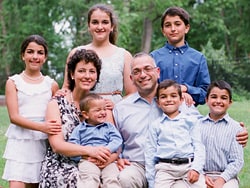
The Noorchashm family. (Source: Courtesy of Hooman Noorchashm, MD)

Diana Zuckerman, PhD, president of the National Center for Health Research, recalled the impression Dr Reed made when the think tank honored her and Dr Noorchashm at an awards luncheon in 2015.

“She spoke without apparent anger or bitterness about what happened to her, which amazed me,” Dr Zuckerman told Medscape Medical News. “I can’t tell you what an impressive, gracious, wonderful woman she (was).”

Determined to Beat the Odds

Dr Reed earned a PhD in immunology at the University of Pennsylvania and then an MD in 2005 from the institution’s Perelman School of Medicine. She followed up with a postdoctoral fellowship in transplant immunology before completing her residency training in anesthesiology and a critical care fellowship at the Hospital of the University of Pennsylvania.

In 2011, Dr Reed joined the Department of Anesthesia, Critical Care and Pain Medicine at Beth Israel Deaconess Medical Center in Boston. It was there that Dr Reed treated victims of the 2013 Boston Marathon bombing along with the surviving bomber, Dzhokhar Tsarnaev.

She married Dr Noorchashm in 2001 and had the first three of their six children by the time she finished medical school. Their togetherness extended to research. They were coauthors of five published studies on immunology — Dr Noorchashm holds a PhD in that field, too.

In October 2013, about a year after the birth of their sixth child, Dr Reed had a hysterectomy to remove bothersome, but supposedly benign, uterine fibroids. She and Dr Noorchashm say her doctors recommended a laparoscopic as opposed to an open-field operation, but did not mention the use of a power morcellator.

Shortly after the operation, Dr Reed learned that she had a uterine leiomyosarcoma and that morcellation had advanced it to stage IV. She underwent cytoreduction and hypothermic intraperiotoneal chemotherapy followed by six rounds of systemic chemotherapy. MRI and CT scans indicated she was cancer free.

She and her family moved from Needham, Massachusetts, to Yardley, Pennsylvania, and by the end of 2014, she had recovered well enough to start working part time at the Hospital of the University of Pennsylvania. However, the leiomyosarcoma still lurked in her body, requiring a surgery to remove a tumor behind her left kidney in February 2015, with radiation treatment afterwards. More metastasis and more procedures, some experimental, followed.

“We all knew the odds were against her,” said Dr Zuckerman, “but Hooman and Amy were both determined to beat the odds. They made it seem possible.”

The end almost came in April when Dr Reed went into pulseless electrical activity cardiac arrest. As Dr Noorchashm described it in an email to media outlets, an inoperable abdominal tumor of hers bled internally and enlarged, pressing against the vena cava and cutting off blood return to the heart. Dr Reed’s heart recovered after the tumor ruptured.

Dr Reed remained hospitalized until May 19, when she was discharged to go home and receive hospice care, Dr Noorchashm said in an email announcement that resembled a eulogy.

He wrote that what mattered to Dr Reed more than dying “is how we live, what we choose to think about, learn and do, the magnitude of our commitments and focus, who our friends are and what mandates of ethics and integrity guide us…in this life.

“Those are the principles by which Amy has lived a life of passion, accomplishment and love for all those she’s touched.”

In an interview with Medscape Medical News in 2015, Dr Reed described how she dealt with her children’s anxiety about her health.

“They ask you questions like, ‘Are you going to die?’ ” Dr Reed said. “I say, ‘Well, everybody dies. I feel okay today.’

“They say, ‘Is the cancer going to come back?’ I say, ‘I hope not. If it does, we’ll deal with it.’

“You don’t go down all those horrible, what-if pathways with the kids. And I don’t think we should do that as adults.

“Look at what’s in front of you today.”

NCHR honored Dr. Amy Reed with a Health Policy Hero award in 2015″ see the pictures here

Read the original article here

A Shocking Diagnosis: Breast Implants “Gave Me Cancer”

Denise Grady, The New York Times: May 14, 2017

Raylene Hollrah was 33, with a young daughter, when she learned she had breast cancer. She made a difficult decision, one she hoped would save her life: She had her breasts removed, underwent grueling chemotherapy and then had reconstructive surgery.

In 2013, six years after her first diagnosis, cancer struck again — not breast cancer, but a rare malignancy of the immune system — caused by the implants used to rebuild her chest.

“My whole world came crumbling down again,” said Ms. Hollrah, now 43, who owns an insurance agency in Hermann, Mo. “I had spent the past six years going to the oncologist every three months trying to keep cancer away, and here was something I had put in my body to try to help me feel more like a woman, and it gave me cancer. I thought, ‘I’m not going to see my kids grow up.’”

Her disease — breast implant-associated anaplastic large-cell lymphoma — is a mysterious cancer that has affected a tiny proportion of the more than 10 million women worldwide who have received implants. Nearly all the cases have been linked to implants with a textured or slightly roughened surface, rather than a smooth covering. Texturing may cause inflammation that leads to cancer. If detected early, the lymphoma is often curable.

The Food and Drug Administration first reported a link between implants and the disease in 2011, and information was added to the products’ labeling. But the added warnings are deeply embedded in a dense list of complications, and no implants have been recalled. The F.D.A. advises women only “to follow their doctor’s recommended actions for monitoring their breast implants,” a spokeswoman said in an email this month.

 Until recently, many doctors had never heard of the disease, and little was known about the women who suddenly received the shocking diagnosis of cancer brought on by implants.

An F.D.A. update in March that linked nine deaths to the implants has helped raise awareness. The agency had received 359 reports of implant-associated lymphoma from around the world, although the actual tally of cases is unknown because the F.D.A.’s monitoring system relies on voluntary reports from doctors or patients. The number is expected to rise as more doctors and pathologists recognize the connection between the implants and the disease.

Women who have had the lymphoma say that the attention is long overdue, that too few women have been informed of the risk and that those with symptoms often face delays and mistakes in diagnosis, and difficulties in receiving proper care. Some have become severely ill.

Implants have become increasingly popular. From 2000 to 2016, the number of breast augmentations in the United States rose 37 percent, and reconstructions after mastectomy rose 39 percent. Annually, nearly 400,000 women in the United States get breast implants, about 300,000 for cosmetic enlargement and about 100,000 for reconstruction after cancer, according to the American Society of Plastic Surgeons. Allergan and Mentor are the major manufacturers. Worldwide, an estimated 1.4 million women got implants in 2015.

As late as 2015, only about 30 percent of plastic surgeons were routinely discussing the cancer with patients, according to Dr. Mark W. Clemens II, a plastic surgeon and an expert on the disease at the University of Texas MD Anderson Cancer Center in Houston.

“I’d like to think that since then we’ve made progress on that,” Dr. Clemens said.

Late last year, an alliance of cancer centers, the National Comprehensive Cancer Network, issued treatment guidelines. Experts agree that the essential first step is to remove the implant and the entire capsule of scar tissue around it. Otherwise, the disease is likely to recur, and the prognosis to worsen.

Not all women have been able to get the recommended treatment. Kimra Rogers, 50, a nursing assistant in Caldwell, Idaho, learned last May that she had lymphoma, from textured implants she had for more than 10 years. But instead of removing the implants and capsules immediately, her doctor prescribed six rounds of chemotherapy and 25 rounds of radiation. A year later, she still has the implants.

“Unfortunately, my doctor didn’t know the first line of defense,” Ms. Rogers said.

She learned about the importance of having the implants removed only from other women in a Facebook group for those with the disease.

Her health insurer, Blue Cross Blue Shield of Montana, covered the chemotherapy and radiation but has refused to pay for removal of the implants, and told her that her appeal rights were “exhausted.” In a statement sent to The New York Times, a spokesman said, “Cosmetic breast implants are a contract exclusion, as are any services related to complications of the cosmetic breast implants, including implant removal and reconstruction.”

Physicians dispute that reasoning, saying the surgery is needed to treat cancer. Her lawyer, Graham Newman, from Columbia, S.C., said he was planning a lawsuit against the implant makers, and had about 20 other clients with breast-implant lymphoma from Australia, Canada, England and the United States.

Ms. Rogers has been unable to work for a year. If she has to pay to have the implants removed, it will mean taking out a $12,000 loan.

“But it’s worth my life,” she said.

Insurers generally cover implants after a mastectomy, but not for cosmetic enlargement, which costs $7,500 or more. Repeat operations for complications are also common, and usually cost more than the original surgery.

Diagnosis and Treatment

Most of the cancers have developed from two to 28 years after implant surgery, with a median of eight. A vast majority occurred with textured implants.

Most implants in the United States are smooth. But for some, including those with teardrop shapes that would look odd if they rotated, texturing is preferable, because tissue can grow into the rough surface and help anchor the implant.

Researchers estimate that in Europe and the United States, one in 30,000 women with textured implants will develop the disease. But in Australia the estimate is higher: one in 10,000 to one in 1,000. No one knows why there is such a discrepancy.

What’s inside the implant — silicone or saline — seems to make no difference: Case numbers have been similar for the two types. The reason for the implants — cosmetic breast enlargement or reconstruction after a mastectomy — makes no difference, either.

Symptoms of the lymphoma usually include painful swelling and fluid buildup around the implant. Sometimes there are lumps in the breast or armpit.

To make a diagnosis, doctors drain fluid from the breast and test it for a substance called CD30, which indicates lymphoma.

The disease is usually treatable and not often fatal. Removing the implant and the entire capsule of scar tissue around it often eliminates the lymphoma. But if the cancer has spread, women need chemotherapy and sometimes radiation.

“In the cases where we have seen bad outcomes, it was usually because they were not treated or there was a major delay in treatment, on the level of years,” Dr. Clemens said. Doctors at MD Anderson have treated 38 cases and have a laboratory dedicated to studying the disease.

About 85 percent of cases can be cured with surgery alone, he said. But he added that in the past, before doctors understood how well surgery worked, many women were given chemotherapy that they probably did not need.

Case reports on the F.D.A. website vary from sketchy to somewhat detailed and rarely include long-term follow-up. Some describe initial diagnoses that were apparently mistaken, including infection and other types of cancer. In some cases, symptoms lasted or recurred for years before the right diagnosis was made.

What exactly causes the disease is not known. One theory is that bacteria may cling to textured implants and form a coating called a biofilm that stirs up the immune system and causes persistent inflammation, which may eventually lead to lymphoma. The idea is medically plausible, because other types of lymphoma stem from certain chronic infections. Professional societies for plastic surgeons recommend special techniques to avoid contamination in the operating room when implants are inserted.

“It could also just be the immune system response to some component of the texturing,” Dr. Clemens said. The rough surface may be irritating or abrasive. Allergan implants seem to be associated with more cases than other types, possibly because they are more deeply textured and have more surface area for bacteria to stick to, he said. Allergan uses a “lost-salt” method that involves rolling an implant in salt to create texture and then washing the salt away. Other makers use a sponge to imprint texturing onto the implant surface.

Allergan is studying bacterial biofilms, and immune and inflammatory responses to breast implants, a spokesman said in an email. He said the company took the disease seriously and was working with professional societies to distribute educational materials about it.

Another possible cause is that some women have a genetic trait that somehow, in the presence of implants, predisposes them to lymphoma. Dr. Clemens said researchers were genetically sequencing 50 patients to look for mutations that might contribute to the disease.

Dr. Clemens was a paid consultant for Allergan from 2013 to 2015, but not for breast implants, and no longer consults for any company, he said.

A spokeswoman for Mentor said the company was monitoring reports about the lymphoma, and stood behind the safety of its implants.

[…]

Read the full article here.

Medical Researchers Thankful for $2 Billion NIH Funding Increase

Mara Lee, Modern Healthcare: May 1, 2017

Academic researchers and medical research advocates didn’t expect Congress to go along with the Trump plan to slash 20% of the National of Institutes of Health budget.

But Sunday’s news, that the agency would receive $2 billion in additional resources for the final five months of this fiscal year, was a delightful surprise.

“We didn’t expect a funding boost,” said Diana Zuckerman, an epidemiologist who’s director of the National Center for Health Research, a Washington think tank.

Dr. Stephen Desiderio, director of the Institute for Basic Biomedical Sciences at the Johns Hopkins University School of Medicine, said he and his colleagues are so thankful to Congress for the appropriation. “This bodes well for fiscal year 2018,” he said. “That’s just fantastic.”

More than 80% of the NIH’s funding is awarded through almost 50,000 competitive grants to more than 300,000 researchers at more than 2,500 universities, medical schools, and other research institutions in every state and around the world.

Johns Hopkins is usually first or second in NIH awards, and has more than $430 million in research projects currently funded, including Desiderio’s own lab, which studies the development of immune systems.

Of 2,300 faculty members at Johns Hopkins medical school, about 1,500 are active in medical research. And while Johns Hopkins has benefited from some major philanthropy, it’s always NIH money that is by far the dominant source of salaries, supplies and equipment.

Overall, NIH’s funding has been eroded by inflation over the last decade, and as a result, grants have been harder and harder to win. Less than 20% of applications succeed.

At the National Cancer Institute, which will get nearly $476 million in additional funding this year, success rates were down to 8%, Desiderio said.

All areas of the NIH will increase, but cancer, Alzheimer’s, brain research and precision medicine were singled out for $100 million-plus earmarks.

He expects the agreement to have immediate effects, as NIH officials are currently making decisions on grant applications submitted in October. The February submissions will also be decided this fiscal year.

Zuckerman said it will be hard to push out $2 billion in five months, and if the NIH doesn’t obligate the money, it will have to be sent back.

“If you really want to make the most of medical funding, for NIH or for anybody else, it needs to be a steady stream of funds,” she said. “The problem is, what about next year? These are not one-year grants.” […]

Read the full article here.

Right to Try? Or Right to be Exploited Before You Die?

Diana Zuckerman, PhD, National Center for Health Research, on behalf of Cancer Prevention & Treatment Fund: April 17, 2017

AlzheimersMy friend Gwen went from being a healthy woman living a happy life to being diagnosed with a fatal cancer in a very short period of time. The doctors tried one toxic chemotherapy after another. All were approved by the FDA, which means they had been proven to work for some patients. But none of them worked for Gwen, and she became a shadow of her former self, living her last months on earth in a limbo of a life, hoping one of these treatments would do some good.

The Goldwater Institute, a conservative think tank that promotes “Right to Try” legislation, has a different view of medical care for dying patients. In their fantasy world, experimental drugs that haven’t even been proven to work forany patients will save the lives of thousands of desperately ill patients, if only the U.S. government would mind their own business and get out of the way.

Unfortunately, this doesn’t make sense. If patients can’t be saved by drugs that are proven to work, what’s the chances that an unproven experimental treatment will save them?

Even more important, under current law all patients in the U.S. have the right to try experimental drugs that have at least some evidence of safety and effectiveness. So why lower the standard to include treatments with no evidence that they work at all?

Many people don’t understand how the current system works, and — understandably — want dying people to have another chance. As a result, Goldwater lobbyists have convinced more than 30 states that they should give patients the “Right to Try” experimental drugs. Those laws haven’t worked very well, however, and there is no evidence to show how many patients have benefited compared to how many have been harmed.

Now the Goldwater Institute is going a giant step further: they are trying to convince Congress to pass a federal Right to Try law that is much, much more dangerous than the state laws.

Here’s what the Goldwater Institute and their supporters are saying. Let’s set the record straight.

They say that the proposed federal law would merely give patients in all 50 states the rights that patients have in states with state Right to Try laws. NOT TRUE.

Under the state laws, companies can’t charge more for the investigational treatments than their “actual cost” to the manufacturer, because federal law prevents profits on experimental drugs. However, they are lobbying for a national Right to Try Act that specifically allows companies to determine what they will charge for their experimental drugs. That means desperate patients and their frantic loved ones can be exploited by scam artists and greedy companies selling unproven treatments.

They say that “promising new treatments” take more than a decade to be approved by FDA. NOT TRUE.

Effective treatments may take a decade to develop, but that is not the fault of the FDA.  The average drug is approved about a year after its pivotal studies are submitted to the FDA. An article in Cancer World concluded that the FDA approves drugs an average of 6 months faster than the European medical agency.

They claim that the law would greatly increase the number of patients gaining access to promising experimental drugs. They complain that in 2015, FDA only allowed 1,300 patients to have access to experimental drugs through their Expanded Access program. NOT TRUE.

The FDA is approving 99% of the applications submitted to them by doctors whose patients want to participate in the program. Only 1,300 patients gained access to experimental drugs because most doctors aren’t requesting it and the companies that are asked to make their drugs available are not always willing or able to do so. They may not have enough of the experimental drug available, or they may believe that the specific patient requesting the drug is more likely to be harmed than helped by the drug.

They even give an inaccurate example. The Goldwater Institute has stated that “most” of the 78 patients treated by an “oncologist” under the Texas Right to Try law “are doing very well.” NOT TRUE.

The doctor they are referring to, Ebrahim Delpassand, is a radiologist, not an oncologist, and he has not said “most are doing very well.” He testified before the Senate that the treatment “has helped many” of the patients, but he doesn’t say how many or to what extent the treatment helped.  He also hasn’t said how many were hurt by the treatment.  None of that information has been made public and the doctor has refused to answer questions from skeptical reporters.

They say “something is wrong” because “fewer than one-tenth of 1 percent of terminal patients can take advantage of the FDA’s compassionate use exception.” NOT TRUE.

Experimental drugs are just that: not proven to work or to be safe. Patients can die sooner and in agony from experimental drugs, especially those that have only gone through tiny, preliminary studies of a few healthy volunteers or patients (as the proposed national law would allow).

Only about 15% of the drugs that complete those types of preliminary studies are eventually proven to be safe or effective. The other 85% are either not safe, not effective, or both. That is a very important reason why most patients (and their doctors) do not seek experimental treatments even when they know they can.

Our patient protections are working. Major pharmaceutical companies are not lobbying for this legislation, but those who oppose FDA safeguards are. If you want to prevent the exploitation of desperate patients, contact your Senators and Congress and let them know.

This article originally appeared on Our Bodies, Our Blog. 

Breast Implants Linked to Rare Cancer

Diana Zuckerman, PhD, National Center for Health Research, on behalf of Cancer Prevention & Treatment Fund, in Our Bodies Ourselves:  March 24, 2017

breast implants


Last week the media discovered that breast implants can cause cancer. Rather than causing breast cancer, experts now say that breast implants can cause a type of lymphoma (cancer of the immune system) called anaplastic large cell lymphoma (ALCL).

You’ll be excused for thinking this is news. The truth is that experts have known that breast implants cause ALCL since at least 2013, and some of the foremost plastic surgeons in the country were discussing it behind closed doors since at least 2010.

The U.S. Food and Drug Administration (FDA), which is responsible for making public information about the risks of medical devices, including breast implants, first published a report on its website about ALCL and breast implants in 2011. At that time, they said there was evidence that implants might possibly cause ALCL. The FDA’s report came months after anarticle published in Allure magazine stated that plastic surgeons and their medical societies were studying the possible link between breast implants and ALCL.

Articles subsequently published in medical journals concluded that breast implants cause ALCL. But despite the growing evidence, the FDA didn’t update its website to officially report that breast implants really can cause ALCL until last week. That’s when the media realized it was a real story.

If you think women should have been told this sooner, here’s what you need to know:

In May 2016, the World Health Organization published a report that included the term breast implant associated ALCL (BIA-ALCL). A few months later, the National Comprehensive Cancer Network (NCCN) released the first worldwide oncology standard for the disease. The guidelines (you need to sign up for a free account to see them) include a guided algorithm for surgeons and oncologists to test for and diagnose the disease. The authors conclude that any abnormal accumulation of fluid or a mass that develops near the breasts months after breast implants are  implanted must be evaluated.

They also state that even if the BIA-ALCL is confined to the scar capsule that surrounds the implant and even if that capsule is totally removed through proper explant surgery, the patient must be followed for 2 years to make sure the ALCL is eliminated.

Why didn’t plastic surgeons or the FDA make that information more widely available? I’m sure there are women and their doctors who would have benefited from that information in the last few months.

In 2015, plastic surgeons who had denied any link between breast implants and cancer for more than two decades published an article in a plastic surgery journal about 173 women with ALCL that was caused by their breast implants.

However, plastic surgeons across the country focused on reassuring women that BIA-ALCL is “very rare” and the FDA echoed that mantra.  But, although rare, it seems that BIA-ALCL is not “very rare.”  In Australia, which can track medical problems from any kind of implants better than the tracking of implants in the U.S., the Australian Department of Health estimates that BIA-ALCL affects as many as one in 1,000 women with breast implants.

The estimates of plastic surgeons and the FDA are much lower in the U.S., but there is no reason to think BIA-ALCL is less likely to develop in women in the U.S. than in Australia. Given the dramatic increase in BIA-ALCL diagnoses in recent years, it is clear that BIA-ALCL was under-diagnosed and under-reported for many years.

For women with ALCL, it doesn’t matter how rare it is. The sooner it is diagnosed, the more likely it can be cured easily by removing the implants and scar capsule surrounding it. At later stages, women will need chemotherapy and are less likely to survive, according to research conducted at the MD Anderson Cancer Center that was published in 2013.

The study followed women for 5 years and found that ALCL related to breast implants sometimes requires chemotherapy, and approximately 25% of the implant patients with the more serious type of ALCL died during the 5 years following their diagnosis. You can read more about the study here.

ALCL caused by breast implants can result in swelling, which is often mistaken for an infection and treated with antibiotics. Antibiotics are ineffective against ALCL and the delay in timely and appropriate treatment for ALCL is dangerous.

A published response in the same medical journal urged physicians to respond quickly and to check patients who have swelling near their implants for ALCL. This would require cytology testing rather than testing for bacteria.

This news is especially important to women who undergo mastectomies to prevent cancer or for DCIS or very early breast cancer, either of which is equally likely to be cured with a lumpectomy instead. Women trying to beat cancer by undergoing a radical surgery they don’t need are unlikely to do so if breast implants will put them at risk of developing a different type of cancer.

The news is equally frightening to cosmetic surgery patients. Many health insurance companies refuse to cover the cost of medical tests or treatment for women with breast problems related to cosmetic breast implants. We now know this can result in undetected ALCL, which can be fatal. In addition, delays in treatment for ALCL can be extremely expensive for patients and their insurance companies; the companies would be required to pay for treatment for ALCL when it is eventually diagnosed at a later stage.

Women deserve to know the facts.  And they deserved to know them years ago.

Read the full article here

FDA Proposal Would Lower Requirements for Some Moderate-Risk Devices

Bronwyn Mixter, Bloomberg BNA: March 24, 2017

Over three-hundred class II medical devices made the list of those that might become exempt from premarket notification requirements once the FDA takes final action.

The Food and Drug Administration March 14 published a proposed list of class II devices that will be exempt from the requirements, also called 510(k)s, when the list is made final (82 Fed. Reg. 13,609). Class II devices are moderate-risk devices. A 510(k) clearance demonstrates that a device is substantially equivalent to another (or predicate) device already on the market. Clinical data typically aren’t generated for a 510(k).

The 21st Century Cures Act (Pub. L. No. 114-255), a 2016 law to speed new drugs and devices to market, required the FDA to publish the list. The FDA said the final list will decrease regulatory burdens on the industry by eliminating time and resources needed to submit 510(k) notifications. The devices include dentures, umbilical clamps, obstetrical forceps and surgical clamps. […]

Safety Concerns

The National Center for Health Research, a nonprofit that encourages new and more effective medical treatments, is concerned these devices won’t be reviewed by the FDA.

“We are very concerned about this huge list of devices that will no longer go through any kind of FDA review,” Diana Zuckerman, president of the nonprofit, told Bloomberg BNA in a March 20 email. “The FDA’s faulty justification is that the FDA already knows quite a bit about these devices, but that ignores the fact that when a new company starts making a device, or when any company makes changes to a device, the device can become substantially less safe or substantially less effective, or both.”

Zuckerman said “it is very disturbing that the FDA’s Center for Devices is so focused on relieving device companies of the burden of providing evidence of safety and effectiveness, but not at all concerned that now doctors and patients have an impossible burden of trying to figure out which devices they can rely on and which they can’t. And if we are ever going to have a value-based reimbursement system for medical care, increasingly devices will not be covered because so often there is no scientific evidence that a specific device will benefit patients.” […]


Read original article here.

FDA Agrees With WHO, Links Breast Implants To Rare Cancer. How Worried Should Women Be?

Rita Ruben, Forbes: March 22, 2017

The Food and Drug Administration has received nine reports of women dying of a rare blood cancer years after getting breast implants, according to information the agency released Tuesday.

The FDA says it now agrees with the World Health Organization that such cases are linked to the breast implants and not some unfortunate coincidence. As of Feb. 1, the FDA says, it had received a total of 359 reports of breast implant-associated anaplastic large cell lymphoma (BIA-ALCL).

The FDA reports suggest that implants with a textured surface are more likely to be associated with the cancer than smooth implants—of the 231 reports that contained information about the implant’s surface, 203 were reported to be textured implants, while 28 were reported to be smooth. The Australian Therapeutic Goods Administration (TGA) analyzed 46 confirmed cases of BIA-ALCL, including three deaths, and none of the cases occurred in women with smooth implants.

BIA-ALCL on average is diagnosed about a decade after implant surgery, according to the WHO. The first reported case of a woman with breast implants developing ALCL was published in a 1997 letter to the journal Plastic & Reconstructive Surgery. While that case was a woman with saline-filled implants, the FDA says the filling, be it saline (salt water) or silicone, doesn’t seem to make much of a difference, although no well-designed studies have yet been conducted to settle that issue.

BIA-ALCL is rare, but just how rare isn’t clear. As the FDA notes, it medical device reports can’t answer that question, because they don’t represent all cases, and the denominator—the total number of women who’ve received breast implants—isn’t known.

ALCL is more common in the breasts of women who’ve had implants than in those who don’t have implants, in whom the cancer almost never develops in the breast. A U.S. studypublished in January concluded that over their lifetime, 3.3 women out of every 100,000 with textured breast implants will develop BIA-ALCL. But the TGA estimates that the disease is more common, affecting 1 in 10,000 to 1 in 1,000 women with breast implants (that agency says it has received no reports of BIA-ALCL in women with smooth implants).

“There is no reason to think it is less likely to develop in women in the U.S., and given the dramatic increase in diagnoses in recent years, it is clear that it was under-diagnosed and under-reported for many years,” Diana Zuckerman, a health advocate who has long questioned the safety of breast implants, told me.  Zuckerman serves as president of both the National Center for Health Research and the Cancer Prevention and Treatment Fund, nonprofits based in Washington, D.C. […]

Read the full article here.

Right to Try National Law Would Exploit False Hope

Diana Zuckerman, PhD, Cancer Prevention & Treatment Fund
Published in 19 newspapers including, Chicago (IL) Tribune, Sacramento (CA) Bee, McAllen (TX) Valley Voice, Bellingham (WA) Herald, Cambridge (OH) Sunday Jeffersonian, Lawton (OK) Constitution, Mason City (IA) Sunday Globe Gazette, Willimantic (CT) Sunday Chronicle, New Bedford (MA) Standard Times, Frederick (MD) News Post, and others from March 16-20, 2017

right-to-tryIf you or a loved one were dying of a terminal illness and your doctor told you there were no proven treatments, would you take the risk of trying an experimental, unproven drug?

Many patients would say yes. But as with most medical decisions, the more you know, the more you realize the answer is not so simple.

As has been clearly shown, Congress is not very good at making complicated and nuanced decisions about medical care.

That’s reason enough to question the new federal Right to Try Act dozens of senators and representatives are pushing this spring.

The most important thing to know is that all terminally ill patients already have a right to try experimental drugs in this country.

The proposed new law, however, is much more dangerous to all patients, and not just those facing fatal illness.

Here’s why:

The current national expanded access program enables doctors to request experimental drugs for their patients. If the company that makes the treatment agrees, the patient will get the treatment for free or at cost; companies are not allowed to sell experimental drugs for a profit.

Many patients get access to experimental drugs through this existing program, and improvements are underway to further streamline the process.

In contrast, under the proposed new law, a drug company could charge desperate patients as much as they want to get access to an experimental drug.

Since insurance companies do not pay for experimental treatments, many patients would wind up with the right, but not the money, to try such regimens. Out of desperation, some would surely go into debilitating debt to try a drug that might harm rather than help them.

The current national program makes sure patients understand the risks of taking an experimental treatment and requires that the drug has been studied enough to know that the patient might possibly benefit from it.

Under the proposed new law, drugs that were only studied at a low dose on a small number of healthy volunteers could be sold to patients, and unethical doctors could receive kickbacks for persuading patients to try treatments that will not help them.

It’s easy to understand why every patient wants to have hope of a cure, and that’s the power of right-to-try laws.

So far, hype and false hope have convinced 33 states to pass right-to-try laws that provide no real advantage over the current national program. But rather than learning from the mistakes at the state level, patient activists and others are pushing Congress to pass a much more dangerous federal law.

In addition to encouraging the sale of unproven treatments at sky-high prices to desperate patients, the 2017 federal Right to Try Act would do the following:

  • Allow the sale of almost all experimental drugs, even those never tested on patients before.
  • Prevent patients and family members from suing the company if the treatment harms or even kills them.
  • Prohibit doctors and scientists from evaluating the benefit or harm of the experimental drugs.

Desperate patients are lobbying for the bill, but do they realize what they are lobbying for?

Instead of getting access to free experimental drugs that have some evidence of benefit and are being tested to help all patients, this law would allow naive and desperate patients to be exploited by greedy companies and unethical doctors.

The right-to-try movement opposes the FDA for what’s described as “interfering” with the doctor-patient relationship. They do not understand that unbiased scientific evidence is needed to help physicians and patients make informed decisions – whether to save a life or make a patient’s last months as enjoyable as possible.

Patients already have a right to try through the FDA’s humanitarian expanded access program, which gives them hope while protecting them from greedy exploitation. The proposed federal Right to Try Act would not.

Read original article here.

On the other side of the debate, Naomi Lopez Bauman of the anti-FDA Goldwater Institute wrote a misleading article about why they support a national Right to Try law. 

Let’s set the record straight on at least a few of her misstatements::

  • She claims that companies are prohibited by law from charging more for the investigational treatments than their “actual cost.”  That is true of current law.  However, the national Right to Try Acts that are being considered in Congress specifically allow companies to determine what they will charge for their experimental drugs.
  • She states that in 2015, FDA only allowed 1,300 patients to have access to experimental drugs through their Expanded Access program.  That is true but very misleading, because the FDA is approving 99% of the applications to participate in the program.  The reason the number is low is that when doctors request access for their patients, the companies that are being asked to make their drugs available are not always willing or able to do so.  In some cases, they don’t have enough of the experimental drug available.  In other cases, they believe that the specific patient requesting the drug could be harmed and would not be helped by taking the drug.
  • She states and implies that the national law would not change FDA safeguards and would do no more than make the current state laws national.  That is not true.  On the contrary, the national law would eliminate the role of the FDA from these decisions and the protections that current law provide to prevent patients from being exploited by greedy companies or doctors.
  • She states that “promising new treatments” take more than a decade to be approved by FDA.  We don’t know where that inaccurate statistic comes from, but we do know that the average drug is approved about a year after it is submitted to the FDA, and an article in Cancer World concluded that the FDA approves drugs an average of 6 months faster than the European medical agency
  • She expresses concern that “FDA would retaliate” against those utilizing Right To Try laws.  There is zero evidence to back up that statement.  That is just anti-FDA rhetoric.
  • She states that “most” of the 78 patients treated by an “oncologist” under the Texas Right to Try law “are doing very well,” according to his testimony before a U.S. Senate committee.  If you watch the video of his statement online, you can see the doctor who testified (Ebrahim Delpassand, who is a radiologist, not an oncologist) never said “most are doing very well.” He said that the treatment “has helped many” of the patients, but he doesn’t say how many or to what extent the treatment helped, nor does he say how many were hurt by the treatment.
  • She says something is wrong because “fewer than one-tenth of 1 percent of terminal patients can take advantage of the FDA’s compassionate use exception.”  But the truth is that experimental drugs are just that: experimental and not proven to work or be safe.  Patients can die sooner and in agony from experimental drugs, especially those that have only gone through tiny, preliminary studies of a few healthy volunteers or patients (as the proposed national law would allow).  She neglects to mention that only about 15% of the drugs that complete those preliminary trials are eventually proven to be safe or effective.  The other 85% are either not safe, not effective, or both. That is a very important reason why most patients (and their doctors) do not seek experimental treatments even when they know they can.