All posts by CPTFadmin

Ovarian Cancer: What Are the Treatment Options?

By Lea Simms and Laura Gottschalk, PhD, Cancer Prevention & Treatment Fund

Ovarian cancer is the 5th leading cause of cancer death in women in the U.S. Approximately 21,000 women will receive a new diagnosis of ovarian cancer in 2015. [1]

Ovarian cancer begins in or near the ovaries, which is part of the female reproductive system. There are two ovaries, one on either side of the uterus, connected to the uterus by the fallopian tubes. Ovarian cancer is often undetected until it has spread to the uterus, pelvis, and abdomen.[2]

Like all cancers, treatment is much more successful in the early stages when the cancer has not yet spread.[3] Women over the age of 55, women who have a family history of breast or ovarian cancer, and women who have had trouble getting pregnant or have never been pregnant are all at increased risk for ovarian cancer.[4]

To find out more about who is at risk and what to do about it, see our article Ovarian Cancer: who should be concerned and what can they do?

Traditionally, there have been three different types of ovarian cancer described:[5]

  • Epithelial
  • Germ cell
  • Stromal

Epithelial tumors are the most common type: 85%-90% of all ovarian cancers are epithelial.[2]These tumors start from the layer of cells that cover the outside of the ovaries or line the inside of the fallopian tubes, and can then spread to other parts of the body. There are four different types of epithelial ovarian cancer: serous (the most common), mucinous, endometroid, and clear cell. These different types of epithelial cancer describe how the tissue looks under the microscope and also the behavior of the cancer.

Germ cell tumors are a rarer form of ovarian cancer, in which the tumor starts growing in the germ cells that produce the eggs. Germ cell tumors make up about 2% of ovarian cancer cases and have a very high survival rate of 90%.[2] This type of cancer is most commonly seen in women under 25 years old (ovarian cancer research fund). There are several types of germ cell tumors: teratomas, dysgerminomas, endodermal sinus tumors, and choriocarcinomas.

There are also stromal tumors which begin in the tissue cells that hold the ovary together. Stromal tumors are diagnosed in about 1% of women with ovarian cancer and have a high survival rate of 75%.[2]

Like most cancers, ovarian cancer is probably not a single disease, but is made up of several different types of cancer that start in different places in or near the ovaries. Each type of cancer has its own unique genetic make-up, place where it begins to grow, and way of spreading. For example, the most common form of ovarian cancer, high-grade serous carcinoma, is now thought to start in the fallopian tube instead of the ovary [6]. New treatments for ovarian cancer are in the early stages, but the goal is to develop treatment options for these specific types of ovarian cancer.

Benign ovarian tumors are not cancerous and can be treated by removal of all or a part of an ovary. Tumors that are cancerous can metastasize (spread) and can be fatal. The stage of the tumor is used to describe how much it has spread ranging from stage I (only within the ovary or fallopian tube and has not yet spread) to stage IV (has spread to outside organs like the liver or lungs). The grade classifies the tumor on how much it looks like normal tissue: 1 is the most like normal tissue and 3 is the least like normal tissue. These classifications are used to determine what treatment is recommended.[1]

Treatments

If you were diagnosed with ovarian cancer, your medical team will recommend one or more treatment options. The main treatments for ovarian cancer are:

The most common recommendation for all stages of ovarian cancer is surgery followed by chemotherapy.[1]

Surgery

Surgery for epithelial ovarian cancer has two main goals: to stage and debulk (remove) the tumor. Staging refers to the doctors looking to see how far the cancer has spread and then taking tissue samples to test in a lab. Usually this means the doctor will remove the ovaries, uterus, cervix, fallopian tubes and omentum (fatty tissue around these organs), and then remove tissue and fluid samples from the abdominal cavity and pelvis.[1] The surgeon will then remove as much of the tumor as possible, which is called debulking. If the disease seems to be limited to one or both ovaries, the surgeon will biopsy the pelvis and abdomen to find out if the cancer has spread. Sometimes debulking is not possible because the patient is not healthy enough or the tumor may be attached to other organs. In these cases, chemotherapy will be used to treat the cancer that can’t be surgically removed.[1]

Research has shown that if the cancer is caught early enough, a woman can be safely treated without removing her uterus (read more about it http://dev.stopcancerfund.org/p-ovarian-cancer/patients-under-50-with-early-stage-ovarian-cancer-safe-treatment-with-no-loss-of-fertility/).  Women with later stage ovarian cancer usually must undergo surgery that removes the uterus and thus causes infertility.[7]

For germ cell tumors and stromal tumors the main goal of surgery is to remove the cancer. Germ cell tumors are usually treated with a hysterectomy (removal of the uterus) and bilateral salpingo-oophorectomy (removal of ovaries and fallopian tubes). If the cancer is found in one ovary, then only one of the ovaries and a fallopian tube will be removed to preserve the woman’s fertility. Stromal tumors are treated by removing the cancerous ovary, unless the cancer has spread to other areas, in which case a hysterectomy or bilateral salpingo-oophorectomy will be performed.[1]

Chemotherapy

After surgery, patients with epithelial ovarian cancer are treated with chemotherapy. Typical chemotherapy is a combination of 2 or more drugs, every 3-4 weeks, with 3-6 cycles. A cycle is a schedule of regular doses of drugs followed by a rest period.[2]

The chemo drugs are given by mouth, injected into a vein (Intravenous chemotherapy also known as IV), or injected through a catheter directly into the abdomine (called intraperitoneal chemotherapy or IP). IP therapy works by bringing the toxic drugs in a concentrated form to exactly where the cancer is, while IV therapy aims to kill cancer cells wherever they might be located.[5] In 2006, researchers reported that on average, patients receiving IP chemotherapy lived 65 months, compared to 50 months for patients receiving IV chemo only [8]. That is why the National Cancer Institute currently recommends IP administration of chemo to treat ovarian cancer. However, this recommendation may soon change. In 2016, a study of 1,560 ovarian cancer patients surprisingly found no difference in survival for women receiving IP chemo compared to other traditional methods [9]. This is important because IP therapy tends to  cause worse side effects.[5]

Although IP and IP/IV administration has been shown to have benefits and has been recommended by the National Cancer Institute, the combination tends to have worse side effects.[5] That is probably why most eligible patients do not receive a combination of IP and IV chemotherapy.[7]

There are many different types of chemotherapy drugs and research has shown that giving a combination of drugs in the initial treatment of ovarian cancer is more effective.[10] Most doctors prescribe a platinum compound such as cisplatin or carboplatin and a taxane compound such as paclitaxel or docetaxel.[1] A very large study in 2006 compared 198 clinical trials of 48,440 women being treated for ovarian cancer and found that the regimen that best prolonged survival is a platinum and taxane combination with intraperitoneal administration.[8]

Hormone Therapy

Hormones or hormone-blocking drugs can stop the growth of tumors. Tamoxifen is an anti-estrogen drug that is common in the treatment of breast cancer and some ovarian stromal tumors.[1] There have been no large studies of Tamoxifen for ovarian cancer, however.  It is generally used as a second-line therapy for recurrent stromal tumors or tumors that do not respond to standard chemotherapy. Since side effects are generally mild, it is considered a less toxic choice for women who cannot tolerate the side effects of standard chemotherapy. However, tamoxifen can increase the risk of serious blood clots in the legs, so patients should be aware of this risk before considering it.[1]

Targeted Therapy

Targeted therapy uses genetically engineered drugs such as bevacizumab (Avastin) and olaparib (Lynparza) to attack the cancer cells. In several studies, Avastin has been shown to have some effectiveness in delaying the progression of ovarian cancer but it is not clear whether it helps patients live longer, and it has substantial side effects that can harm quality of life.[11][12]

Olaparib (Lynparza) is approved by the FDA for the treatment of ovarian cancer in women with BRCA1 or BRCA2 mutations as a last resort for women who have had three or more prior unsuccessful treatments of chemotherapy.[13]  It has not been proven safe or effective for other ovarian cancer patients, but two studies are underway to see if the drug can be a useful treatment for women with BRCA mutations who have previously tried at least one platinum-based chemotherapy treatment.[14][15]

Radiation Therapy

Radiation therapy is not common for ovarian cancer.  Radiation therapy uses high energy x-rays or particles to kill the cancer cells.  It is sometimes used for recurrent cases when the cancer is confined to a small area.[2]

Which types of treatment you and your doctor decide to go with depends on the type of ovarian cancer you have and how it has advanced.

Clinical Trials

Clinical trials are used to help find new treatments for cancer.[2] If more effective treatments are found through clinical trials, they may become the standard treatment. If the new treatment is found to be less effective or have worse side effects, it probably will not be approved by the FDA and will not be available in the future.  Patients can enter clinical trials at different stages of their cancer treatment, but some trials may only be open to patients who have not yet started treatment. Remember: the treatments tested in clinical trials are not proven to be effective and the side effects are often unknown.  The new treatment may be worse than standard treatments, better, or identical in terms of effectiveness or side effects.  For those reasons, clinical trials are usually chosen by patients who have no other good options for treatment.  See here for the National Cancer Institute’s list of clinical trials: http://www.cancer.gov/about-cancer/treatment/clinical-trials.

The Latest Research

New research suggests that the most common route of treatment (first surgery, then chemo) might not be the most effective route of treatment. There is now evidence that having chemotherapy first, then followed by surgery, may be more effective for women with ovarian cancer, especially with epithelial ovarian tumors.[16]  Research has shown that chemotherapy prior to surgery improved the debulking of the tumor[17][18] and that patients also had fewer surgical complications and better post-operative recovery.[19]

The latest research, by Dr. Sean Kehoe and his team of doctors, took place in 87 hospitals in the UK and New Zealand.[18] The study randomly assigned 552 women with stage III or IV ovarian cancer to either the “Primary Surgery Group” (surgery followed by 6 cycles of chemotherapy) or to the “Primary Chemotherapy Group” (3 cycles of chemotherapy, then surgery followed by 3 more cycles of chemotherapy). The study measured overall survival rate as well as progression free survival (delaying the spread of cancer) and quality of life. At the conclusion of the study, 231 patients in the primary surgery group had died as had 220 in the primary chemotherapy group. Although the number of patients that died was similar, the Primary Chemotherapy group lived 1.5 months longer on average and had fewer adverse side effects and fewer toxic effects than the Primary Surgery group. The median survival rate (how long they lived after treatment) for the Primary Surgery group was 22.6 months compared to 24.1 months for the Primary Chemotherapy group. These results are also consistent with observational studies that showed similar results in survival rates.[20]

Although the differences in survival rate and duration of survival were similar, the chemotherapy group did have marginally better outcomes. This new finding may change the way doctors treat ovarian cancer and gives women another option rather than immediate surgery.

All articles are reviewed and approved by Dr. Diana Zuckerman and other senior staff.

References

  1. How is ovarian cancer treated? (2015, March 12). Retrieved June 8, 2015, from http://www.cancer.org/cancer/ovariancancer/detailedguide/ovarian-cancer-treating-general-info
  2. Ovarian, Fallopian Tube, and Primary Peritoneal Cancer. (n.d.). Retrieved June 8, 2015, from http://www.cancer.gov/types/ovarian
  3. Ovarian cancer. (n.d.). Retrieved June 16, 2015, from http://www.mayoclinic.org/diseases-conditions/ovarian-cancer/basics/definition/con-20028096
  4. Waghray, P. (n.d.). Ovarian cancer: Who should be concerned and what can they do? Retrieved August 12, 2015, from http://dev.stopcancerfund.org/uncategorized/ovarian-cancer-who-should-be-concerned-and-what-can-they-do/
  5. Types of Ovarian Cancer. (n.d.). Retrieved June 16, 2015, from http://www.ocrf.org/about-ovarian-cancer/what-is-ovarian-cancer/types-of-ovarian-cancer
  6. Perets  R, Drapkin  R.  It’s totally tubular… riding the new wave of ovarian cancer research. Cancer Res. 2016;76(1):10-17.
  7. Bromberg, J. (n.d.). Patients under 50 with early-stage ovarian cancer: Safe treatment with no loss of fertility. Retrieved August 12, 2015, from http://dev.stopcancerfund.org/p-ovarian-cancer/patients-under-50-with-early-stage-ovarian-cancer-safe-treatment-with-no-loss-of-fertility/
  8. Armstrong DK, Bundy B, Wenzel L, et al. Intraperitoneal Cisplatin and Paclitaxel in Ovarian Cancer. N Engl J Med. 2006; 354:34-43.
  9. Walker JL, Brady, MF, Wenzel L. A phase III trial of bevacizumab with IV versus IP chemotherapy for ovarian, fallopian tube, and peritoneal carcinoma: An NRG Oncology Study. Annual Meeting on Women’s Cancer. March 19-22, 2016. San Diego, CA. Presentation.
  10. Kyrgiou, M, G Salanti, N Pavlidis, E Paraskevaidis, and JPA Ioannidis. n.d. “Survival benefits with diverse chemotherapy regimens for ovarian cancer: Meta-analysis of multiple treatments.” Jnci-Journal Of The National Cancer Institute 98, no. 22: 1655-1663. Science Citation Index, EBSCOhost (accessed August 12, 2015).
  11. Garcia A, Singh H. Bevacizumab and ovarian cancer. Ther Adv Med Oncol. 2013; 5(2): 133–141. http://www.ncbi.nlm.nih.gov/pmc/articles/PMC3556875/
  12. Li, J., Zhou, L., Chen, X., & Ba, Y. (2015). Addition of bevacizumab to chemotherapy in patients with ovarian cancer: a systematic review and meta-analysis of randomized trials. Clinical & Translational Oncology: Official Publication of The Federation of Spanish Oncology Societies And of The National Cancer Institute of Mexico.
  13. Lynparza (Olaparib) label. (2014, December 1). Retrieved August 13, 2015, from http://www.accessdata.fda.gov/drugsatfda_docs/label/2014/206162
  14. Olaparib Maintenance Monotherapy in Patients With BRCA Mutated Ovarian Cancer Following First Line Platinum Based Chemotherapy. (SOLO-1). (2013, April 30). Retrieved August 13, 2015, from https://www.clinicaltrials.gov/ct2/show/NCT01844986
  15. Olaparib Treatment in BRCA Mutated Ovarian Cancer Patients After Complete or Partial Response to Platinum Chemotherapy. (2013, June 7). Retrieved August 13, 2015.
  16. Bristow RE, Chi DS. Platinum-based neoadjuvant chemotherapy and interval surgical cytoreduction for advanced ovarian cancer: a meta-analysis. Gynecol Oncol 2006; 103: 1070–76.
  17. Vergote I, De Wever I, Tjalma W, Van Gramberen M, Decloedt J, van Dam P. Neoadjuvant chemotherapy or primary debulking surgery in advanced ovarian carcinoma: a retrospective analysis of 285 patients. Gynecol Oncol 1998; 71: 431–36.
  18. Kang S, Nam BH. Does neoadjuvant chemotherapy increase optimal cytoreduction rate in advanced ovarian cancer? Meta-analysis of 21 studies. Ann Surg Oncol 2009; 16: 2315–20.
  19. Hou JY, Kelly MG, Yu H, et al. Neoadjuvant chemotherapy lessens surgical morbidity in advanced ovarian cancer and leads to improved survival in stage IV disease. GynecolOncol 2007; 105: 211–17.
  20. Kehoe, S., Hook, J., Nankivell, M., Jayson, G., Kitchener, H., Lopes, T., . . . Swart, A. (n.d.). Primary chemotherapy versus primary surgery for newly diagnosed advanced ovarian cancer (CHORUS): An open-label, randomised, controlled, non-inferiority trial. The Lancet.

The Cancer Prevention and Treatment Fund (CFC #11967) at CFC Events

Federal employees can learn more about the Cancer
Prevention and Treatment Fund (CFC #11967) when we’re at CFC events:
IMG_6479

October 25, 2016
1322 Patterson Ave SE
Washington Navy Yard
10am – 12pm

October 19, 2016
Office of Equal Employment Opportunity Commission
131 M Street NE
1pm – 3pm

September 13, 2016
Office of the Assistant Secretary of the Army for Installations, Energy and Environment (OASA IE&E) and the Office of the Assistant Chief of Staff for Installation Management (OACSIM)
The Pentagon
11am – 1pm

Missed us? You can download our handouts!

About Us

Our Latest Newsletter

Research Update on Cancer and Military Service

Is it safe for children and athletes of any age to play on rubber instead of grass?


December 9, 2015
Department of Defense – Washington Headquarters Service
10am – 2pm
The Pentagon, Arlington, VA

December 1, 2015
US Agency for International Development
Noon – 2pm
Washington, DC 24558

CFC 2015November 23, 2015
US Navy
11am-2pm
Falls Church, VA

November 19, 2015
Securities and Exchange Commission
10am-4pm
Washington DC

November 18, 2015
Department of Labor
10am – 1pm
Washington, DC

Nov. 10, 2015
Department of Defense – National Guard Bureau
9am-1pm
Arlington, VA

Nov. 6, 2015
Department of Defense – Air Force
1pm-4pm
Joint Base Andrews, MD

November 5, 2015
10:30am-12:30pm
US General Services Administration
Washington, DC

October 29, 2015
Department of Education
9-11am
Washington, DC

October 23, 2015
Department of Defense – Army
1-2pm
Pentagon, Arlington VA

Oct. 15, 2015
Department of Defense – Navy
1pm – 3pm
Falls Church, VA

Oct. 13, 2015
Department of Defense – Education Activity
10am-Noon
Arlington, VA

Oct. 8, 2015
US Patent Office
1:30-3pm
Alexandria, VA

Sept. 23, 2015
National Institute of Standards and Technology
9am-1pm
Gaithersburg, MD


August 24, 2015 Letter to the FDA about ads for “natural” tobacco

As a member of the Campaign for Tobacco-Free Kids, the Cancer Prevention and Treatment Fund recently signed on to a letter (below) to the FDA regarding advertising of “natural” tobacco. See some of the misleading ads by clicking here and here.

Three days after receiving this letter, the FDA followed our suggestion and told the tobacco companies to stop these ads.
tfk signons

August 24, 2015

Mr. Mitchell Zeller
Director, Center for Tobacco Products
U.S. Food and Drug Administration
10903 New Hampshire Ave.
Silver Spring, MD 20993


Dear Mr. Zeller:

We write to urge the Food and Drug Administration (FDA) to commence an appropriate enforcement action against Reynolds American, Inc. (Reynolds) and its subsidiary Santa Fe Natural Tobacco Co. (Santa Fe) for the marketing of Natural American Spirit brand cigarettes in violation of the modified risk provisions of the Family Smoking Prevention and Tobacco Control Act (TCA).

Section 911 of the Food, Drug & Cosmetic Act, as amended by the TCA,[1] prohibits the introduction of modified risk tobacco products – products sold “for use to reduce harm or the risk of tobacco-related disease” – without an FDA marketing order. That section defines “modified risk tobacco product” to mean tobacco products for which the label or advertising explicitly or implicitly represents that the product presents a lower risk of disease or is less harmful than another tobacco product, contains a reduced level of a substance, or does not contain or is free of a substance. Premarket FDA review of modified risk products is critical for the agency to determine whether the product, as used by consumers, will significantly reduce the risk of disease to individual users and to assess whether its marketing, with the claim of reduced risk, will benefit the health of the population as a whole. The potential for irreparable damage to public health from the marketing of tobacco products with modified risk claims is well illustrated by the industry’s years of deceptive advertising of “light” and “low-tar” cigarettes to persuade health-conscious consumers to continue smoking, when in fact such cigarettes, as actually used by smokers, were no less hazardous than other cigarettes.

Recently, Reynolds’ Santa Fe subsidiary launched a new national magazine advertising campaign for its Natural American Spirit brand which continues and intensifies past advertising campaigns using words and phrases such as “100% additive-free,” “natural tobacco” and “organic tobacco” that imply the brand is less hazardous than other cigarettes. The new campaign includes full-page ads (some consisting of the entire back cover) in magazines such as Sports Illustrated, Glamour, InStyle, Rolling Stone, Car and Driver, Vanity Fair and US Weekly. As demonstrated by the enclosed collection of Natural American Spirit brand ads, covering the period 2000-2015, the company long has used the terms “natural tobacco,” “organic tobacco” and “100% additive-free” to describe its cigarettes. However the new campaign features these descriptors much more prominently, and they easily overwhelm the small disclaimers at the bottom of the ads. There is no question that these terms imply that this brand is healthier than other brands and are understood by the public to mean a less hazardous cigarette.[2]  Moreover, the “100% additive-free” phrase is an explicit representation that Natural American Spirit cigarettes are free of a particular substance. Therefore, because these products are being marketed with such representations, they are modified risk tobacco products, as defined in Section 911, marketed without a premarket order from FDA in contravention of the TCA.

This conclusion is not altered by the appearance of disclaimers on the products’ packaging and advertising. As you are aware, the disclaimer “No additives in our tobacco does NOT mean a safer cigarette” is required by a Federal Trade Commission (FTC) consent order entered in 2000 to resolve FTC charges that the use of “no additives” language in Natural American Spirit ads was deceptive in implying, without a reasonable basis, that the cigarettes are safer. A second disclaimer, “Organic tobacco does NOT mean a safer cigarette,” is required by an agreement entered into in 2010 with Attorneys General from 33 states and the District of Columbia to resolve charges that the use of the words “organic” or “100% organic” violated the Master Settlement Agreement by deceptively indicating that Natural American Spirit cigarettes and roll-your-own tobacco are safer than other tobacco products. As the ads enclosed with this letter make clear, Santa Fe’s use of the terms “natural tobacco,” “100% additive-free,” and “organic tobacco,” has become increasingly prominent in its advertising and now overwhelm, and render completely ineffective, the inconspicuous disclaimers on the company’s ads. The reduced risk message is further conveyed by the use of the word “natural” in the brand name “Natural American Spirit.” Thus, despite the existing disclaimers, the current ads for Natural American Spirit cigarettes convey a dominant and clear message to consumers of reduced risk and reduced exposure to harmful substances.

The misleading effect of claims that some cigarettes are “additive-free” or contain “organic tobacco” has already been recognized in a watershed federal appellate decision. When the major tobacco product manufacturers sued to have Section 911 declared unconstitutional as an infringement on freedom of speech, they argued that such claims were not misleading but simply informed consumers of factual information about their cigarettes. The U.S. Court of Appeals for the Sixth Circuit explicitly rejected plaintiffs’ claims that “marketing of tobacco products as ‘additive-free’” was designed “to appeal to naturalists and smokers who prefer organic products, even when such preferences are not linked to perceptions of health benefit.” Discount Tobacco City and Lottery, Inc. v. U.S., 674 F.3d 509, 536 (6th Cir. 2012). The Court stated:

Plaintiffs have presented no evidence to suggest that “consumers who prefer organic products for environmental or other reasons . . . [but do not] perceived [them] . . . to convey a health benefit,” (id.), actually exist. On the contrary, we may safely presume that naturalists and those who subscribe to organic products do not engage in unmotivated or arbitrary behavior – common sense dictates the conclusion that they prefer such products precisely because they believe that natural and organic products confer health advantages over conventional products. See Centers for Disease Control and Prevention (“CDC”), Low-Yield Cigarettes and Cigarette-Like Products, 1 (2009) (finding that “[m]any smokers consider smoking . . . additive-free cigarettes to be safer than smoking regular cigarettes”). Consequently, Plaintiffs’ attempt to de-link hypothetical consumers’ preferences for “organic” and “additive-free products” from general health concerns is unsustainable.

Id.

It also is worth noting that the Natural American Spirit is experiencing significant brand growth. From 2009 to 2014, sales of Natural American Spirit cigarettes increased by 86%, while sales of all cigarettes nationally declined by 17%.[3] Reynolds CEO Susan Cameron, in a recent earnings call with investors, industry analysts and the media, stated that Santa Fe’s performance “continues to exceed even our own high expectations,” describing the Natural American Spirit brand as “the driving force” behind Santa Fe’s success. According to Cameron, the brand had volume growth of over 25% in the second quarter of 2015, is gaining market share in every state, and has achieved “a loyal and growing franchise and the brand strength is based on its distinctive additive free style, including those made with organic tobacco.” There is every reason to believe that Natural American Spirit is growing in popularity because consumers are being misled to believe that the brand offers a healthier alternative to other cigarettes.

FDA should determine that because Natural American Spirit cigarettes are being marketed with reduced risk claims as modified risk tobacco products, as defined in Section 911, they are illegally on the market without a premarket order. It should take enforcement action against Reynolds and Santa Fe to prohibit the continued sale, without an FDA order, of products advertised or promoted with the use of the terms “natural,” “additive-free” or “organic,” or any other term or phrase conveying a message of reduced risk or reduced exposure to harmful substances, including the use of any of these terms in the brand name itself.


Respectfully submitted,

Action on Smoking & Health
Altarum Institute Center for Prevention
American Academy of Family Physicians
American Academy of Otolaryngology—Head and Neck Surgery
American Association for Respiratory Care
American Cancer Society Cancer Action Network
American College of Occupational and Environmental Medicine
American Heart Association
American Legacy Foundation
American Lung Association
American Psychological Association
American Public Health Association
American School Health Association
American Thoracic Society
Campaign for Tobacco-Free Kids
Cancer Prevention and Treatment Fund
ClearWay Minnesota
Community Anti-Drug Coalitions of America
Global Advisors on Smokefree Policy
International Association for the Study of Lung Cancer
Lung Cancer Alliance
National Association of County & City Health Officials
Oncology Nursing Society
Prevention Institute
Society for Public Health Education
Society for Research on Nicotine and Tobacco
Tobacco Control Legal Consortium
Trust for America’s Health

Enclosure: Natural American Spirit Advertisements

[1] 21 U.S.C. §387k.

[2] A significant body of research establishes the association of these terms with reduced risk. See e.g. Agaku, Israel T., et al., “Cigarette design and marketing features are associated with increased smoking susceptibility and perception of reduced harm among smokers in 27 EU countries,” Tobacco Control 0:1-8, 2014 (descriptors such as “natural” or “organic” in cigarettes associated with perceptions of reduced harm among specific demographic groups); Czoli, D.D. & Hammond D., “Cigarette Packaging: Youth Perceptions of ‘Natural’ Cigarettes, Filter References and Contraband Tobacco,” Journal of Adolescent Health 54:33-39, 2014 (among Canadian youth, organic and additive-free tobacco viewed as significantly more appealing and less harmful); McDaniel, P. and Malone R., “’I always thought they were all pure tobacco”: American smokers’ perceptions of ‘natural’ cigarettes and tobacco industry advertising strategies,” Tobacco Control 16:e7, 2007 (review of tobacco industry documents shows American tobacco companies have understood, for decades, that “natural” implies unwarranted health claims); Cummings, K.M., et al., “Are smokers adequately informed about the health risks of smoking and medicinal nicotine?” Nicotine & Tobacco Research 6(3): S333-340, 2004 (60% of adult smokers surveyed believed that removal of additives made cigarettes less dangerous to the smoker); Arnett, J.J., “Winston’s ‘No Additives’ Campaign: “Straight Up”?’ ‘No Bull’?, Public Health Reports 114: 522-527, 1999 (study of Winston’s use of “No Additives” in advertising shows two-thirds of adolescents, and 27 percent of adults, interpret “No Additives” as an implicit health claim); Pearson, J.L., et al, “Quick, dirty, and cheap: crowdsourcing harm perceptions surrounding American Spirit Cigarette pack descriptors.” 2013 Society for Research on Nicotine and Tobacco Annual Meeting, Boston, MA (in a large sample of U.S. adults, American Spirit packs with the descriptors “100% additive free” and “made with organic tobacco” were associated with reduced harm perceptions compared to a Marlboro Red pack and to the same American Spirit packs without the descriptors).

[3] Reynolds American, Inc., Filings with the U.S. Securities and Exchange Commission; U.S. Alcohol and Tobacco Tax and Trade Bureau, Tobacco Statistics, http://www.ttb.gov/tobacco/tobacco-stats.shtml

Statement of Dr Diana Zuckerman, NCHR President: Regarding the House of Representatives Passage of the 21st Century Cures Act, July 10, 2015

Dr. Diana Zuckerman, PhD
July 20, 2015

We are greatly disappointed by the passage of the 21st Century Cures Act by the House of Representatives.  We share Congress’ desire to increase funding for NIH, but there are dangerous provisions in this bill that undermine scientific evidence used to approve medical products.  However, this was a very technical 350+ page bill, and many Members of Congress did not have the time to fully evaluate the public health implications of the scientific wording.

Cancer patients deserve better!  As often happens, millions of dollars spent on pharmaceutical and device company lobbying were more effective than the efforts of health experts to explain their concerns about patient safety. When campaign contributions and lobbying overwhelmingly support industry wish lists and mislead many patient advocates, as happened here, industry will win. If this bill becomes law, rat and test tube studies will be used to approve medications instead of studies of patients’ health and survival, and cancer patients will be harmed as a result.

This bill promises to speed up drug approvals so much that it’s making people uncomfortable

By Carolyn Johnson, The Washington Post
July 8, 2015

The bill slated to land on the House floor on Thursday seems unassailable on its face – the 21st Century Cures legislation promises to modernize medicine and speed the development of lifesaving treatments.

But a vocal chorus of physicians and pharmaceutical industry watchdogs warn that the bill is full of stealth provisions that could actually put sick people in harm’s way, by speeding the development of treatments that are neither safe nor effective.

It’s not exactly easy to oppose a widely-supported bipartisan bill that is often referred to as just “Cures.” But opponents say the proposed law is full of flaws, starting with its name and its key premise: that bottlenecks in the regulatory process are a big reason we haven’t cured cancer, Alzheimer’s, and a panoply of rare diseases.

To drug companies and patient advocates, expedited access to drugs and devices might seem like a huge boon. But critics are worried that the law will relax America’s standards for evaluating new drugs and devices, which are approved based on careful review of evidence — including rigorously designed clinical trials. The bill offers up a slew of new ways to evaluate drugs: for example, allowing antibiotics to be approved based on what would today be considered preliminary evidence — animal and test tube studies and very small trials in people. New medical devices could be approved based on “case histories” — potentially of just a handful of patients.

“The irony is calling this 21st Century Cures, when they’re talking about standards that were left behind in the 20th century, because they were found to not be good,” said Diana Zuckerman, president of the National Center for Health Research, a nonprofit, non-partisan think tank that does not accept money from drug or medical device companies.

Here are a few of the provisions that have sparked debate:

-The bill would allow antibiotics to be approved based on laboratory and animal tests and small, early clinical trials.

-The bill allows companies to seek expedited drug approval based on so-called “surrogate endpoints” — early indicators that a drug is working, such as whether a tumor has stopped growing in cancer.

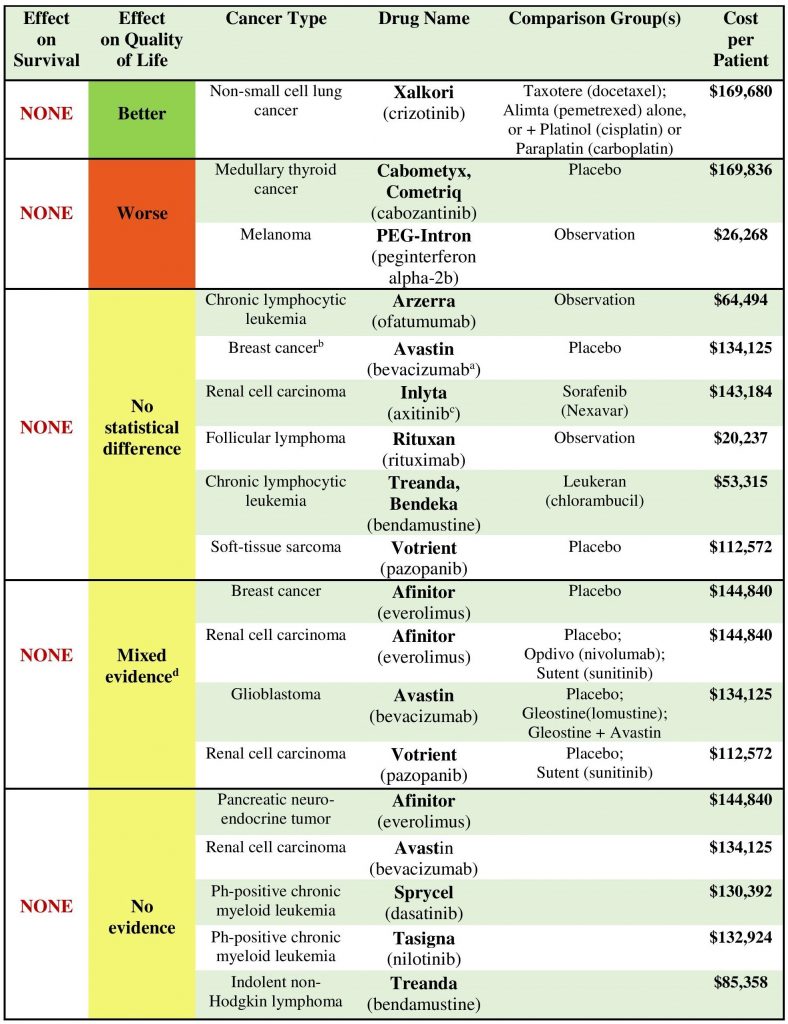
A study published last month in the journal JAMA Internal Medicine found that efforts to expedite cancer drug approval by using such criteria has resulted in the approval of many cancer drugs that do not extend life, but do have side effects.

-The bill also threatens disclosure requirements that are intended to limit pharmaceutical companies’ influence on physicians. The bill would allow physicians to receive speaking fees and gifts from companies without disclosing them, as long as they were for medical education.

Read full story here.

NCHR Comment on the USPSTF’s Draft Recommendations for Cervical Cancer Screening

2015

The National Center for Health Research is dedicated to improving the health and safety of adults and children by scrutinizing medical and scientific research. Based on our detailed analysis of currently available data, the Center strongly supports the existing USPSTF guidelines on cervical cancer screening which recommend Pap smears every 3 years starting at age 21, with the option of replacing that regimen starting at age 30 with a combination of a Pap smear and HPV test.

In response to the key systematic question regarding “the effectiveness of HPV testing, with or without cytology, as a primary screening strategy for reducing cancer mortality and incidence,” we strongly believe that this critical question must be divided into four questions: Is HPV testing effective with or without cytology (Pap smear) for women below 30 and for women above 30? Based on current data, the answers to those four questions seem to differ dramatically and more research will help answer those questions for different racial and ethnic groups.

Based on the research to date, HPV test without cytology should not be used as a screening tool. The HPV test by itself isn’t useful for women under 30 because many young women have HPV that will disappear without any treatment. Being objectively correct about whether HPV is present does not accurately predict whether infection with HPV will lead to cervical cancer.  On the contrary, the vast majority of women with HPV will never develop cervical cancer.   The only question is the extent to which HPV screening is useful for women over 30 and whether that is related to marital status or other measures associated with the number of sexual partners.

Positive results of an HPV test performed instead of a Pap smear, especially for women under 30, will add anxiety and lead to additional testing, as physicians follow a positive result on the HPV test with a colposcopy, an expensive and invasive procedure that could result in much lower compliance. Undergoing an HPV test without Pap smear is going to scare many women who are not at high or even moderate risk of cervical cancer.

The HPV test can only detect the presence of the virus, which in many cases will not result in cervical cancer; it cannot identify abnormal cells and it also cannot detect cancers of the cervix  that are not caused by HPV.

Although the FDA approved the use of the HPV test without cytology in 2014, it did not recommend replacing the safe and effective, well-established Pap screening regimen that has successfully prevented cervical cancer in the U.S.  FDA approval does not mean the HPV test is as good as the Pap smear, it only means it is better than placebo.

There has been little comparative effectiveness data comparing HPV-alone screening with HPV and cytology tests, known as co-testing. A new study published last month, conducted by scientists from the Quest Diagnostics laboratory and Magee-Women’s Hospital, analyzed data for over 256,000 women over 30[end Blatt AJ, Kennedy R, Luff RD, Austin RM, Rabin DS. Comparison of cervical cancer screening results among 256,648 women in multiple clinical practices. Cancer Cytopathol. 2015 May;123(5):282-8. Epub 2015 Apr 10.], and found that “approximately 19% of women with cervical cancer may be misdiagnosed by an HPV-only cervical screen.”  We urge the USPSTF to carefully review those data, and compare them to co-testing for women under 30 and those over 30.

The study data support co-testing in women ages 30 to 65 years as more effective at detecting pre-cancers and cancers. In addition, the study states that, “Co-testing performed better than HPV-alone or Pap-alone for cervical adenocarcinoma, a form of cervical cancer that is known to be harder to detect”.  It is important to consider and carefully scrutinize these data as the guidelines for cervical cancer screening undergo revision. We ask that USPSTF includes this study in its Proposed Research Approach — Evidence Review.

Current data indicate that HPV testing alone is likely to be much less accurate on women under 30, making the benefits of co-testing less likely for that age group.

In conclusion, based on current data and an excellent track record in the U.S., we believe Pap smear is an important screening tool, and that women should continue to rely on it every 3 years starting at age 21. Pap smears identify abnormalities in the cervix, which is useful by itself or together with an HPV test for women over 30. Most U.S. women who get cervical cancer did not have Pap smears within the last 5 years. In fact, some never had Pap smears. For that reason, women should continue to rely on Pap smears to screen for cervical cancer.  At the age of 30 or older, women may want to also be tested for HPV at the same time.

Startling link between pregnant mother’s exposure to DDT and daughter’s risk of breast cancer

by Ariana Eunjung Cha, Washington Post
June 17, 2015

Banned by the United States in 1972, the insecticide DDT is best known as the impetus for the modern environmental movement. Since Rachel Carson’s bestseller “Silent Spring” sounded the alarm about the poisonous effects of the chemical on wildlife, the environment and human health, numerous studies have linked it to birth defects, miscarriage and reduced fertility.

Its role in cancer has been less clear. The Environmental Protection Agency classifies DDT as a “probable” carcinogen. Roughly three dozen studies have been published about DDT and breast cancer risk for women who lived during its peak use in the 1950s, but a 2014 meta-analysis of that research found that there was no significant association between exposure and breast cancer risk.

They may have been looking at the wrong generation of women.

A new study published Tuesday in the Journal of Clinical Endocrinology and Metabolism found a startling link between pregnant women exposed to DDT and the breast cancer risk to their daughters.

The study tracked the daughters of women who were part of a study at the Kaiser Foundation Health Plan from 1959 to 1967 near the city of Oakland, Calif. During that time DDT was widely used and accumulated in the fat of animals that we eat and was found in milk, butter, cheese and other products in the food supply. It was also in a number of consumer products, including some wallpaper.

During that period the participants gave birth to 9,300 daughters. Every mother had some measurable level of DDT in her blood. Researchers determined the level of exposure to DDT in utero by analyzing stored blood samples that were taken from the mothers during pregnancy or shortly after they delivered their babies. By using state records and surveying the daughters, who are now in their late 40s and early 50s, they were able to figure out which ones developed breast cancer.

The researchers found that elevated levels of DDT in the mother’s blood were associated with almost a four-fold increase in her daughter’s risk of breast cancer and that this was independent of the mother’s history of breast cancer. They also determined that those with higher levels of exposure were diagnosed with more advanced breast cancer.

About 83 percent of those who got breast cancer had estrogen-receptor positive breast cancer and were more likely to develop HER2-positive breast cancer in which a genetic mutation produces an excess of a protein. In previous studies, DDT has been found to interfere with the function of estrogen and, separately, to activate the HER2 protein, which may explain the link.

Barbara A. Cohn, one of the study’s authors and the director of Child Health and Development Studies at the Public Health Institute in Berkeley, Calif., said the 54-year study is “the first to provide direct evidence that chemical exposures for pregnant women may have lifelong consequences for their daughters’ breast cancer risk.”

Elizabeth Ward, senior vice president of intramural research for the American Cancer Society, said the group of mothers and daughters the researchers are studying is a “unique resource” for studying potential associations between maternal blood levels of chemicals and risk to their children.

“What makes this study interesting is its analysis of in-utero exposure,” she said. However, she said that the number of breast cancer cases was small — 103 — so “the results should be interpreted cautiously.”

In an interview, Cohn said the paper is part of a series of studies on chemicals and their effects on hormones or  development during gestation. Earlier studies she led have looked at the effects of DDT on the time of pregnancy of the daughters of women exposed (they found it could slow their ability to become pregnant or shorten it depending on level of exposure) and on incidence of testicular cancer among the male children (those exposed to the highest levels had an almost three-fold risk  compared with those with lower exposure). She is also studying the effect of other chemicals used for stain control on carpeting and waterproofing for food containers.

“We are looking at a vulnerable period in utero,” she said. “In some ways it is not surprising that early in life is a time when some of these chemicals can have a strong effect.”

Earlier work by Cohn also supports the idea that timing of the exposure matters. In a 2007 paper, she found that DDT affected breast cancer only for women who were exposed before age 14.  The meta-analysis that didn’t find any association between DDT and exposure looked at studies of women who were exposed later in life.

DDT is still widely used in other parts of the world, including regions of Africa and Asia, where it is used to control the spread of malaria.

“Our findings don’t change the perception of benefits, but they do change the perception of risks,” Cohn said. “We are hoping that policymakers will use this information as they continue to debate the use of DDT around the world.”


See original article here.

Kids Talk About Healthy Eating

Cancer Prevention and Treatment Fund

Energy In-Energy Out. (Manuel, age 11)

I don’t feel like walking when my backpack is really full. Sometimes it gets so heavy because I forget to clean it out. I just keep putting things in without taking out books I’ve already read, old homework assignments, food wrappers and other stuff that I don’t need to be hauling around. My mom keeps telling me, “Just carry what you need.”  I’m starting to think about food that way. I eat the foods my body really needs, and when I forget or have a craving to eat the ones it doesn’t need-like cookies and chips-I try to take the stairs instead of the elevator, or walk the last five blocks home instead of staying on the bus.

I like to Pick my Own Sneakers and Dress a Certain Way. My Mom Says That Eating Right Means Making Sure Your Plate is Wearing the Right Colors. (Alex, age 9)

When I dress, I like to stick to my favorite colors-blue and yellow. But when I serve myself food, I try to get as many colors on my plate as I can because each color has its own “magical powers” (Okay, they’re really just vitamins and nutrients). It turns out that orange and dark green are some of the most powerful. And one way I keep from eating too many of the wrong foods is by making sure that half my plate is covered with colorful fruits or vegetables.

The One Time I Don’t Want to be Multi-Tasking: When I’m Eating. (Alisha, age 13)

My parents don’t understand how I can be checking text messages, doing homework, IMing, and listening to music all at the same time. I can, though.  Really.  But one thing I’ve learned recently: if I’m eating while watching TV or YouTube videos, I don’t pay attention to how much I’m eating.  All of sudden I’m like, I just ate a whole box of crackers.  Everyone eats stuff on the go sometimes, but now I’m trying to eat my meals and snacks on a plate or in a bowl and not do anything else while I’m eating except enjoy my food.  Being focused on my food lets me see how much I’m eating and be sure that most of what I’m eating really is fuel.  Put the wrong thing in your gas tank and your car won’t run.

Let’s Move (Chris, age 15)

It’s true that I spend a lot of time sitting-too much time: in class, in front of the television or the computer, or in the car to and from school. Mrs. Obama has been telling kids (and their parents) that they need to get moving to stay healthy.  So now I’ve made myself some rules that I stick to pretty regularly: for every 30 minutes I am sitting down, I do 30 jumping jacks or 30 sit-ups. I call it “doing my 30s.” I can’t do 30 push ups yet, but you know what? I’m working on it! The funny thing is that instead of feeling tired after my “30s,” I feel like I have more energy.

Saving Calories is Like Saving Money to Buy Something Special (Jesse, age 10)

I don’t like to use up my spending money on stuff I don’t need.  And nothing makes me more upset than losing money, like sometimes I’ll pull something out of my pocket and drop a dollar bill without noticing.  It’s all right to drink a soda when you really feel like it or when you’re at a party, but drinking soft drinks, sugary ice tea, and sports drinks just because you’re thirsty is like throwing money away-not just because of what they cost, but because they’re a waste of calories.  Water has no calories, and at home and school you can usually get it for free.  If you want to stay healthy, save up your calories for foods and beverages that keep you feeling full and satisfied-food and beverages that give you the vitamins and nutrients you need.  When I’m thirsty I stick to water or 1% milk.

I’m Down With Brown (Keesha, 16)

Bread, spaghetti, rice.  Whatever it is, I ask for it “brown,” because that means it’s whole grain.  Nothing has been taken away-none of the nutrition and none of the flavor.  And when I drink milk or eat yogurt or ice cream, I get reduced fat or fat-free. I get all the taste without the calories or saturated fat (that’s the kind of fat you don’t want to eat too much of-it’s in food that comes from animals, like meat, cheese, butter, and other stuff made from milk).  Remember this: low fat is all that!

Reading for a Reason (Khalil, age 14)

Reading can save your life. We all need to be able to read the directions on a medicine bottle because medicine can make you feel better and even cure you-if you use it right. Too much medicine can poison you. Too much of the wrong foods and the wrong ingredients can poison your body. That’s why I’ve started looking at the writing on food packages. I don’t read everything but I at least look at how much sodium, how much sugar, and how much fat is in those crackers or cookies.  I don’t want to eat half of the fat I’m supposed to eat in one day in just one snack!  Even fast food restaurants have that kind of information available, and if it’s not posted, you can ask where to find out how much fat is in those fries.  We all have a right to know-that’s what getting an education is about.

How Do I Get My Child to Eat Healthier Foods?

Cancer Prevention and Treatment Fund

A Guide for Parents of On-The-Go Kids and Picky Eaters

Between parents’ work schedules, after school activities, homework, and chores, you may find it impossible to make time for healthy meals that your kids actually want to eat.  The challenge is even greater when kids get hooked on the pizza, soda, and chips provided at friends’ houses, activities, and parties.  Even the most conscientious parent may find it hard to avoid the temptation of fast food and favorite snacks.  But there are solutions!

  • Have easy foods on hand for last minute meals.  Keep healthy food on hand for quick and easy meals-frozen food can be an easy and healthy choice, especially all-in-one bag frozen family meals that are low on calories and fat (check out the many combinations of grilled chicken, rice or pasta, and vegetables in one bag).  If those family meals aren’t quite large enough for your family, you can easily add more fresh or frozen peas, green beans, or corn to make it more filling.
  • Plan meals in advance.  This is hard for most families, but if you cook on the weekend you can freeze meals (or at least one major ingredient, such as cooked beans or rice) that you can use to make several meals during the week.  You can even look online for Once a Month Cooking (OAMC) plans that designate one day each month as “cooking day” and free up the rest of your time for other things.  Ask your kids to help you select and even help prepare the dishes-that way they are more likely to eat them when they are served.
  • Out of sight, out of mind.  Don’t keep cake, candy, cookies, or chips (the 4 Cs!) in the house.  If you want to splurge occasionally, buy a small bag or individual portion as a treat.  Keep healthy snacks where kids can reach them.  You can “disguise” healthy foods by combining them with favorites-for example, try apple slices with low-fat peanut butter, baby carrots with veggie dip, or make your own trail mix with a combination of nuts, seeds, and dried fruit.
  • Shopping Tips.  When you buy groceries, try to buy “whole foods” instead of processed foods – for example, buy fish, chicken, turkey, whole grain breads and cereals, brown rice, and fresh fruits and vegetables.  If fresh fruits and vegetables are too expensive or inconvenient, look for frozen ones without sauces, salt, sugar, or additives.  Whole foods are preferable because they have all their nutrients and they don’t have added chemicals, sugars, salt, or fat.  Experts call these foods “nutrition dense” because you get more nutrients per calorie than you do with processed foods.  Try to pick foods that look good together because they have different colors and textures.  It sounds funny-like you’re trying to have a “fashion forward” plate-but this is a great way to maximize taste and nutrition!
  • Avoid misleading “health” claims.  Grilled chicken or fish are great choices, but fried chicken or fried fish are no healthier than hamburgers.  Remember that how food is prepared (fried, grilled, baked) is almost as important as what is in the food.  Most “juice drinks” have more sugar than the fruit they are made from, and contain little or no fiber, and many vegetable soups have more salt than vitamins.  If a salad has ham, eggs, cheese, and lots of salad dressing, it may be more fattening than a cheeseburger.  Remember that just because a label says “low calorie” or “sugar-free,” doesn’t mean the food or beverage is healthy.  Check food and beverage labels for nutrients like vitamins, protein, fiber, and minerals, not just for “bad” things like fat, calories, and salt.
  • Transition slowly.  If you and your family are used to eating a lot of fast food and prepared meals, your kids will need to slowly get used to other foods.  For example, try adding some extra fruits and vegetables to your usual meals, gradually decreasing the portion size of other items on the plate.  Start using whole grain bread, lean meat, low-fat cheese in a sandwich.  Try applesauce for dessert.  Our taste buds adjust over time, so cravings for very sweet or salty foods will decrease if you gradually take those foods out of your children’s diets.
  • Get young children involved in the kitchen.  The more kids are involved in making meals and snacks, the more they will enjoy eating healthy food.  Ask your kids to help you wash fruits and vegetables or do simple tasks like snapping the stems off of green beans, or making a salad.  Give children a few healthy choices for their sandwich or salad, so that they are involved and interested in eating healthy.  You can also teach kids where their food comes from by helping them start a small garden-even if all you have is a windowsill or fire escape.

All articles have been reviewed by Dr. Diana Zuckerman and senior staff.

References:

  1. Diana Zuckerman & Brandel France de Bravo, The Survival Guide for Working Moms (and Other Stressed-Out Adults), 2009.
  2. United States Department of Agriculture and Department of Health and Human Services, Dietary Guidelines for Healthy Americans 2010, available at: http://www.health.gov/dietaryguidelines/.

The Cost of Obesity: a Higher Price for Women—and Not Just in Terms of Health

Margaret Aker and Brandel France de Bravo, MPH, Cancer Prevention and Treatment Fund

By now nearly everyone knows that being obese is bad for your health, but did you know that it is also bad for your wallet? This is especially true for women.

Obesity is usually defined as being 20% over ideal weight or as having a body mass index of 30 or higher (body mass index or BMI is calculated using height and weight). Obese people are more likely to suffer from chronic health problems, such as diabetes and heart disease, and they don’t usually live as long as people who are not overweight. The latest research indicates that obese men and women are at higher risk of colon cancer, and obese women are also more likely to get breast cancer and endometrial cancer (cancer of the womb). Obese people also experience a diminished quality of life because of physical difficulties and discrimination. While many reports have discussed the “cost to society” of obesity, none have looked at the additional costs in dollars for an obese woman or man.

A 2010 study by Avi Dor and his colleagues at the School of Public Health at George Washington University found that it costs an obese woman $4,870 more per year to live in America than a woman of healthy weight. Obesity costs less for men — an additional $2,646 per year.[1] Some of those costs are paid directly by the obese person and part by employers and the government.

How did the Researchers Come Up with Those Figures?

They looked at all the data available on direct medical costs, work-related costs, and personal costs. Direct medical costs include out-of-pocket as well as insurance-covered expenses related to doctor visits, hospital care, and medications; work-related costs include differences in wages, missed work days and disability payments. Personal costs refer to the yearly dollar amount spent on transportation and life insurance.

The researchers believe that their estimates are on the low side because they did not take into account other expenses that typically are higher for obese people, such as clothing, air travel, or furniture.

Lower Wages

Most surprising, the researchers discovered that obese women do not earn as much as normal-weight female employees. No such wage differential was found for obese men who earn the same as normal-weight men. While no one knows for sure why it is that obese women have lower wages, one likely explanation is a double standard that places greater emphasis on women’s physical appearance than men’s. If obese women’s lower wages were the result of something else, like lower productivity or more missed days of work, wouldn’t that  be true for obese men as well?

The chart below shows the breakdown in obesity costs for men and women. For men, direct medical costs account for over half of their additional “cost of living,” whereas for women, reduced wages are the biggest contributor.

TOTAL COST OF OBESITY FOR AN INDIVIDUAL

cost-of-obesity-for-men-and-women1 

Overweight vs. Obese: Do Costs go Down When Weight goes Down?

This study also found that there is an added cost for being overweight (BMI of 25 to 29.9), although not as high as for being obese. It costs an overweight woman an extra $524 per year to live in the United States, compared to $432 extra per year for men. So, how overweight you are matters. If a person is only overweight by a few pounds, losing those pounds could potentially save quite a bit.

The economic downturn has affected nearly all of us in one way or another, but this study reveals that its impact may be even greater for people who are overweight or obese. If health concerns aren’t enough incentive to change eating and exercise habits, knowing the economic costs might be.

Lastly, while many of us need to lose weight, all of us should be finding ways to fight discrimination. This study draws needed attention to another way obese people — particularly women — are discriminated against.

All articles on our website have been approved by Dr. Diana Zuckerman and other senior staff. 


  1. Dor, A., Ferguson, C., Langwith, C., Tan, E.: A Heavy Burdern: The Individual Costs of Being Overweight and Obese in the United States. The George Washington University School of Public Health and Health Services 2010.